


U.S. President Donald Trump’s recent threat of instituting a 100 percent tariff on all Chinese goods from 1 November onward has generated yet more uncertainty for Chinese seafood exporters.
“Although we don't know whether this will be implemented in the end, this has definitely disturbed all of our shipment plans,” said Josephine Wang, the head of export sales at Hainan, China-based tilapia producer Hainan Golden Spring Foods. “We do have some U.S. orders in hand right now, but nobody knows how to deal with it.”
Wang added that the timing of Trump’s newest batch of threats especially hurt, as Golden Spring is attempting to ink new deals at year-end seafood shows, such as the China Seafood Expo in Qingdao.
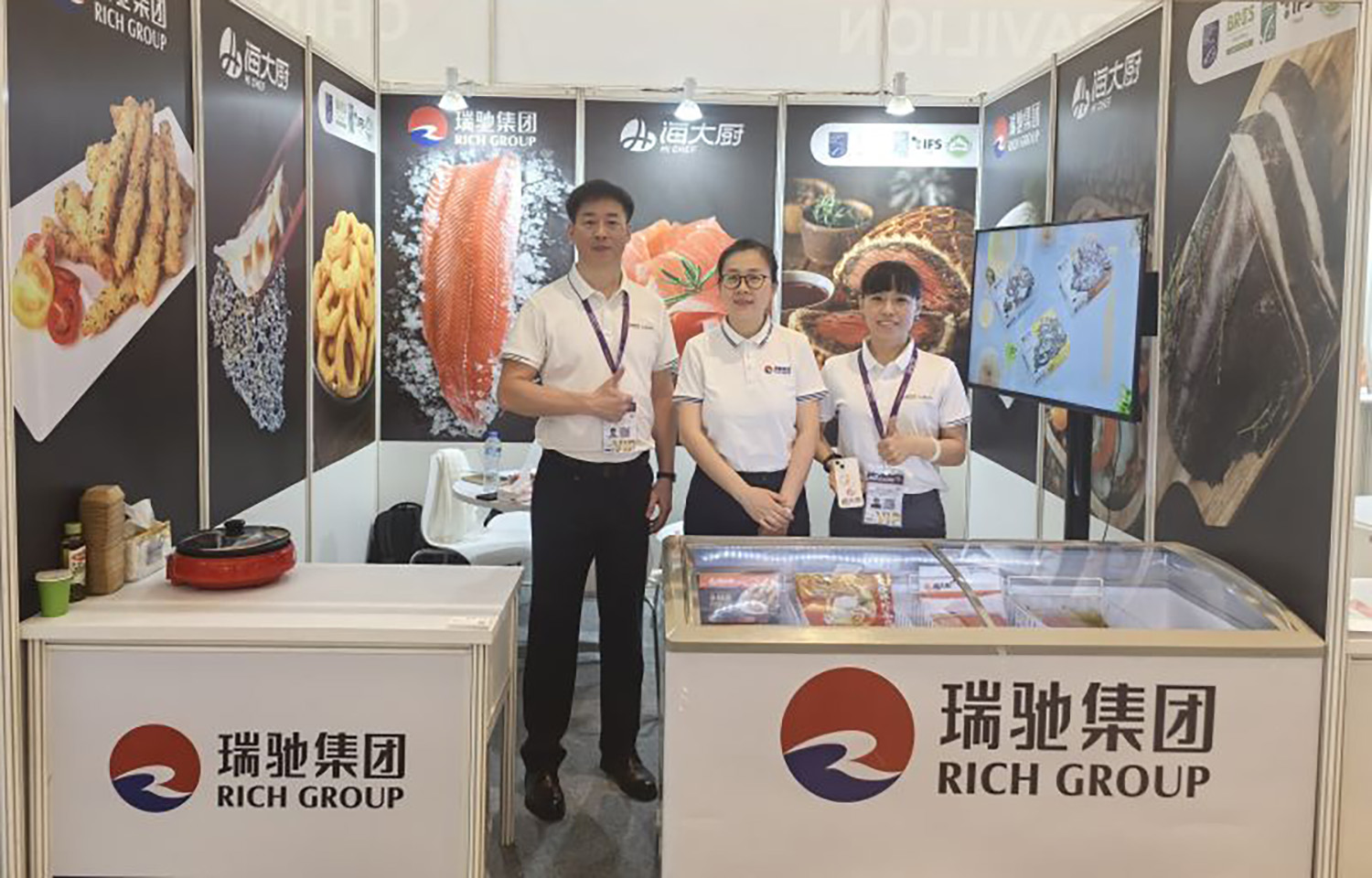
Sara Shi, an export manager at seafood-processing firm Dalian Rich Enterprise Group, is also worried about whether the threat of new tariffs will jeopardize deals.
“If the 100 percent tariff is implemented, it will definitely hurt our business,” Shi told SeafoodSource. “Cost is always the first factor for the end user’s consumption.”
According to Shi, Dalian Rich has experienced success expanding its brand of seafood products in the U.S., which mainly targets the Asian demographic in the country, while also exporting ready-to-cook products to U.S. retailers. She said Dalian Rich has grown its exports to the U.S. by 20 percent through the first three quarters of 2025 compared to the same period in 2024 but that further tariffs endanger that momentum.
“This growth has come despite the fact we were not optimistic about the U.S. market in the beginning of the year. The tariffs have changed again and again and made everything a mess,” Shi said.
Like other seafood firms across China, tariff uncertainty is forcing Dalian Rich to grow sales of its Hi Chef range of products, which has traditionally seen success in Western markets, in Southeast Asia, Japan, and the Middle East.
“No matter what happens in the future, Dalian Rich will always pursue a multi-market strategy and promote our own brands,” Shi said.
Hainan Golden Spring is also interested in markets outside the U.S. but is waiting for the tariff situation to become clearer to make more drastic moves, according to Wang. However, the firm does not have as widespread of a global infrastructure as other firms, and thus, it will take time to lessen its heavy dependence on the U.S.
“We don't really have clients from Africa, mostly because our price is not competitive,” Wang said. “As for the Middle East, demand is also soft; they will probably need more time to use up their inventory.”
