






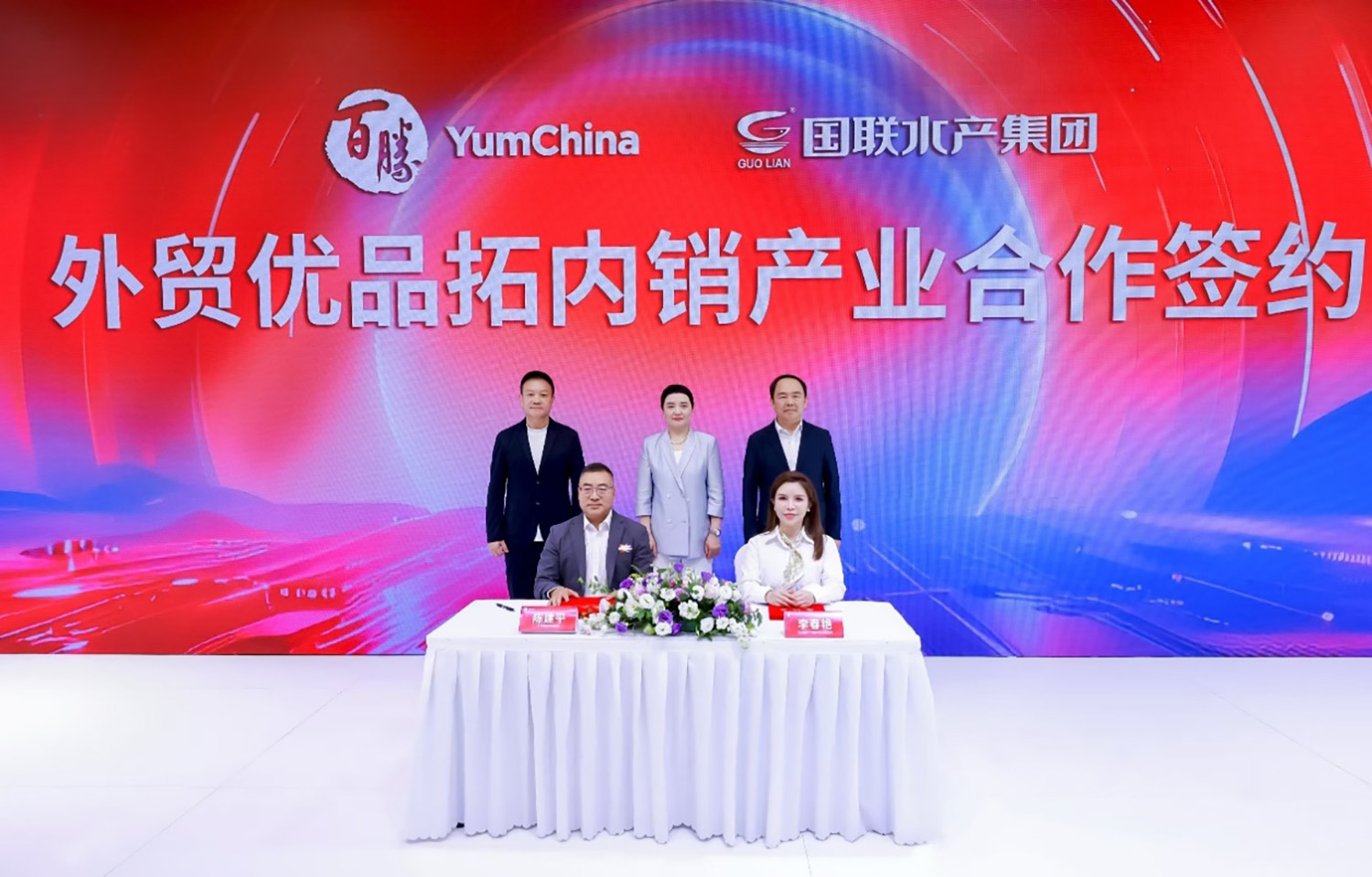
Chinese seafood firm Zhangjiang Guolian Aquatic Products announced plans to supply shrimp and tilapia to domestic restaurant operator Yum China, the latest move by a Chinese company attempting to reap the benefits of focusing more on the domestic market.
“Many companies now much prefer to sell domestically,” Didier Boon, the head of Beijing, China-based East China Seas, which sources shrimp and tilapia for export, told SeafoodSource. “A huge benefit is immediate cash. For export, you wait 60 to 90 days from the time of production until cash in the bank. Domestically, you wait until production is finished and then receive the cash in two weeks.”
Besides the benefit of quicker payment, another reason for a greater domestic focus is that China’s shrimp and tilapia exporters have been heavily impacted by U.S. trade policy, forcing these operations to scramble in order to cushion the blow from tariffs.
“It is obvious that it is more and more difficult to export to the U.S., which is by far the largest market for Chinese shrimp. Guolian enjoyed tariff-free access since 2005 when most Chinese producers were hit with high anti-dumping tariffs. Now, there is a base tariff of 30 percent,” Boon said.
Guolian, among other firms, have thus turned toward China's massive domestic market instead, and the Chinese government has instituted initiatives to help companies hurt by tariff volatility do just that.
Online retailer JD.com has heeded government calls to promote domestic seafood sales by sending its employees to Chinese companies involved in foreign trade, directly purchasing their products such as tilapia, and setting up a special area on its e-commerce platform to sell these products and direct traffic and marketing support accordingly.
Supermarket chain Freshippo, owned by JD.com rival Alibaba, also opened a fast-track path for export companies to test the domestic waters on its e-commerce platform.
Central and regional governments in China, such as Guangdong, are also organizing matchmaking events to connect exporters with local buyers.
Though Guolian and others are now targeting the domestic market with a range of products, in its Yum China partnership announcement Guolian still referred to its products as “export-ready” to describe their quality, which is marketing language that Boon said is misleading and outdated now.
“People systematically think that the Chinese market will take the worst products and export the best. This is simply not true,” he said. “[China’s] laws ruling the food industry have improved dramatically over the last 15 to 20 years. The expectations of sanitary quality are now the same for domestic products as they were and are for export products.”
To Boon’s point, data from the the Best Aquaculture Practices (BAP) certification program shows that China is increasingly being flooded with high-quality seafood products.
According to the Global Seafood Alliance (GSA), which operates the BAP certification program, there has been a surge in applications from seafood firms supplying China’s domestic market. New applicants targeting the Chinese domestic market accounted for just 3 percent of new applications in the country as recently as five years ago, but that figure now stands at 50 percent, according to Iris Xin Wang, GSA’s director of market development for China.
Certification schemes like BAP are taking advantage of Chinese consumer willingness to pay extra for products certified by authoritative third-party auditors.
“Producers and retailers can address consumer concerns about food safety and environmental impact by investing in transparent supply chains and adopting blockchain technology for traceability,” a report released earlier this year said. “Such measures not only meet consumer demands but also potentially command premium prices in the market.”
The partnership with Yum China, which oversees a restaurant network in China comprising such chains as KFC, Pizza Hut, Lavazza, and Taco Bell, is not the first time Guolian has tried to target domestic consumers.
In 2022, Guolian, which is four-star BAP-certified, launched a range of tilapia home-meal products for the domestic market, largely distributed through China’s e-commerce companies. Drawing on popular traditional Chinese cuisine, the range also sells in Chinese supermarkets. Even earlier, in 2016, the company launched an industrial-scale kitchen to supply a range of fast food companies in China.
