



Bergen, Norway-headquartered Lerøy Seafood Group (LSG) posted slight dips in revenue and operational EBIT in Q2 2024, but the firm saw quarter-over-quarter biological and earnings improvements, especially in the operations of Scottish Sea Farms, of which it owns 50 percent.
LSG CEO Henning Beltestad said the company performed well in a quarter characterized by declining salmon prices, increasing its average harvest weights from 3.9 kilograms to 4.7 kilograms in the period.
The company reported a consolidated operational EBIT of NOK 906 million (USD 86 million, EUR 77.2 million), compared to NOK 950 million (USD 90.8 million, EUR 81 million) in Q2 2023, and revenues of NOK 7.6 billion (USD 721.5 million, EUR 647.8 million), compared to NOK 7.7 billion (USD 735 million, EUR 657 million) in the same period a year prior.
Due to the biological improvement, the company reduced the number of sea lice treatments it carried out, and growth and survival rates substantially increased compared to the average over the past five years. As such, the quarterly salmon and trout harvest volume increased 24 percent year over year to 36,709 gutted weight tonnage (GWT).
Regarding Scottish Seafarms, Beltestad said that after some challenging years, it was “really good” to see the improvements that have been made.
“There was a strong biological development in the quarter, and the next generation of fish are performing well,” he said. “There’s a significant increase in year-over-year harvest volume, weights, and growth while reducing mortality.”
The full-year 2024 harvest guidance for the region remains at 37,000 GWT.
“We see significant potential for growth beyond 2024,” Beltestad said. “It’s been a really good performance, and we are really pleased to see this development.”
In Norway, Lerøy’s Farming segment comprises three farming regions: Lerøy Aurora, located in Troms and Finnmark; Lerøy Midt, located in Nordmøre and Trøndelag; and Lerøy Sjøtroll, located in Vestland.
Beltestad said Lerøy Aurora delivered strong biological performance, with a high survival rate. He also said there would be a large increase in its third-quarter harvest volume, resulting in a full-year total, barring unforeseen developments, of 47,000 GWT.
Similarly, Lerøy Midt performed well in the period, with a higher Q3 harvest as anticipated, and it is on course to meet its full-year guidance of 70,000 GWT.
For Lerøy Sjøtroll, continued improvements were made in the region’s biology, but two infectious salmon anemia outbreaks led to accelerated harvesting at low prices. Nevertheless, its harvest guidance for the year remains unchanged at 58,000 GWT.
Including its 50 percent share (18,500 GWT) of Scottish Seafarms, LSG is anticipating a total harvest of 193,500 GWT this year.
“We are keeping our target for 2025 for Norway at 200,000 GWT, which means an increase of [around] 25,000 GWT going into next year,” Beltestad said.
By segment, the company’s Farming arm achieved revenues of over NOK 3.3 billion (USD 313.3 million, EUR 281.3 million) in Q2 2024, up from NOK 2.8 billion (USD 265.9 million, EUR 238.7 million) in Q2 2023. Its operational EBIT was NOK 777 million (USD 73.8 million, EUR 66.2 million), compared to NOK 767 million (USD 72.8 million, EUR 65.4 million).
Meanwhile, its Wild Catch segment reported revenues of NOK 680 million (USD 64.6 million, EUR 58 million), which was NOK 138 million (USD 13.1 million, EUR 11.8 million) less than in Q2 2023. Its operational EBIT fell NOK 103 million (USD 9.8 million, EUR 8.8 million) to a loss of NOK 4 million (USD 379,944, EUR 341,023). In total, the segment caught 17,829 MT of fisheries products in the quarter, versus 23,709 MT a year previously.
“There’s been a significant quota reduction, with catch volumes down 25 percent year over year, and reduced profitability,” Beltestad said. “It’s a challenging [Wild Catch] outlook for the remainder of 2024 and 2025. The quota advice for 2025 indicates lower quotas, and new regulations will allocate quotas from the trawling fleet to the coastal fleet. So, there will be ups and downs in this segment going forward, but we keep improving.”
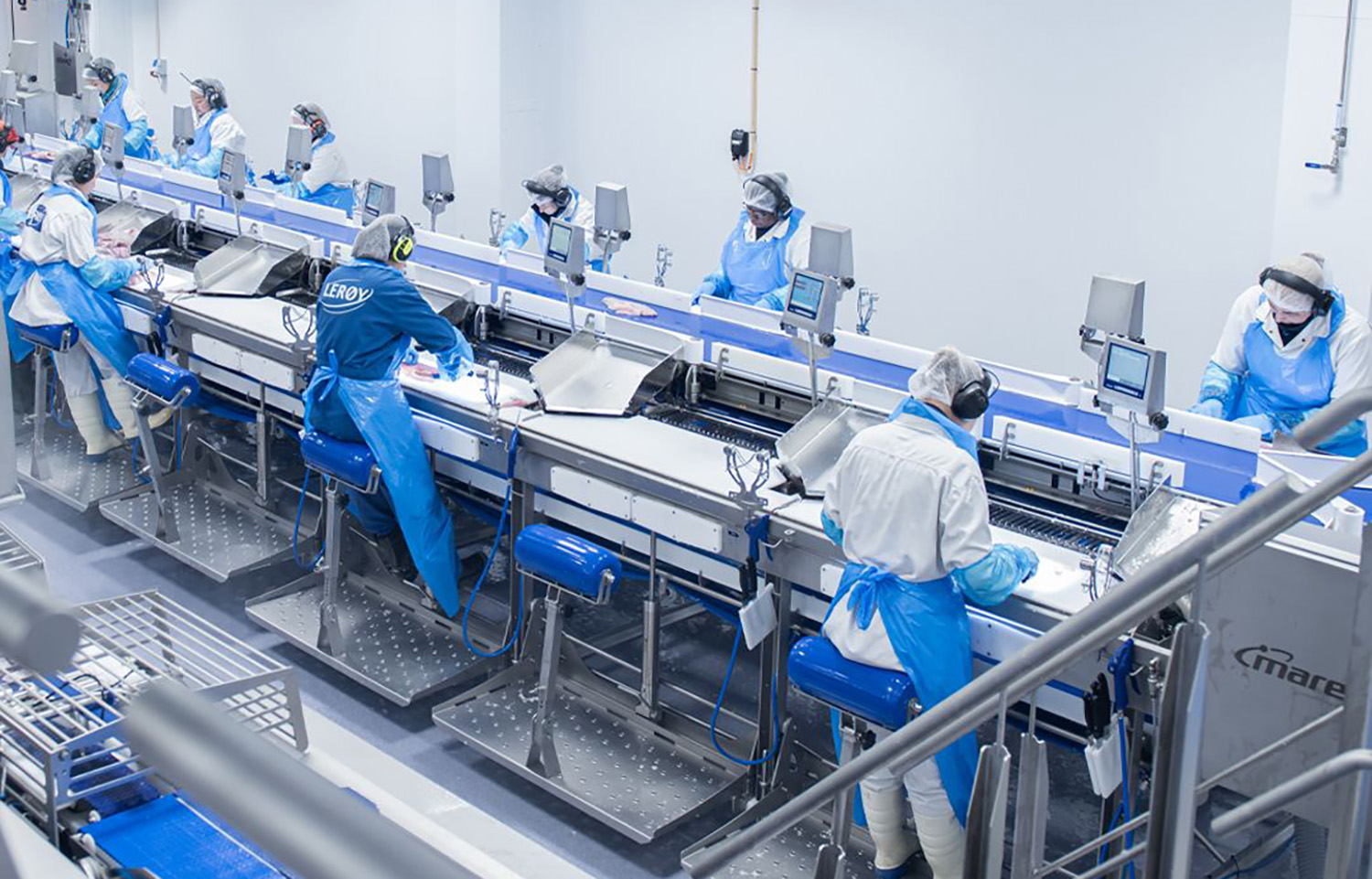
The downstream VAP, Sales, and Distribution (VAPS&D) segment generated revenues of NOK 7.3 billion (USD 693.4 million, EUR 622.4 million), which was about even year over year, and an operational EBIT of NOK 217 million (USD 20.6 million, EUR 18.5 million), increasing from NOK 113 million (USD 10.8 million, EUR 9.6 million) year over year.
“There’s been continued positive development in this sector, with high profitability compared to the second quarter of 2023, driven by operational improvements, high utilization in processing capacity in Norway, and product prices better reflecting raw material prices,” Beltestad said. “The expectation is for a continued positive profitability trend in the second half [of this year], based on the belief of high-volume developments in key markets.”
