






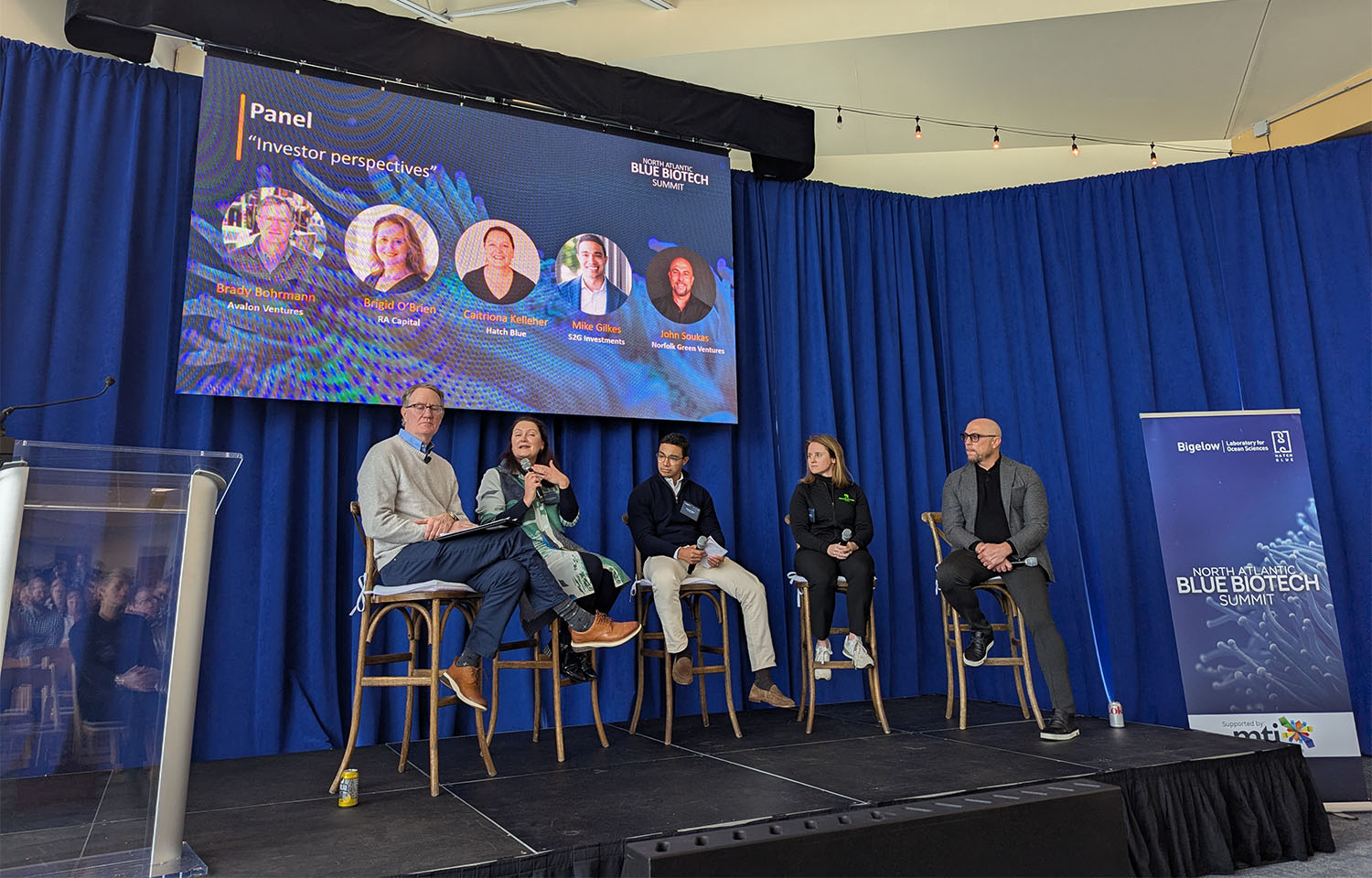
The inaugural North Atlantic Blue BioTech Summit offered several startups a chance to pitch their ideas and also gave investors who could make those ideas become a reality a chance to offer advice on what it takes to secure funds.
“Investors who can make decisions and commit capital on behalf of their firm, which is at the partner level, have probably in the first two minutes made their decision,” Brady Bohrmann of Avalon Ventures – a San Diego, California, U.S.A.-based biotech venture fund – said during a panel covering investor perspectives on the industry. “Nobody likes to hear that.”
Bohrmann, along with four other investors, gave a rundown of some of the things that they look for when they hear product pitches from potential partners. He said that across the board, making sure the story is refined and rehearsed is essential to getting investors to bite.
“It’s sometimes controversial in rooms like this, but there is no shortage of capital in the system,” Bohrmann said. “The challenge is really connecting that capital with the entrepreneurs or the entrepreneurs learning how to connect with the capital sources.”
The blue biotech industry has a unique challenge in accessing capital because it is so new, according to the panelists. Many other existing forms of industry can attract investment because they represent a familiar path to a financial return; however, blue biotech has to first get investors to understand what the product even is before convincing anyone it’s worth investing in.
“You can learn how to speak the language and meet investors where they are and how they think about investing,” Bohrmann said.
Brigid O’Brien, a managing partner with RA Capital Management, said her team will always give any prospective client 30 minutes to make their case – but that case needs to be well-organized and buttoned-up to have any chance. She also said it is essential a company treats anyone it connects with at an investment firm with respect, even if they aren’t the decision-maker.
“Because we always give somebody 30 minutes, if you get an associate on my team, don’t dismiss them,” O’Brien said. “They’re coming to pipeline that Monday, and they’re convincing me to take that second call. Because I’m a managing partner, I’m going to come in once my team has screened them, with the screening criteria being that it’s worth my time to come in.”
O’Brien said sometimes people are dismissive of an associate but those people are often the advocates for bigger investments.
She also said any entrepreneur looking for investment should make sure to do their homework before approaching any investment firm.
“We talk very often about our screening criteria; we’re always on stage, and we have blogs about it,” O’Brien said.
For her, those criteria are things like how fast a company can get to market, whether a company understands the market it is targeting, and the efficiency of the capital.
“I love companies that come in and have done their homework and are talking to the screening criteria,” O’Brien said.
Other items like being late to the meeting are also something to be wary of, she said. When investors have hundreds of meetings a year on the calendar but can only invest in a few companies, every single issue can be a deciding factor.
Another major tip is to use the allotted time to its maximum capacity and avoid getting trapped in explaining details that aren’t necessary to the investment.
“I used to run one of the world's largest mining company’s venture capital arms. If you were going to come in and have 30 minutes with me and spend 25 minutes about talking about how important copper is in the world, now you’ve got five minutes to pitch your company to me,” O’Brien said. “Don’t stick to your script because you practiced it. Get to the things that matter the most.”
