






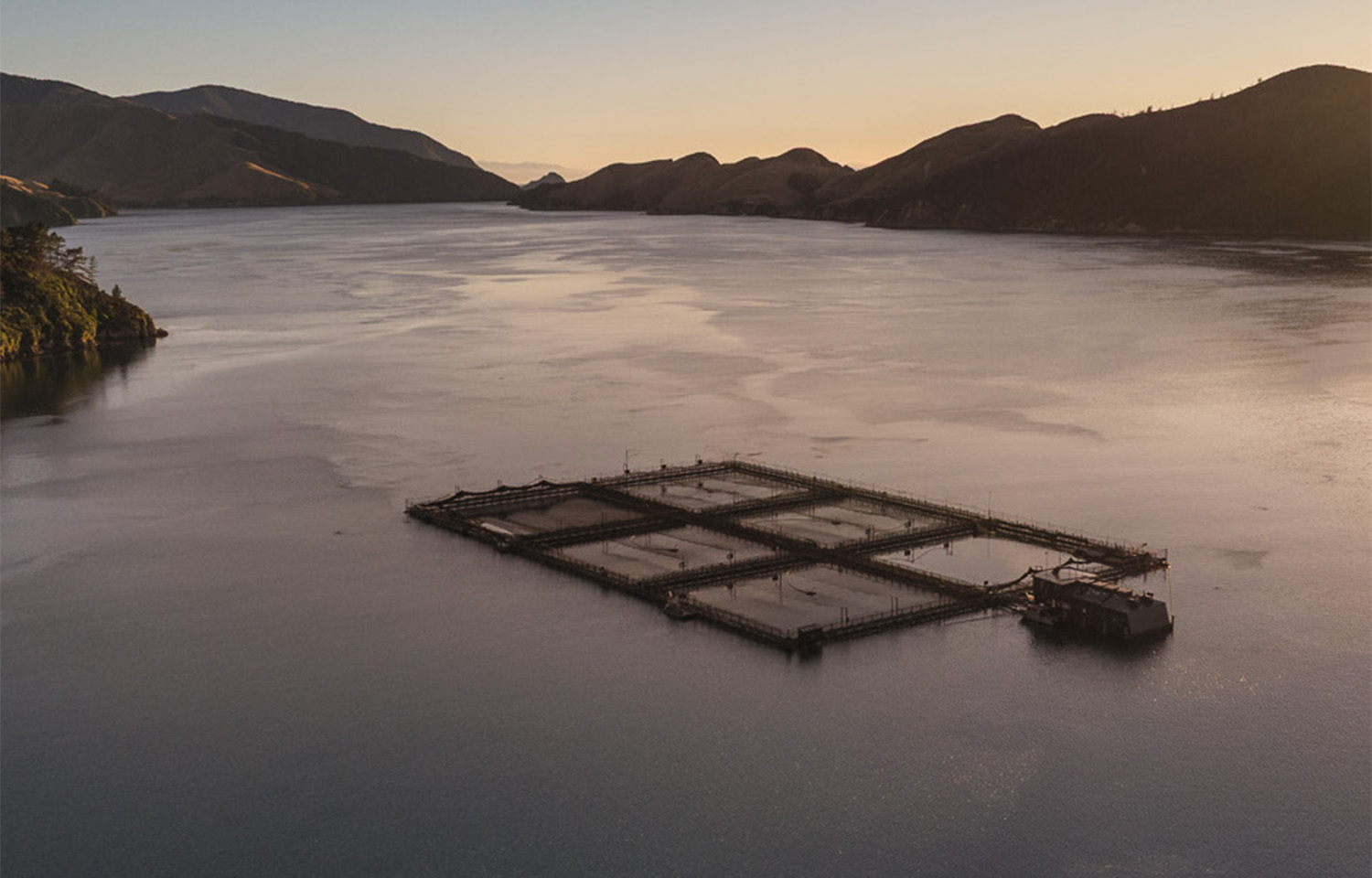
New Zealand King Salmon (NZKS) has revised its earnings expectations for FY 2026 after its summer growing season went well.
NZKS said it now expects its pro-forma EBITDA to be in the range of NZD 19 million to NZD 27 million (USD 11.2 million to USD 15.9 million, EUR 9.5 million to EUR 13.5 million), up from the earlier predicted pro-forma EBITDA of NZD 9 million to NZD 15 million (USD 5.3 million to USD 8.8 million, EUR 4.5 million to EUR 7.5 million). Its pro-forma EBIT is also projected to increase from a range between an NZD 3 million (USD 1.8 million, EUR 1.5 million) loss and an NZD 3 million profit to a gain of NZD 10 million to NZD 18 million (USD 5.9 million to USD 10.6 million, EUR 5 million to EUR 9 million).
The company said the big boost to its expected earnings is largely thanks to completing its summer farming period.
“While work on the half‑year financial results is ongoing, we now have greater confidence in fish performance to date and the anticipated impact on FY26 full year financial performance,” NZKS CEO Carl Carrington said in a release. “Mortality levels over summer have been lower than forecast and feed‑out rates have remained strong which has resulted in the company having more fish to sell, and an overall improvement in fish size and quality.”
NZKS has faced biological issues at its New Zealand-based salmon farms in the past as warmer water in the summer caused elevated mortality rates and lower feed-out rates. In FY 2022, it faced mortality rates as high as 42 percent due to one of the hottest summers on record in the country, and the company has been working to pilot offshore aquaculture with its Blue Endeavor project, which has received a funding partnership with the New Zealand government.
This year, the company’s salmon farming went well due to a “combination of factors,” according to the company, which includes a new summer feed diet.
“Improved fish performance has also enabled greater operational efficiency. Higher biomass available for harvest reduces unit costs across farming and processing operations, and allows us to sell more fish into higher returning products and markets,” NZKS said.
Because of the strong biological performance over the summer, the company predicts to harvest whole gilled and gutted volumes of between 5,800 metric tons (MT) and 6,100 MT, which is up from 5,500 MT and 5,900 MT.
Looking ahead, the company said the remaining months of the financial year are historically relatively stable, which is why the company was confident enough to raise its earnings guidance.
“However, the board has broadened the guidance range to reflect short‑term external uncertainties that could impact results for the balance of FY26,” NZKS said.
Some of those uncertainties include the consequences of the geopolitical conflicts such as the war in Iran.
“These include potential impacts on the availability and cost of air freight into key markets, and increased production and supply chain costs arising from global oil price movements. These risks are linked to the ongoing conflict in the Middle East,” the company said. “The company will continue to monitor these factors and will update market guidance as appropriate.”
