






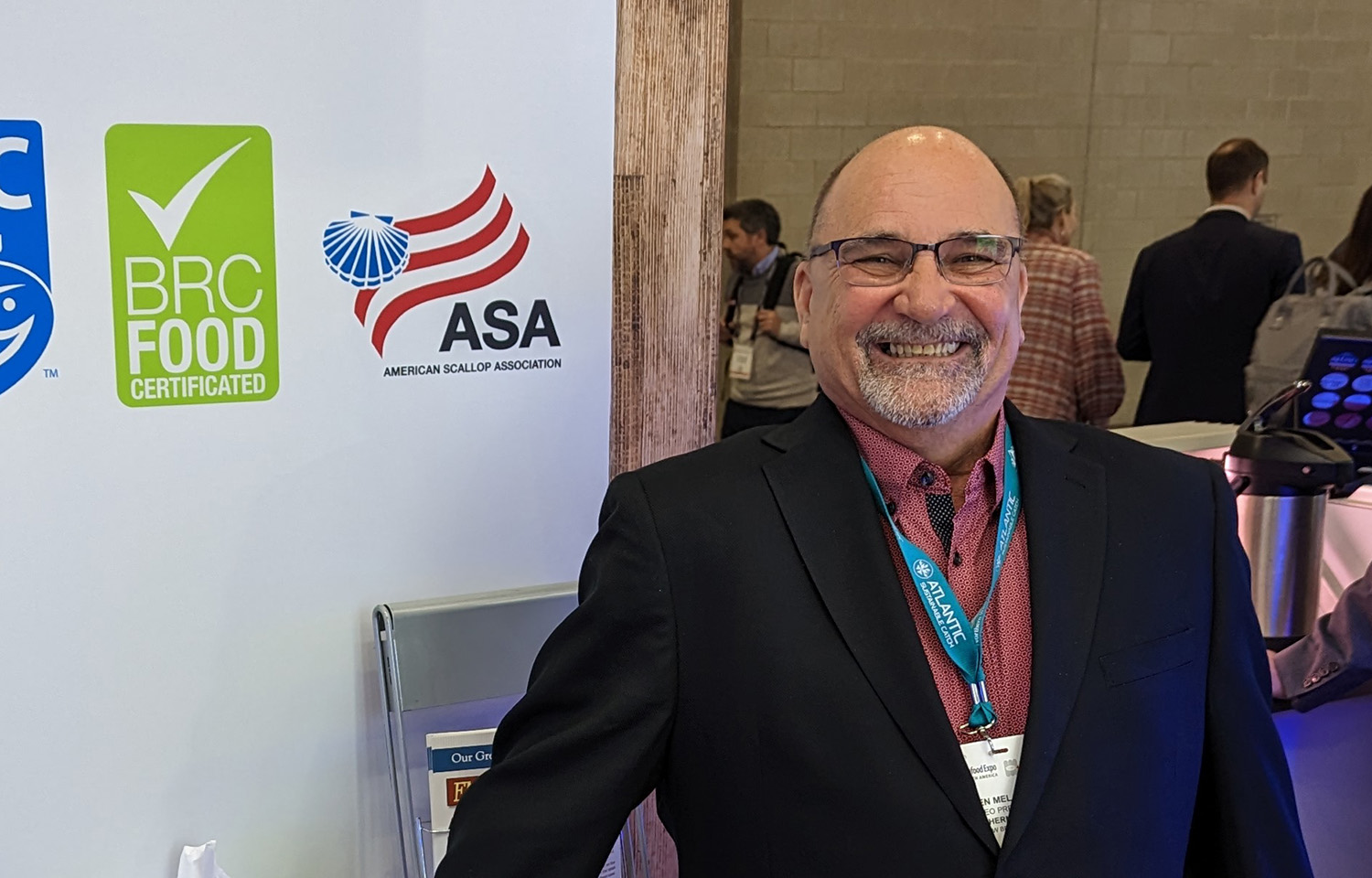
Northern Wind’s recent acquisition of Atlantic Caped Fisheries was in large part due to diminishing scallop quotas in the U.S. Northeast.
Atlantic Sustainable Catch, which is composed of Northern Wind, Suncoast Seafood, and Raymond O’Neill & Son Fisheries, acquired the business in late December 2024, which will see Northern Wind take over the processing and sales division of the company. Both companies are based in the Northeast U.S. and process a significant portion of the scallop quota in the region.
The scallop market has been grappling with steadily decreasing quotas in recent years, with the most recent quota recommendation representing a 28 percent cut, dropping the total projected landings to 19.75 million pounds – far below the 60-million-pound season the fishery had in 2019.
That drop, Northern Wind CEO Ken Melanson told SeafoodSource, is part of what led to the deal between the two companies.
“It was scallops; it was the reason why we targeted Atlantic Capes,” he said. “There’s only a handful of people that basically deal with 80 percent of the total quota here domestically in the scallop business … with the diminishing quotas and everything else it just made all the sense in the world – rather than go out there and fight for customers.”
Melanson said Atlantic Capes, being a similar size to Northern Wind, deals with many of the same products and has many of the same processes – creating natural synergies between the two companies. There are a few other product types and offerings that will benefit both companies, but scallops was the main motivator.
“It’s the reason why we did it, so we can run one facility at 75 percent capacity, rather than two facilities that are both at 30 percent to 35 percent capacity,” he said. “When you’re used to running 12 million to 14 million pounds of product through your facility on scallops and you’re only running 7 million, you can cut to a point, but you can only cut so much.”
Antarctica Advisors Vice President Jean-Marc Narine told SeafoodSource the motivation behind the deal was the same for Atlantic Capes. Antarctica Advisors advised Atlantic Capes on the transaction and had been working with the company for multiple years.
“I think with where we see the quotas going with the scallop industry as a whole, I think a move like this made even more sense at this point in time,” he said. “I think that took the strategic rationale to another level, just given where things are trending, and Northern Wind and Atlantic Capes both saw that.”
Narine said Antarctica Advisors had worked with Atlantic Capes for multiple years to try and find a deal.
“This is a process that has evolved over the years, stretching back to when Danny Cohen originally engaged us a number of years ago,” Narine said.
Melanson said he tried to put a deal together with Atlantic Capes years ago, but things never managed to cross the finish line. After multiple attempts, Northern Wind hired Antarctica Advisors and put the company up for sale – which led to the deal with ACON Investments in 2021.
Eventually, the deal began moving again, and Narine said the acquisition and merger of operations and quota is a natural conclusion of the trends in the industry.
“It’s a trend, not just in scallops, but in the seafood industry in general, where you have a lot of fragmentation, and I think there’s a lot of investment that is needed in the industry to optimize efficiencies,” he said. “I think that lends itself to consolidation in order to be able to make those investments worthwhile, especially in a declining quota environment.”
The personality fit between the two teams was also a big reason the acquisition happened, Narine said.
“There was very good chemistry between the two teams when they met,” he said.
Melanson said the two companies have been in the scallop business for decades and have known each other all that time.
“We’ve known each other for the majority of our careers down here,” Melanson said. “There’s two different things that I look at. The business side of things is cut and dry, it’s on paper, it’s numbers. They’re easy. But, personalities are a little different.”
Looking forward, Melanson said the acquisition will allow the company to run at greater efficiencies during the quota downturn and, hopefully, weather things until quotas go back up.
“We’re all hoping and praying that we get back up to the 35-million- to 45-million-pound quotas, which I think is certainly doable in the next three to five years. But, that remains to be seen,” Melanson said.
