



Seafarms Group Limited’s (SFG) Project Sea Dragon has lost an appeal in Australian federal court, with an earlier order to liquidate the company now standing.
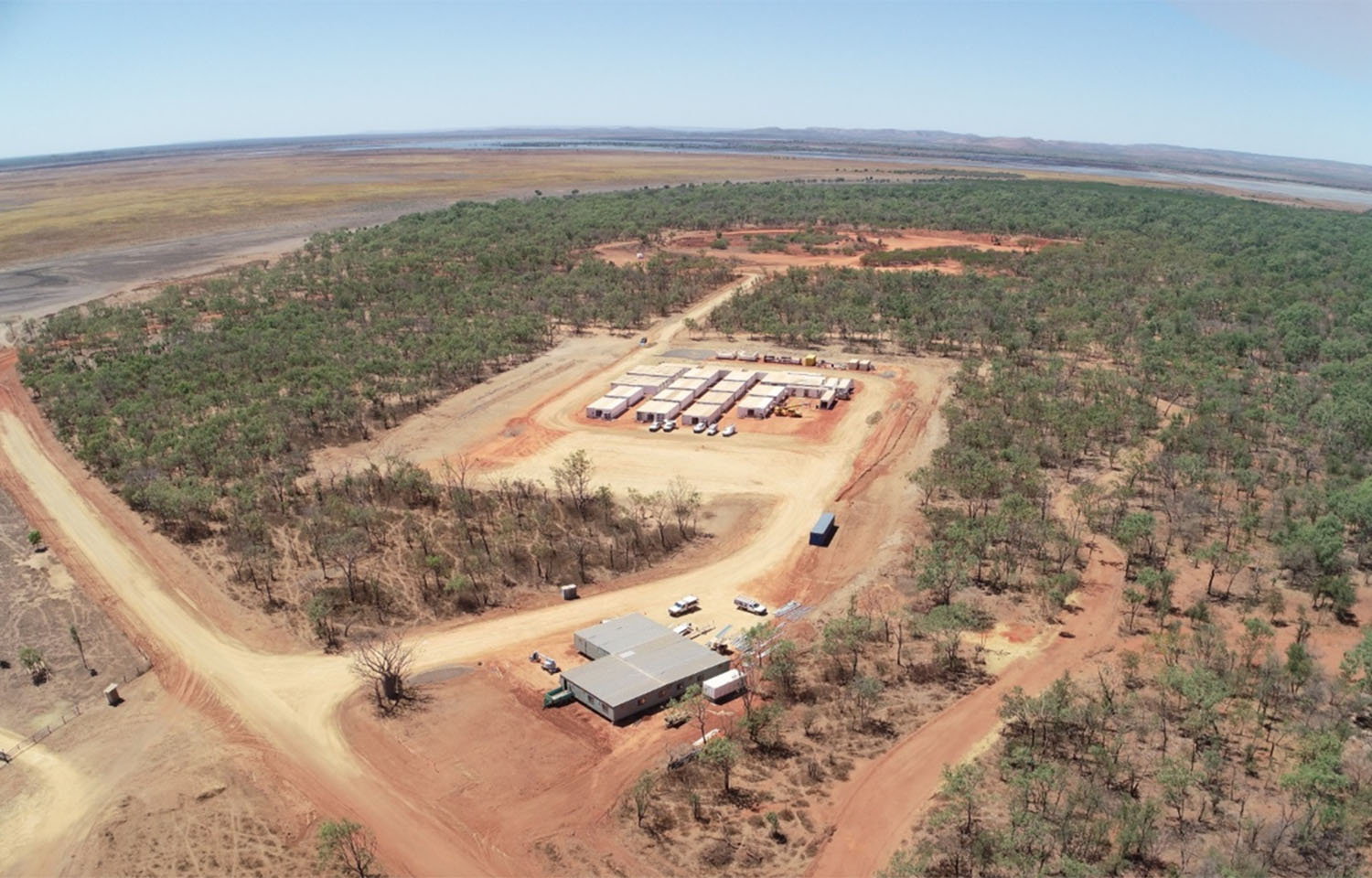
In February 2024, Australian Court Justice Michael Derrington ordered the appointment of two liquidators of Project Sea Dragon after finding the company abused the Corporations Act in Australia. The project was originally billed as the world’s largest black tiger shrimp aquaculture project, comprising the development of 10,000 hectares with the first phase alone costing AUD 281 million (USD 186 million, EUR 170 million).
“Seafarms Group Limited will now engage with the appointed liquidators and work through the implications of the findings,” SFG said in a release on the Australian Stock Exchange (ASX). “SFG remains solvent and further announcements on the company’s engagement with the liquidators will follow.”
Project Sea Dragon has had a complicated history, with one former CEO claiming the project couldn’t proceed in its current form in April 2022 before resigning a month later at the behest of a major shareholder. Just under a year later in February 2023, the company faced a complete trading halt on the ASX after SFG placed the project into voluntary administration before later announcing it remained committed to the project.
That move to voluntary administration was a key factor in Derrington’s order to liquidate the company. Derrington wrote in the original ruling that the move to place Project Sea Dragon into administration was an attempt to avoid its liability, and an earlier court order, to pay AUD 13.9 million (USD 9.2 million, EUR 8.4 million) to Canstruct. SFG selected Canstruct to build the first phase of Project Sea Dragon but canceled the contract in April 2022, ultimately leading to the judgment against SFG.
The original ruling revealed that despite assurances by then-SFG CEO Rod Dyer that the company was reengaging with previous and new funders, no formal loan agreement between SFG and any other company assumed an obligation to provide funding for Project Sea Dragon.
“In fact, there has been no agreement or arrangement at all between Project Sea Dragon on the one hand and Seafarms Group Limited and the other companies in the Seafarms Group on the other, by which the latter has offered to, has been obliged to, or has committed to provide funding to the former on any occasion,” Derrington wrote.
The ruling found that Project Sea Dragon was effectively funded by third-party investments in SFG, that funding for the project was entirely at SFG’s discretion, and that positioning was abused by the two companies to avoid its liability to Canstruct.
According to Derrington, SFG first stopped funding Project Sea Dragon to render it insolvent, forcing it into voluntary administration – which was when it faced its trading halt in 2023. Then, Project Sea Dragon entered a deed of company arrangement (DOCA) with SFG, which paid all of its creditors in full except for Canstruct. After the voluntary administration, the companies resumed normal operations at Project Sea Dragon, again funded by SFG, “in essentially the same position that it was in prior to its entry into the DOCA, minus its liability to Canstruct.”
Derrington wrote the strategy left Project Sea Dragon a stalking horse in an “ongoing state of insolvency” that led it to accrue debt to SFG while holding no assets of its own, having no income, and obtaining no commitments from any party to meet any of its debts. That strategy constituted an abuse of Australia’s Corporations Act, and thus, “the DOCA should accordingly be terminated, the administration should be brought to an end, and Project Sea Dragon should be wound up.”
The Australian Broadcasting Corporation (ABC) reported that a number of local companies had been sub-contracted by Canstruct to work on the farm and expect to go unpaid for the work.
“Forgive me if I am a little bit skeptical about how much money is going to get back to local businesses that are owed,” David Menzel, president of the local government, told ABC. “I guess we will have to wait and see, but I’m pretty sure no-one is holding their breath.”
According to ABC, the Australian federal government and the governments of the state of Western Australia and the Northern Territory all contributed to the project with infrastructure improvements. More than AUD 130 million (USD 86 million, EUR 79 million) overall was spent mainly on road infrastructure, with the federal government spending AUD 63 million (USD 41 million, EUR 38 million), the NT government spending AUD 56 million (USD 37 million, EUR 34 million), and Western Australia spending AUD 15 million (USD 10 million, EUR 9 million).
