






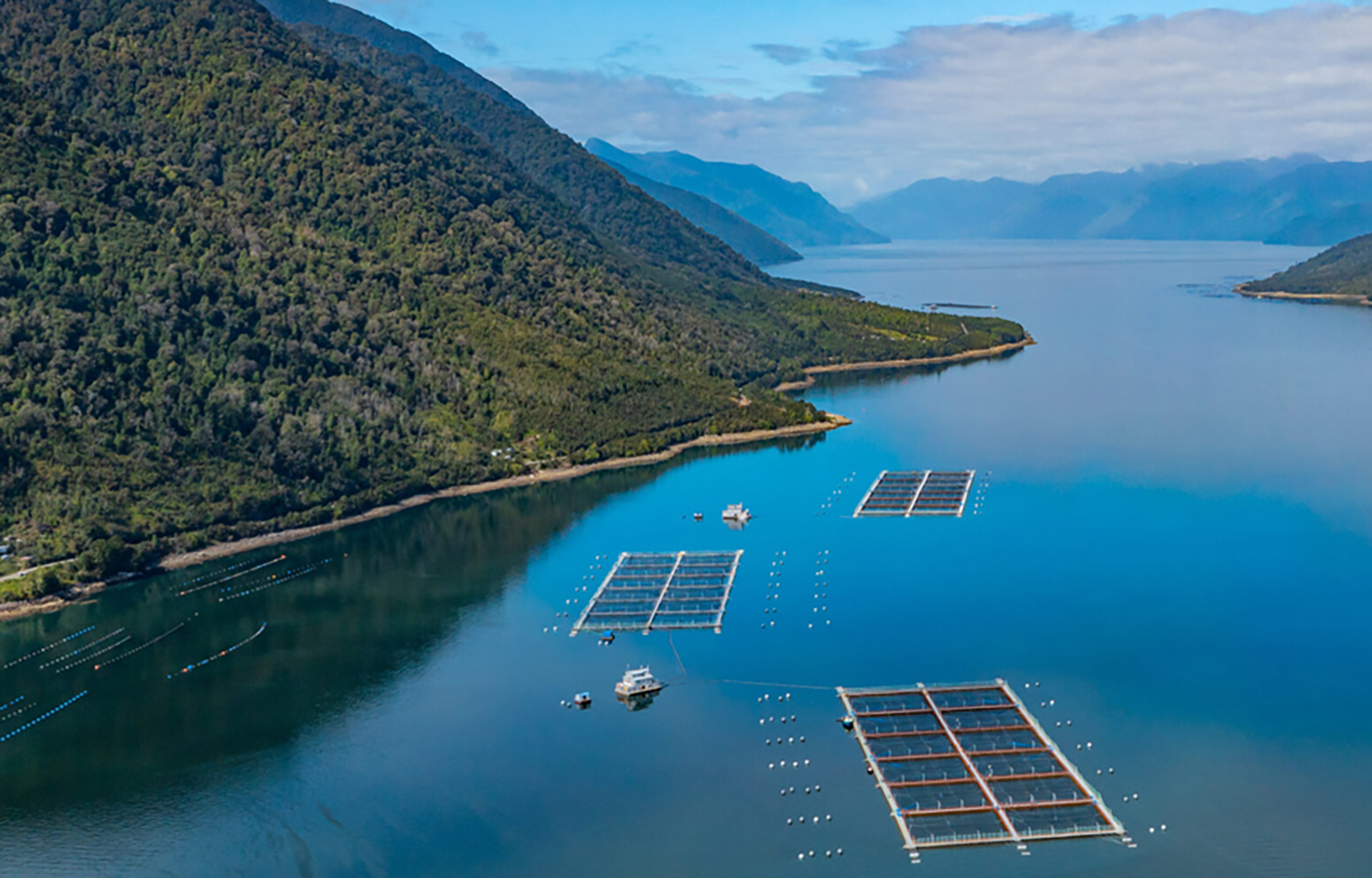
Puerto Montt, Chile-based salmon-farming firm Ventisqueros is investing heavily in coho salmon, believing it will soon become a dominant export product.
Currently, the firm’s sales are roughly evenly split between Atlantic salmon and coho, but the goal is to have that ratio shift to 60 percent in coho’s favor by 2030, Ventisqueros Chief Commercial Officer Javier Calvo told SeafoodSource.
“We’ve been working on that, and we will continue to do so. There are some very heavy investments – not in purchasing other companies but organically, investing internally,” he said.
Though Calvo did not reveal exact details of investments the firm is planning to make, he did add that Ventisqueros is aiming to secure and strengthen its whole supply chain in order to increase total production, aiming for 62,500 metric tons (MT) by 2030 while increasing revenues to USD 350 million (EUR 296 million) by the same year.
“Most of that growth we're confident will come from coho,” he said.
Aiding in that growth is increasing supply to Asian markets, such as Vietnam, Thailand, the Philippines, and South Korea. Thanks to the greater interest, Calvo said that coho is starting to get “a totally separate identity.”
“Even in some cases, which was very unusual for last year, we were seeing coho at a higher price than Atlantic salmon,” he said. “In many ways, this is a fantastic opportunity for Chile to have a differentiated offer.”
Epitomizing the shift in identity has been coho’s changing usage in Japan, which is Ventisqueros’ second largest export market, according to Calvo.
“Previously, coho was never used for sushi in Japan, where they are very demanding about the quality. They started using it last year, which is big because in the end, it'll start to happen in other places,” he said. “Imagine if the species manages to get relevant in the sushi segment, which is the fastest growing segment in the world. In the U.S., younger consumers are into sushi thanks to many reasons: the quality, the flavor, the taste, but also it’s grab and go. You don't have to wait a lot of time, and it's growing very strong. So, I think that if coho makes inroads in that part of the market, it could be very explosive. It's not there yet, but if Japan is making these movements, I think it is fair to say that this could happen in other countries.”
The top destination for Ventisqueros salmon continues to be the U.S., where it has a joint venture with fellow salmon-farming firm Blumar called BluGlacier.
Brazil places third in Ventisqueros’ export markets, which Calvo said is “very relevant” thanks to its geographical proximity and the fact the country’s middle class continues to expand; it is also home to more than 1.8 million Japanese descendants, with a heavy influence of Japanese culture.
“Salmon is a protein that’s gaining space, and we are seeing a lot of interest from retailers there in order to have more products. I'm seeing more B2C products, so we're very happy with that,” he said.
Ventisqueros has also seen development in Mexico and Colombia, Calvo added, but the biggest surprise last year came from Canada – thanks to coho.
“We never had managed to sell 50 containers of coho fillets in Canada, but we managed to do it last year, which was actually a year of record sales for us of coho. We had never reached the sales volumes of 20,000 MT in sales of coho, and we managed to do that last year, with very good diversification,” he said. “I'm always very excited when a country can tell a new story because I think we can all benefit from that."
Calvo added that coho is being developed by the largest producer in the country, AquaChile, as well as more boutique players such as Ventisqueros, allowing producers to deliver different characteristics in different markets to different consumers.
Ventisqueros’ coho production grew about 13 percent last year, while Atlantic salmon production remained at about the same levels as the year before.
Calvo made sure to emphasize that along with growth, there are environmental factors that need to be taken into consideration.
“You have to deal with global warming and climate change,” he said, pointing to unusually high temperatures recently in the south of Chile during the Southern Hemisphere’s summer. “You need to be aware of that and the stronger the fish, the better results that we will have. Coho is also growing because of that. In the end, it's more resilient, and it seems to be more adapted to Chile waters. It presents less problems and less risk than Atlantic salmon.”
To that end, coho can be harvested before summer – a season in which the risk of algae blooms is heightened due to higher water temperatures. The species also requires less time at sea than Atlantic salmon, which is the period in the production cycle when the fish are most susceptible to disease.
