


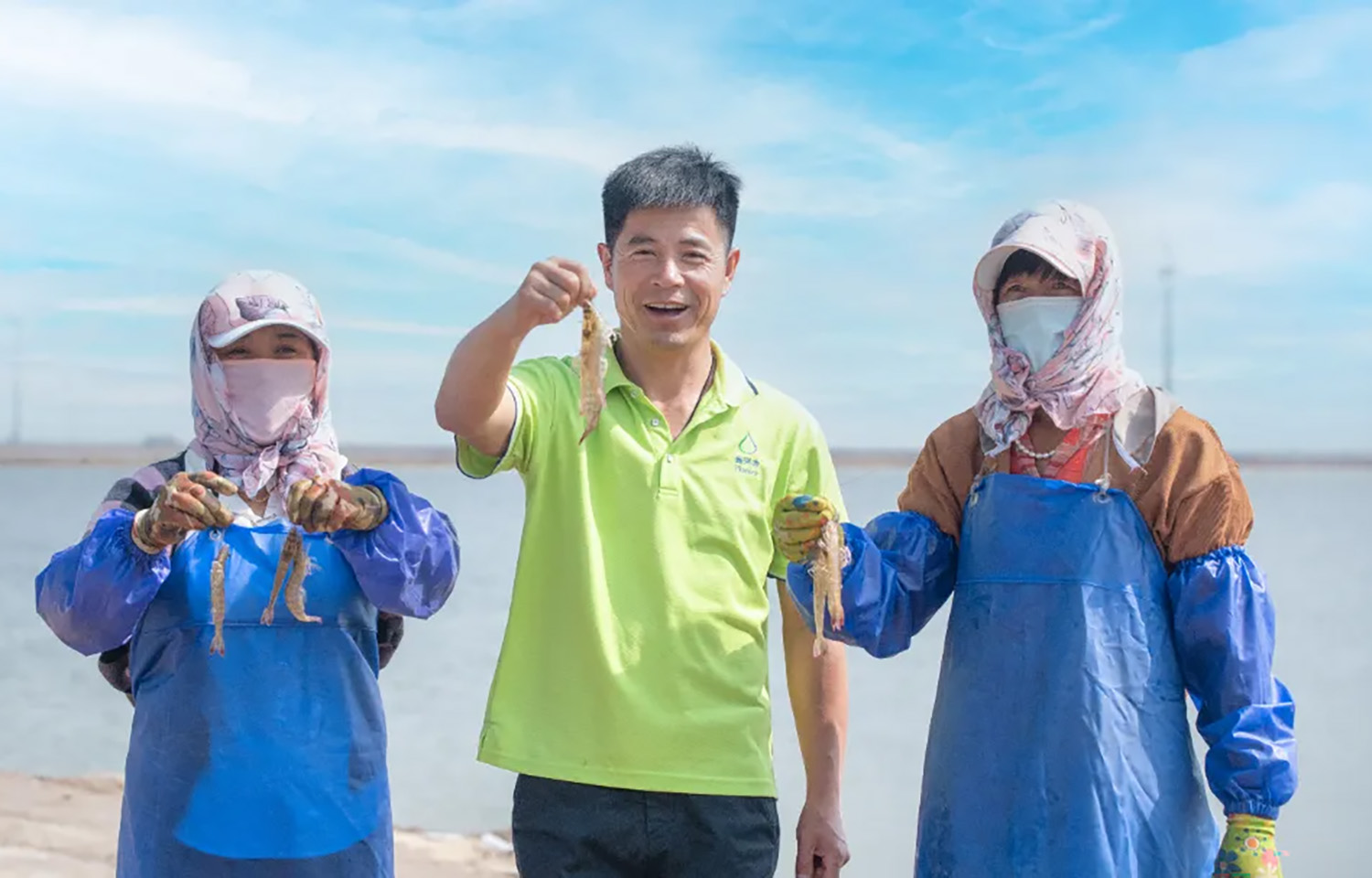
Multiple Chinese feed firms are pursuing aggressive expansion efforts, pushing for greater market share in Africa and Southeast Asia, among other locations.
Best exemplifying this trend has been Guangzhou-based Haid, which in recent years has established new facilities in Egypt, Nigeria, Ecuador, and most recently in Vietnam.
These expansion efforts helped Haid’s international aquafeed sales rise around 21 percent by volume year over year to 3.4 million tons in the first half of 2026, while its revenue rose 9 percent to CNY 64.2 billion (USD 9.6 billion, EUR 8.3 billion) during the period.
The firm is now the world’s third-largest feed company in terms of production volume.
University of Arizona Professor Kevin Fitzsimmons, who is an aquaculture and feed expert, said that Haid’s growth path has stood out compared to others in the space.
“They are not the only ones in this race, as Tongwei Group and Guangdong Evergreen are on similar trajectories … [but] Haid’s growth and diversification have been most impressive,” he told SeafoodSource. “Market competition within China is especially fierce, so internationalization provides opportunities.”
Gorjan Nikolik, a senior seafood analyst at Dutch financial services firm Rabobank, said Haid and other firms have been able to achieve such success by targeting markets underserved by Western competitors.
“A few companies, notably Haid and New Hope, have expanded beyond China over the past 10 years. This expansion has primarily been focused on Southeast Asia and, to a lesser extent, Africa,” he told SeafoodSource. “Major Western players largely originate from the salmon feed industry. They all share similar core competencies: global sourcing, R&D and formulation capabilities, and a strong focus on sustainability.”
Nikolik explained that Chinese firms, meanwhile, have differentiated their value proposition from such competitors by going beyond simply providing core services, which has given them an advantage among clients who do not have robust internal infrastructure.
“The Chinese model is somewhat different, as it combines feed production with more extensive technical support and a broader portfolio of products and services, including vaccines and genetics. This approach is particularly useful in less developed markets but does not necessarily provide a competitive advantage when serving the largest and most technologically advanced farmers,” he said. “As a result, the overlap between the customer bases of the Western players and Chinese aquafeed companies operating outside China remains relatively limited.”
Though the overlap between Western competitors and Chinese firms are relatively limited, there is greater overlap with other regional competitors like Thailand-based Charoen Pokphand (CP) Foods, which saw its revenue from its Vietnamese business fall 17 percent in 2025 as firms like Haid gain market share.
Haid has signaled that its expansion ambitions are unlikely to slow, as well, as it pursued an initial public offering (IPO) listing earlier this year.
Beijing, China-based agricultural consultant Ian Lahiffe told SeafoodSource that the exploration of an IPO, which has since been postponed, was linked to the company’s desire to “continue to scale internationally, and the profitability linked to international markets is obviously far superior to their domestic profitability.”
“The [Haid] model seems to be like [Chinese ride-hailing app] Didi or [e-commerce site] Alibaba: They come in with low prices, undercut everyone, bring good service, and then grab market share before then raising prices and holding market share,” he said.
That strategy is particularly effective in the current geopolitical environment, according to Jonah van Beijnen, a sustainable aquaculture and fisheries expert at VB Consultancy, which advises clients in Africa and Asia.
“I believe the company has got a lot of potential to grow as Chinese producers are strong at cutting costs. Price is everything in feed, and this has become especially critical with the recent geopolitical instability,” he said.
Nevertheless, van Beijnen said Haid still faces the same challenges as other international players in controlling prices because it must source commodity ingredients like fishmeal from global markets, the output of which is pacing well behind 2025 totals as the year progresses.
If Haid can control costs, they are likely to continue successfully expanding in locations like Africa, where farmers are “relatively inexperienced, have limited experience in using pellet feeds, and are consequently working with tight profit margins,” van Beijnen said,
He added that the firm’s wide range of services like training for local aquaculture clients will serve as additional tools Haid needs to continue expanding in Africa’s burgeoning aquaculture sector.
“As I see the global turmoil continue for the coming years, I think more feed producers will need to bet on better utilizing local feed ingredients to keep their product affordable,” he said.
