

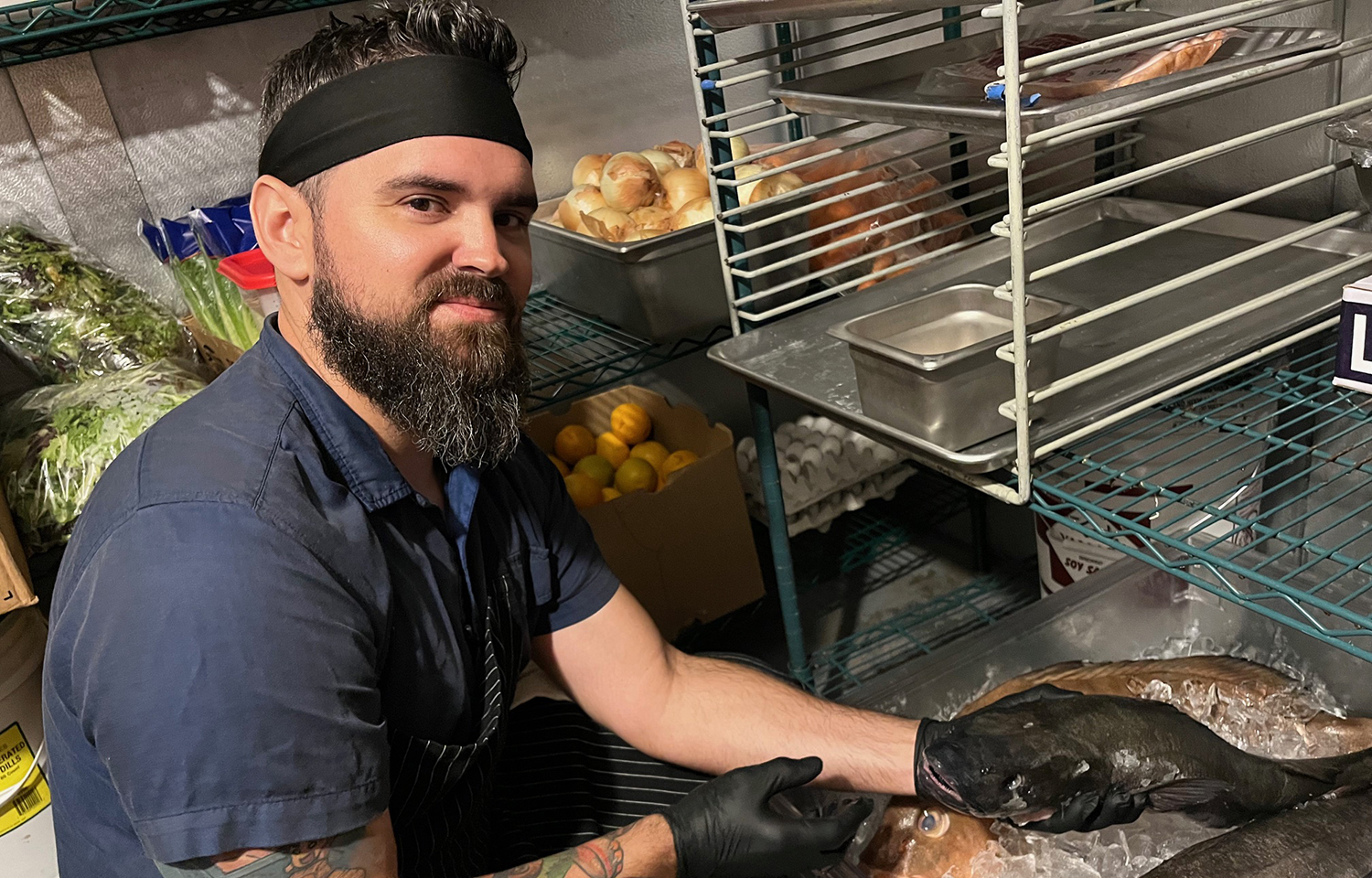
Mike Evans took inspiration from several sources when crafting the menu at The Bait & Hook, a seafood-focused restaurant he recently opened in Sanford, Florida, U.S.A.
One source of inspiration was fellow chef Josh Nilan, who wrote “The Whole Fish Cookbook” in 2019, which focuses on taking a “nose-to-tail” approach to cooking seafood.
“Nilan is an inspiration for a lot of things when it comes to the use of our fish and seafood and should be for lots of chefs,” Evans told SeafoodSource. “I really like that he uses every single part of the fish that is usable and comes up with some very cool ideas with them.”
Using Nilan as an influence, Evans’ new eatery utilizes nearly 90 percent of the fish it sources in its dishes, compared to a typical restaurant, which may use just 40 percent, he said.
Chefs at The Bait & Hook use fish trimmings in smoked fish dip made from grouper, snapper, cobia, or myriad other fish depending on what is in season.
Other dishes at the new establishment include fish burgers, tuna tataki, crab cakes, a variety of sushi, Thai-inspired Grouper Cheeks when available, an umami dashi broth made from fish bones, and a Nashville Fish Sandwich, which is a playful take on the Nashville hot chicken sandwich.
“I want fish and shellfish to be there tomorrow for the next chef to use after me,” Evans said regarding the strategy he has taken with The Bait & Hook. “We have heard before that if the oceans die, we die, and I truly believe that,”
Among the sustainable seafood The Bait & Hook sources is cobia farmed by Open Blue Cobia in Stuart, Florida, which raises the fish in open water. The company “carefully chooses their sites so as to not displace other marine life and sets up these ‘No Take’ zones to further protect these ecosystems,” Evans said.
The restaurant also sources kingfish from the Kingfish Company, an Aquaculture Stewardship Council-certified, recirculating aquaculture system (RAS) farming firm in The Netherlands.
To ensure he makes the most sustainable choices possible, Evans relies on Monterey Bay Aquarium’s website and app, which he says is updated often.
“It’s helping me to make my sushi menu more sustainable. Utilizing species that guests may not be used to seeing can be challenging to do since people are so used to certain types of fish, but it will be necessary to push for sustainable sushi in the future seeing how its popularity will only continue to grow,” Evans said.
In addition to sourcing sustainable farmed fish, catch methods are paramount in Evans’ decision-making.
“An example would be getting tuna that has been pole-and-line or handline caught versus being caught in big nets that take everything in their paths,” Evans said. "Those big dragnet methods are ultra-destructive to everything in the ocean and not just the fish they are targeting.”
Sustainability and minimal waste have been top priorities for Evans even before launching The Bait & Hook. He said he takes the same approach at The Yugiri Ramen Project, another one of his restaurants located in the same food hall, Henry’s Depot, that houses The Bait & Hook.
Evans’ philosophy aligns with the larger 100% Fish movement, which champions the full utilization of fisheries and aquaculture products. Launched by the Iceland Ocean Cluster (IOC), the movement calls for the full utilization of raw materials such as heads, skins, bones, guts, cut-offs, and more.
Last year, IOC CEO Alexandra Leeper told SeafoodSource that the movement was picking up steam across the globe.
“I've been with the cluster now for three and a half years, and even within that time frame, there's been a lot of long-term development and success stories to talk about," Leeper said. "We’ve really been focusing on international engagement and visibility, and now we're getting that kind of tidal momentum. There’s a big focus with many stakeholders saying, ‘We can't afford to be wasting anything.’ This conversation has become a lot more global. There's a lot of outreach happening, and a lot of people questioning if this is something they can do and asking where best to start.”
Late last year, Scottish seafood stakeholders announced that they were beginning to focus on developing a secondary yield strategy for the nation’s seafood byproducts and an innovation cluster similar to Iceland’s, and similar initiatives have also gained momentum in the Great Lakes regions of the U.S. and Canada, as well as several Pacific Island nations.
