






Scotland is making a concerted push to better utilize its fisheries and aquaculture byproducts.
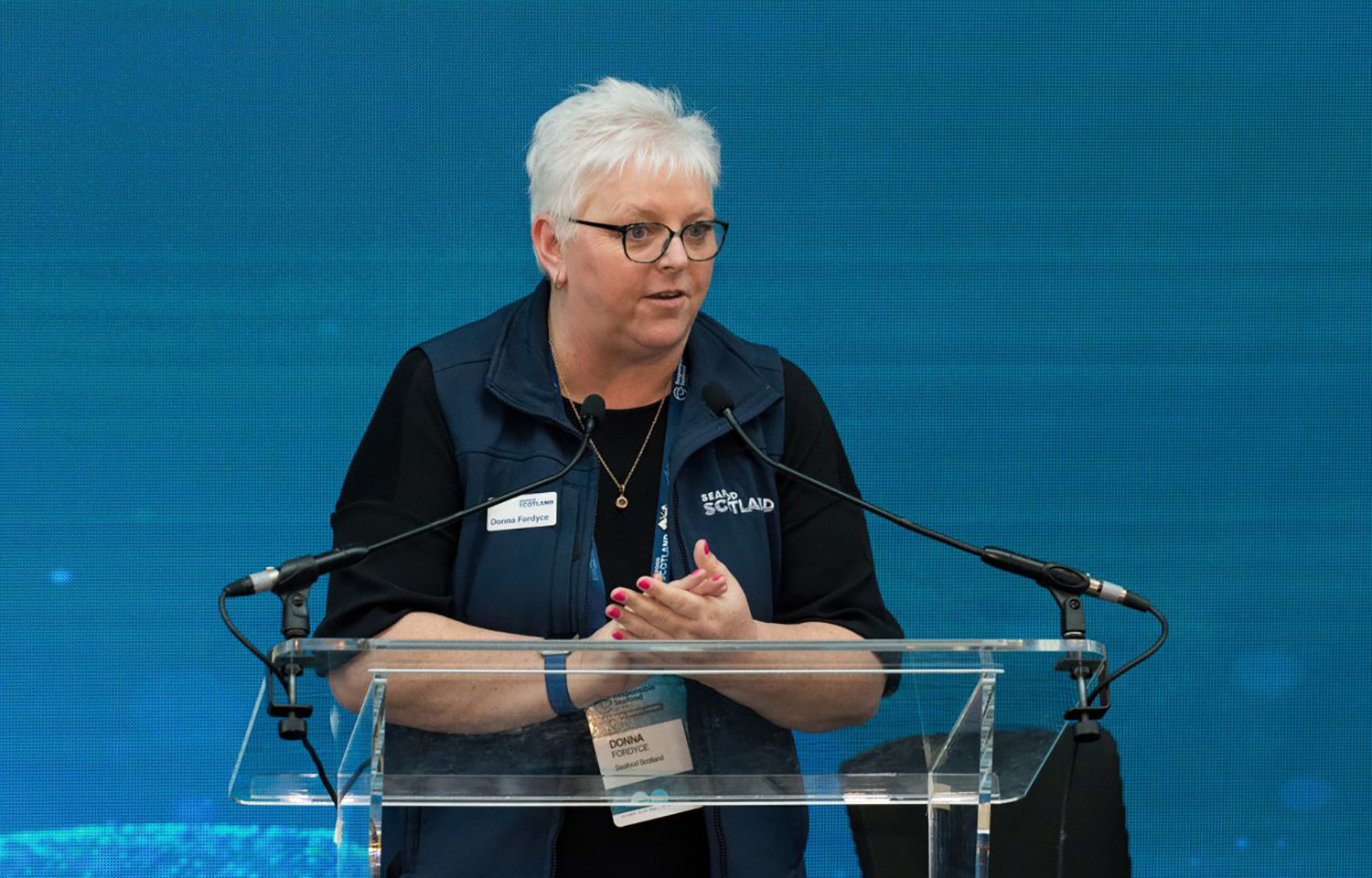
To accomplish this goal, Scottish seafood stakeholders have focused on developing a secondary yield strategy for its byproducts and an innovation cluster similar to Iceland’s, Seafood Scotland CEO Donna Fordyce said at the Responsible Seafood Summit recently held in St. Andrews, Scotland.
During a presentation at the summit, she highlighted a mapping study conducted in November 2023 that confirmed Scotland has several companies generating a large, diverse volume of byproducts. A subsequent workshop comprising industry, academia, and research representatives soon began to gauge the appetite within the Scottish seafood industry for developing more value within their waste streams.
Along with insights and assistance provided by Iceland Ocean Cluster CEO Alexandra Leeper, the project identified a number of key considerations.
Among these, there’s a lack of communication in Scotland between industry and potential innovators in the space; there’s an industry perception that there’s little to no waste generated by the country’s seafood sectors; there’s little clear data currently available on byproduct best practices; and there’s little understanding on the market potential for new products made through byproducts.
These findings, according to Fordyce, emphasized the need to look at other countries that are better using their byproducts and find strategies that fit Scotland and its 65 commercially fished and farmed species.
“We need a Scotland-specific solution, and it needs to be a long-term project. This isn’t going to happen overnight. It's really going to take time and effort to build this,” she said.
Recommendations generated from this insight have included forming a Scotland Byproducts Strategy Steering Group; determining byproduct capabilities and academic institutions that are able to convert byproducts into bioproducts; better understanding the volume of processed fish and shellfish and the volume and type of byproducts being produced; setting up a digital marketplace for fish and seafood byproducts; and more.
Communication with and visits to the Reykjavik-headquartered Iceland Ocean Cluster, as well as some of its affiliated companies, have also provided Seafood Scotland with further insights and inspiration, with a number of these businesses stating they’d be interested in collaborating with Scottish ventures, Fordyce told the conference.
“Of course, one size doesn't fit all; it's not a case of plug and play. It really is about what the problem is you’re trying to solve, and then you build a cluster around that. But, this is a movement. It's happening all around the world,” she said.
Leeper explained her organization’s work has extended to a growing number of locations, but that its main focus remains on creating sustainable blue value wherever its work is conducted.
“We do this through research and innovation projects. We do this through business and science consultancy,” Leeper said at the summit. “We invest in good ideas that we believe in, and more than anything else, our focus is on bringing people together from different sectors and walks of life to make good ideas.”
The Iceland cluster’s flagship project is 100% Fish, which entails wasting no seafood products that a local industry captures or farms, creating more value for these operations in the process, Leeper said.
Atlantic cod epitomizes the 100% Fish ethos, Leeper said, with its transformation from being a fish previously worth around USD 12 (EUR 11.06) based on its fillet value to having a potential value of USD 4,750 (EUR 4,378) when considering secondary yields – heads, skins, guts, etc. – utilized across a broad range of value chains and sectors.
These secondary-yield products include feed for aquaculture and land animals; food and snacks for human consumption; nutraceuticals with powders made from collagen that go into smoothies, cosmetics, skin care, and more; textiles such as fish skin leathers; and also biomedical applications such as skin grafts.
Not every fish is as conducive to the 100% Fish mission as Atlantic cod, but the principle – no matter the species – is the same, bringing people together to explore opportunities and reimagine the way raw materials are used and how to derive value, Leeper said.
“This really wasn’t a journey that happened overnight. It's one that's taken a long period of time, requiring a lot of collaboration and transformation in the Icelandic seafood sector,” she said.
Outside of Iceland and Scotland, the cluster has been working in the U.S. and Canada with Great Lakes St. Lawrence Governors & Premiers (GSGP) to help reverse steadily declining Great Lakes whitefish catch. A similar project is also underway regarding Namibian hake, and the cluster is also looking at jumpstarting similar work with Alaska’s fisheries, Pacific tuna, and Greenland’s coldwater shrimp sector.
Companies like Lerøy Seafood Group have also established 100% Fish departments to better use their waste streams to derive value.
