



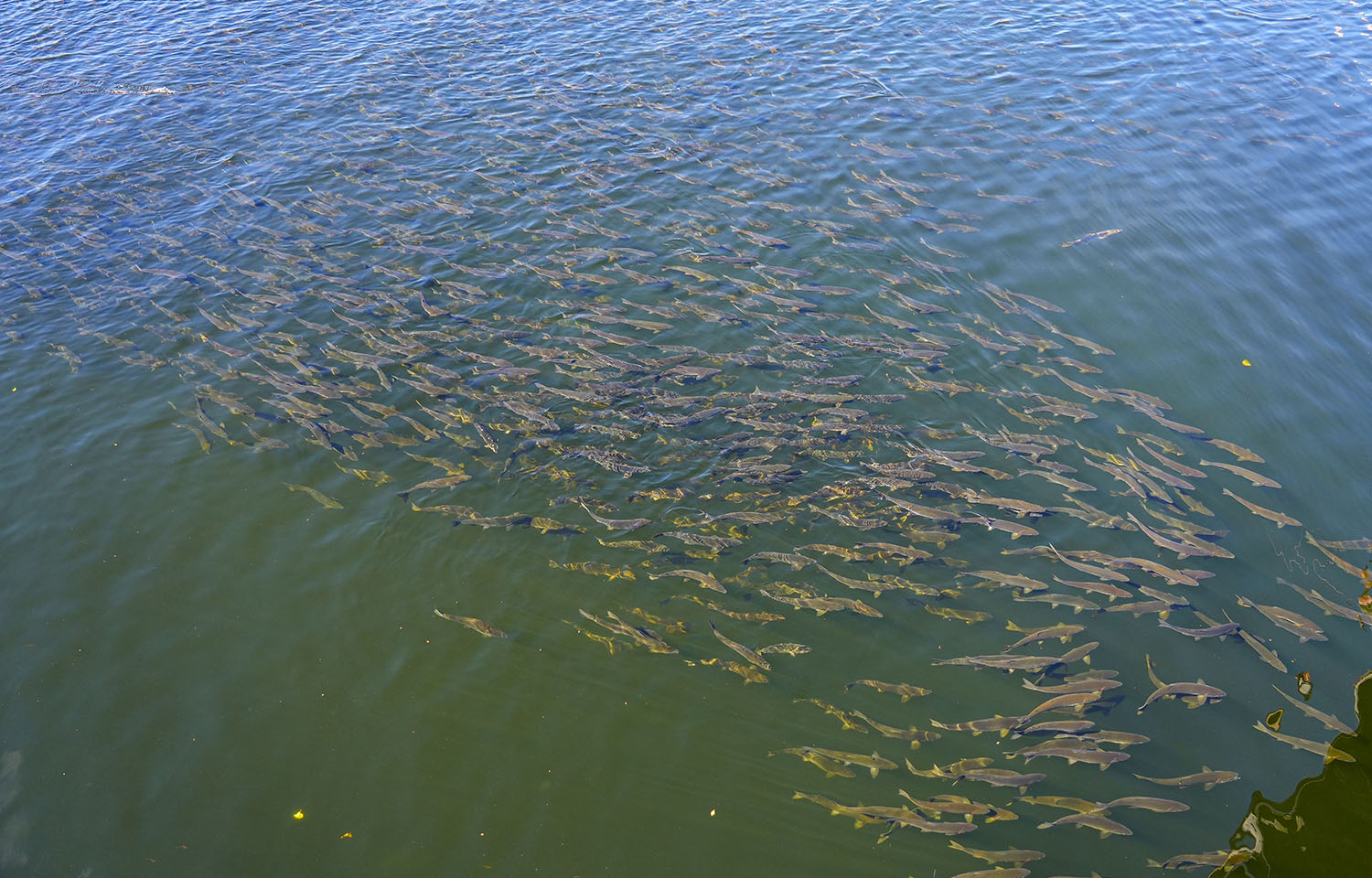
Alaska’s commercial fishing sector is up in arms again over ongoing efforts to have the state’s Chinook salmon listed under the Endangered Species Act (ESA), a determination that could have massive impacts for the state’s fisheries.
Last year, Wild Fish Conservancy, a conservation group based out of Duvall, Washington, U.S.A., petitioned NOAA to list Alaskan Chinook salmon under the ESA, arguing that the once-abundant species had suffered chronic declines. An initial review by the agency found that ESA protections may be warranted; however, the government has yet to complete its review, completely missing its 12-month deadline for issuing a determination.
In February, Wild Fish Conservancy warned NOAA that it planned to sue over the missed deadline, and on 8 May, the conservation group followed through on that promise and filed suit.
“It should not take a lawsuit to make the federal government uphold its legal responsibility, but with the crisis facing Alaskan Chinook, we are out of time and options,” Wild Fish Conservancy Executive Director Emma Helverson said in a statement. “The Endangered Species Act sets clear deadlines for a reason – to evaluate the risk of extinction and trigger action while recovery is still possible. By ignoring those deadlines, NOAA isn’t just breaking the law, it’s perpetuating the collapse of Alaskan Chinook and threatening the ecosystems and communities that depend on them.”
This isn’t Wild Fish Conservancy’s first effort targeting Alaskan salmon fishing. In 2019, the group sued NOAA, arguing that regulators had not properly considered how the commercial salmon harvest impacted endangered orcas. The group achieved a partial victory in that case, forcing NOAA to rewrite a biological opinion and nearly closed down the commercial fishery. Ultimately, an appeals court allowed the fishery to continue while NOAA updated its documentation.
Like previous attempts to limit the state’s salmon fishing, the petition has sparked backlash from state fishing groups.
According to the Alaska Trollers Association, the petition and lawsuit is a direct threat to the state’s trolling community.
“Southeast Alaska trollers remain one of the strongest advocates for the health and proper management of Alaska Chinook because of how they support our way of life,” Alaska Trollers Association Executive Director Amy Daugherty said in a statement. “Just as we did when WFC attempted to shut down the Southeast Alaska troll fishery in litigation that spanned 2020 to 2024, we will take necessary legal action to defend ourselves from WFC’s agenda.”
Separately, the Alaska Longline Fishermen’s Association (ALFA) and the Alaska Marine Conservation Council expressed “disgust” with the lawsuit and the ongoing petition.
“The National Marine Fisheries Service is conducting a thorough and science-based status review of Alaska’s salmon stocks in response to the ESA petition filed by this litigious group,” ALFA Executive Director Linda Behnken said in a statement. “Since WFC does not work in Alaska, it may not be aware that Alaska is exceptionally large with over 19,000 rivers or streams that support salmon. An accurate ESA status review takes time – especially when NMFS is dealing with budget cuts and staff reductions imposed by the current administration. Filing yet another lawsuit will only divert NMFS staff from working on the status review.”
While acknowledging the challenges Alaska’s Chinook salmon populations face, Alaska Marine Conservation Council Executive Director Michelle Stratton called the petition misguided.
“Protecting Alaska’s Chinook salmon is essential, but it requires science-driven solutions and meaningful conservation efforts, not misinformed lawsuits. The Wild Fish Conservancy’s petition to list Gulf of Alaska Chinook as endangered is riddled with inaccuracies and insufficient research, failing to capture the full scope of salmon management in Alaska and the specific, hyperlocal needs of these salmon populations,” Stratton said. “The state already has systems in place to support Chinook salmon recovery, and what’s truly needed is increased funding for a robust rehabilitation program that prioritizes habitat restoration, scientific monitoring, and sustainable fisheries practices tailored to individual runs. Rather than diverting resources to litigation, I encourage the Wild Fish Conservancy to direct its funding toward genuine, on-the-ground conservation and rehabilitation efforts that create a measurable positive impact.”
Despite the backlash, Wild Fish Conservancy maintains that Alaska Chinook salmon are not well-managed and need stronger protections than are currently in place.
“Government officials, seafood certifiers, and the fishing industry continue to assure the public that Alaska’s Chinook are well-managed, but the data tells a different story. This year, Chinook fisheries across the Gulf of Alaska are closed on an emergency basis, yet fisheries managers continue to stubbornly defend their position that the fish are not at risk of extinction.” Conrad Gowell, a biologist with Wild Fish Conservancy and co-author of the petition, said in a statement. “The longer the federal government waits to release their findings and take appropriate action, the more severe the social, economic, and environmental consequences will be.”
