



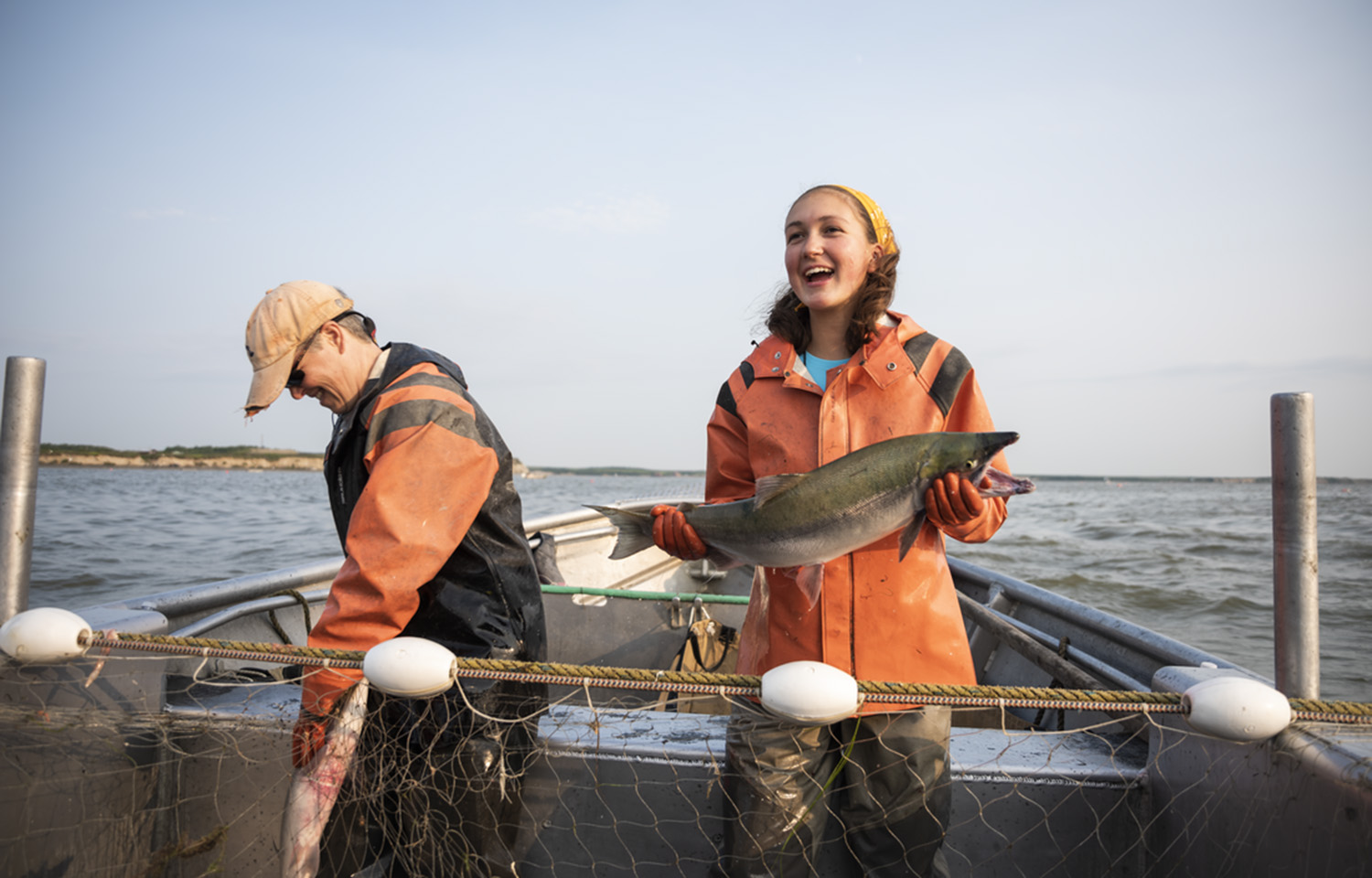
The salmon fishery in the U.S. state of Alaska has received recertification to the Marine Stewardship Council (MSC) Fisheries Standard after an independent adjudicator rejected objections from conservation groups.
MSC recently announced the Alaska salmon fishery’s fifth certification, marking 25 years the fishery has been engaged with the certification standard.
The Alaska Fisheries Development Foundation (AFDF) took on MSC client duties for the fishery in 2010 after the board of directors of the group voted in favor of serving as the client for the certification process.
The latest certification includes Pacific salmon, coho silver salmon, Chinook salmon, sockeye salmon, pink salmon, and chum salmon. The fishery is also certified to seven different gear types across 14 geographic areas, the MSC said in a release.
"The Alaska salmon fishery has been a true leader in the sustainable seafood movement with 25 years of engagement with the MSC,” MSC U.S. Program Director Nicole Condon said. “This milestone is a testament not only to their leadership but also to the tireless efforts of everyone involved in the fishery to protect our ocean and fishery resources.”
AFDF CEO Kristy Clement called the fifth straight certification of Alaska’s salmon fishery a testament to the hard work of the industry and its commitment to sustainability and stewardship.
“For a quarter century, the Alaska salmon fishery has exemplified the MSC’s rigorous standard for sustainable fishing, rooted in practices that trace back to Alaska’s Indigenous traditions, where sustainability and stewardship are a way of life,” Clement said. “This milestone reflects the dedication of our fishers, processors, and management partners who continue to uphold these essential practices, reaffirming Alaska’s commitment to responsible salmon fishing.”
The successful certification process comes as Alaska’s salmon industry has struggled amid a down year. Fishermen in Bristol Bay – home to the world’s largest sockeye salmon fishery – were faced with a smaller-than-expected salmon run in 2024 – one year after low ex-vessel prices placed a number of companies in dire straits.
The smaller runs and lower prices also came as fishermen faced increased costs. A report by NOAA economist Stephen Kasperski found fishermen in Alaska suffered a 50 percent decline in profitability between 2021 and 2023 as a result of decreasing prices and increased costs.
The companies fishermen sell their catch to also faced issues in 2024.
In April, Wells Fargo Bank filed a legal request to move Peter Pan Seafoods into receivership, which kicked off the firm's bankruptcy process and auction of its assets. The auction ended with Rodger May, who acquired 50 percent of Peter Pan Seafoods in 2021, agreeing to pay more than USD 37.32 million (EUR 35.3 million) for the business.
May later sold two of the facilities to Silver Bay Seafoods, which competed with May to purchase assets from Peter Pan.
Peter Pan isn’t the only company that put assets up for sale. Trident Seafoods announced in December 2023 it would be selling off some of its processing plants. It subsequently sold processing facilities in Petersburg, Ketchikan, False Pass, and most recently Kodiak Alaska.
As fishermen and companies work to recover from multiple difficult years, the MSC certification of the Alaska salmon fishery has faced pressure from environmental groups. Two different groups objected to the certification, claiming the fishery does not adhere best practices.
“Both the MSC and the Alaska salmon fishery had an opportunity here to demonstrate that they are actually committed to sustainable fishing as they both claim but, instead, proved the opposite – that their labels are meaningless marketing scams,” SkeenaWild Executive Director Greg Knox said in a statement. “The MSC’s failure to address these overfishing problems in Alaska seriously undermines its credibility.”
SkeenaWild Fisheries Biologist Kaitlin Yehle claimed the Alaska salmon fishery does not adhere to best practices with respect to handling and release of bycatch species or basic catch monitoring and data collection and that it is “intercepting millions of south-migrating salmon from populations of conservation concern yet is marketed to consumers as ‘sustainable.’”
The MSC said official objections from groups like SkeenaWild are a key part of its certification process.
“The MSC objections procedure is an important part of ensuring the independence and rigor of the MSC fisheries assessment process,” MSC said.
As the certification process was actively underway, Vancouver, British Columbia, Canada-based nonprofit Ocean Wise removed its recommendation for Alaska salmon, similarly claiming the fishery was intercepting salmon from other stocks. MSC and Alaska fishing industry representatives pushed back against Ocean Wise’s claims.
“The MSC stands by the rigor and thoroughness of its assessment process and the outcomes of third-party certification decisions,” MSC said.
