






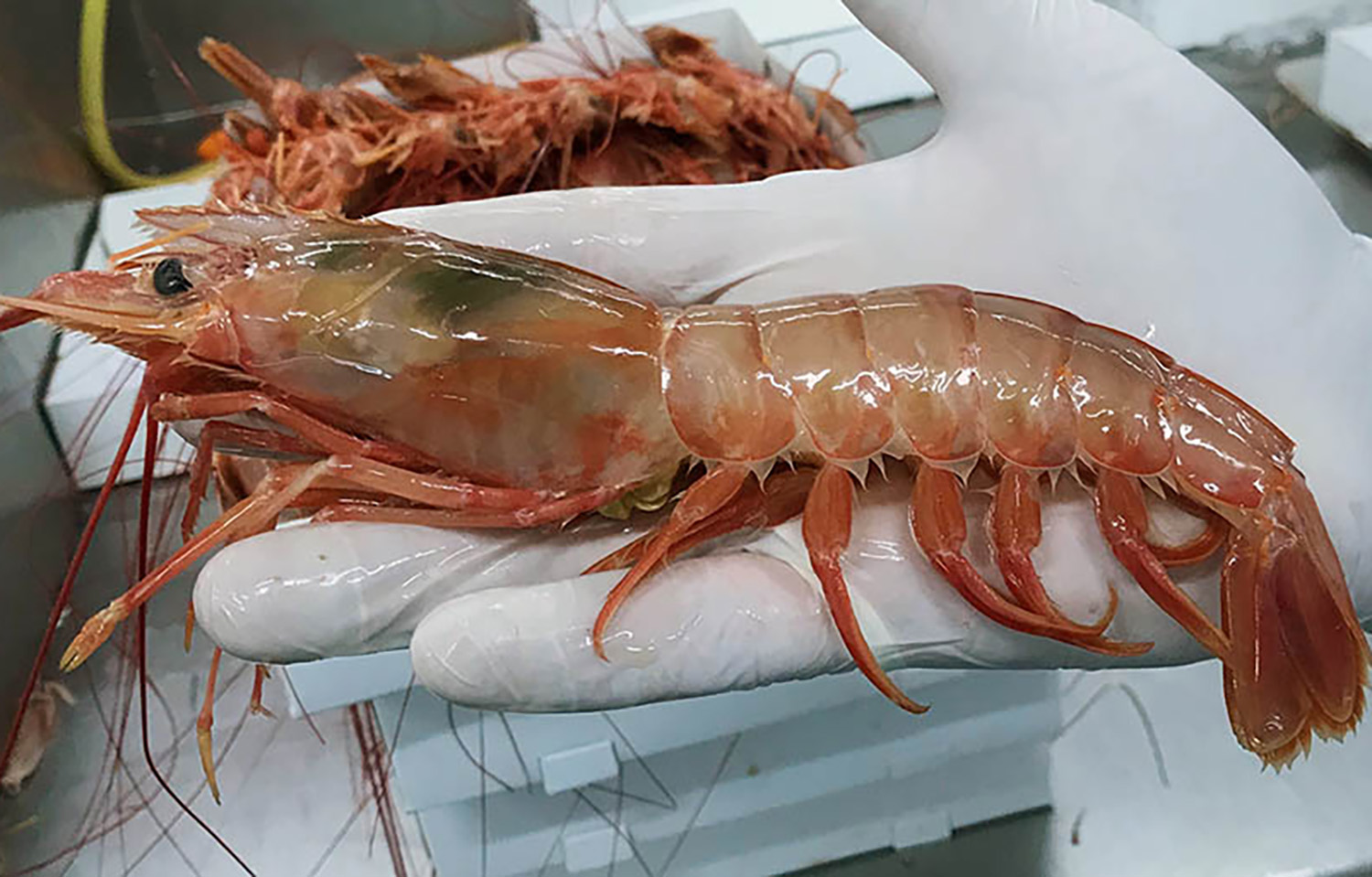
Argentina’s national-water red shrimp fishery has secured Marine Stewardship Council (MSC) certification.
The recognition comes after 10 years of work on a fishery improvement project (FIP) to obtain “the most prestigious certification in the world,” CeDePesca – a Buenos Aires, Argentina-headquartered NGO that aims to help fisheries in Latin America work toward implementing more sustainable practices – reported in a release.
“MSC certification marks both an achievement and a starting point,” CeDePesca, along with 33 companies that were involved with the FIP, said. “While identifying remaining challenges, the sector reaffirms its commitment to continue working collaboratively to strengthen the sustainability of the fishery, ensure its long-term continuity, and enhance its socioeconomic impact, consolidating Argentine shrimp as a competitive and responsible product in international markets.”
The companies also credited the work of institutions including the Federal Fisheries Council, the Undersecretariat of Fisheries, and the National Institute for Fisheries Research (INIDEP) for aiding in achieving the certification.
Wild-caught Argentine red shrimp (Pleoticus muelleri) is highly valued internationally thanks to its large size and characteristic flavors, differing substantially from the whiteleg shrimp (Litopenaeus vannamei) that is farmed in different South American countries such as Ecuador. It is considered Argentina’s most important fishery, bringing in about USD 1 billion (EUR 843 million) annually. In 2024 alone, the fleet landed more than 139,000 metric tons (MT) of shrimp.
The latest MSC certification follows similar certification of the Chubut onshore Argentine red shrimp fishery last year, similarly achieved after a full decade of dedicated improvements to the fishery. Locking down that credential made it the first coastal shrimp fishery in Argentina to obtain the certification.
The fishery formally entered the MSC assessment process in 2024 but had been making progress for years. The onshore fishery, based out of the port of Chubut in Argentina, developed a fishery improvement project (FIP) in 2014, and the offshore fishery followed suit in 2016.
