






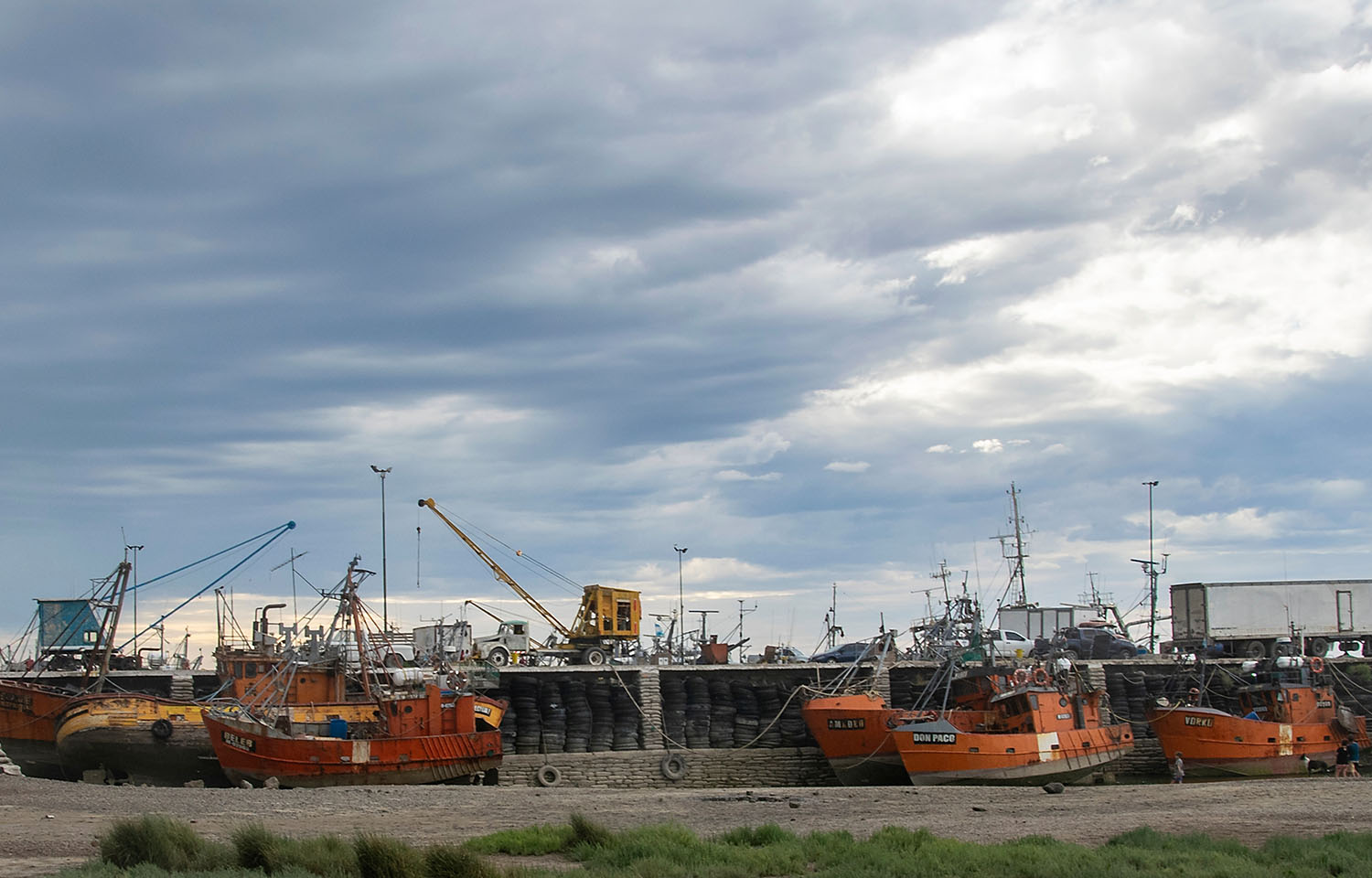
The Chubut onshore Argentine red shrimp fishery recently achieved certification to the Marine Stewardship Council (MSC) standard, even as the overall fishery is facing a potential economic crisis causing boats to stay at the dock.
MSC announced the fishery achieved certification in late March after a full decade of dedicated improvements to the fishery. The achievement makes it the first coastal shrimp fishery in Argentina to obtain the certification.
The fishery formally entered the MSC assessment process in 2024 but had been making progress for years. The onshore fishery, based out of the port of Chubut in Argentina, developed a fishery improvement project (FIP) in 2014, and the offshore fishery followed suit in 2016. The fishery was getting close by 2018 to completing the FIP goals and hoped to cross the finish line by 2019, but delays in rulemaking kept it from entering the full MSC process.
Now, roughly a year after entering the formal assessment, the onshore fishery is certified to the MSC standard.
"Obtaining MSC certification is the result of hard teamwork, ensuring the long-term sustainability of shrimp fishing in Chubut,” Federico Angeleri, who represented the client group and serves as the commercial director at Mar del Plata, Argentina-based Grupo Veraz, said. “We take great pride in contributing to the region’s economic development while maintaining the highest environmental standards. This certification opens new doors in the market, allowing us to offer a certified, high-quality shrimp product.”
According to MSC, the offshore portion – which operates in federal waters and catches roughly 140,000 metric tons (MT) of product each year – is still under assessment and is working to finalize MSC certification by the end of 2025.
“This certification is a significant step forward for sustainable fishing in Argentina,” MSC Latin America Program Director Cristian Vallejos said. “It demonstrates the dedication of the fishery to environmental responsibility and highlights the positive impact that collaboration and improvement efforts can have on the industry. We hope this milestone inspires other fisheries in the region to continue their improvements.”
Despite the achievement, the fishery is facing an economic downturn that may end up changing the industry.
Many of the fishery’s vessels have been sitting idle due to escalating costs and lower prices, per Faro de Vigo.
According to the publication, 1 liter of diesel fuel had increased in price by 500 percent over the last 12 months, while wages are tied to the consumer price index. As costs increased, the price of a MT of frozen shrimp dropped from an average of USD 6,314 (EUR 5,517) in 2022 to USD 5,616 (EUR 4,907) in 2024 – which sources told Faro de Vigo is below their breakeven point of USD 5,800 (EUR 5,067).
The increased costs come as Argentina still faces high inflation, with the country’s central bank reporting year-over-year inflation of 66.9 percent.
Shipowners told the paper they were losing as much as USD 10,000 (EUR 8,738) a day. Faro de Vigo reported the trawling fleet is pushing to compensate workers less; however, any decreases in salary must be negotiated with the United Maritime Workers Union, a machine workers union, and a captains’ union separately.
