






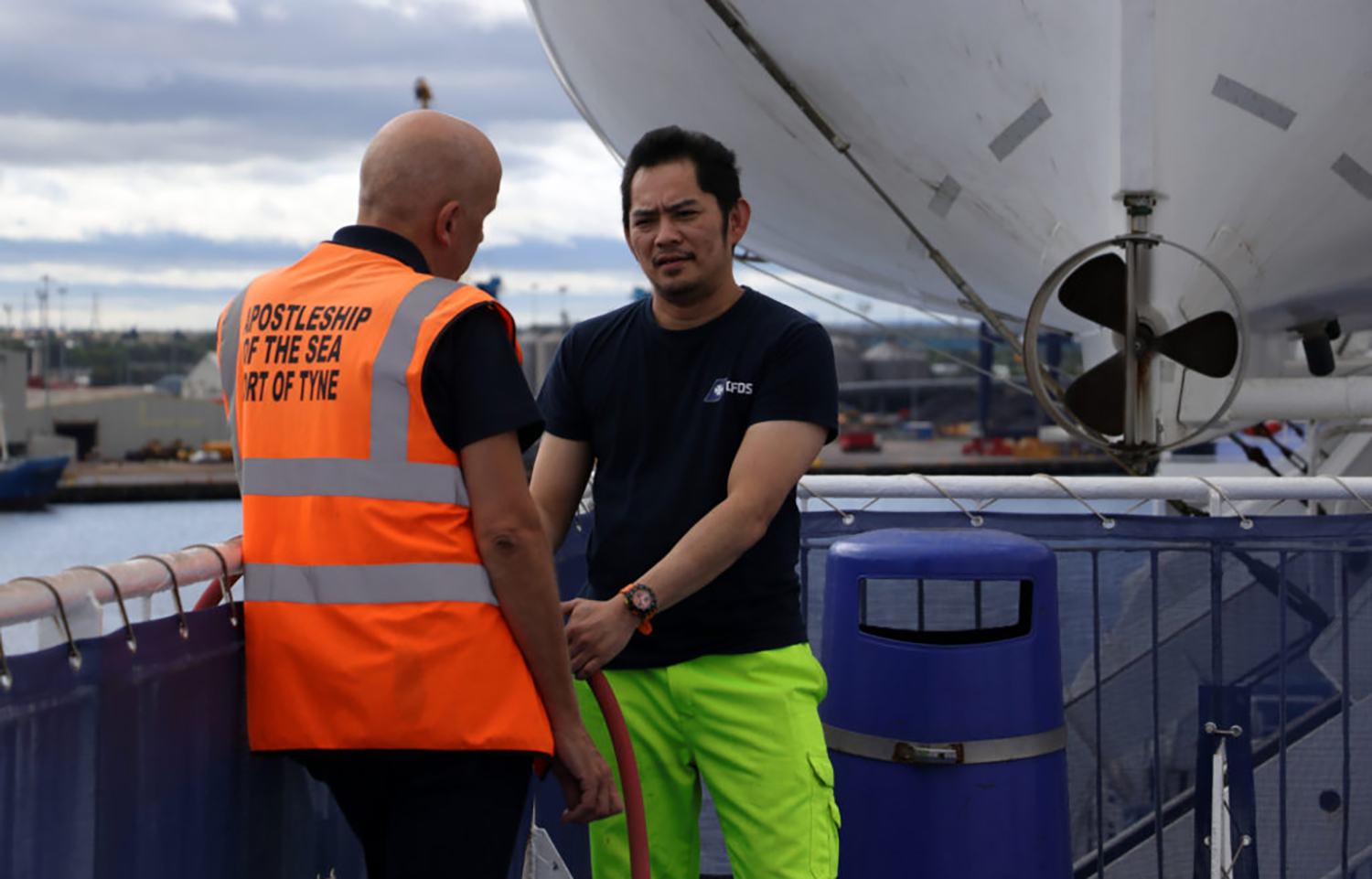
Catholic charity Stella Maris, which provides chaplain services to fishermen and other seafarers around the world, wants to play a leading role in crafting an internationally recognized seafood certification focused on improving labor standards.
Founded in Scotland in 1920, Stella Maris now has a network of chaplains in over 60 countries who offer pastoral guidance to workers at sea. The group has also actively promoted workers’ labor rights in areas such as Southeast Asia, the U.K., and more.
“While 10 percent of the cases [we handle] include fishermen, these cases account for 30 percent of our most complex cases,” Stella Maris CEO Tim Hill told SeafoodSource. “Seafarers tend to have more robust contracts. Fishers tend to have slightly less formal contracts. There are also frequent cases of labor bondage.”
In order to effect change, Hill said he believes stakeholders need to harness consumer power, and with popular schemes like the Marine Stewardship Council (MSC) stepping away from calls to emphasize labor standards in their certification processes, he wants Stella Maris to find a partner that can jointly develop an effective labor credential, helping to fill a current gap in the industry.
“We want to ally with a [seafood sustainability] group. As a charity, we bring a certain weight. People listen to us,” he said.
In the development process, Hill said the right questions have to be asked.
“How do you define standards, how do you measure them, and how do you demonstrate improvement?” he said.
Additionally, the eventual certification has to be grounded in reality, Hill added.
“You can’t expect, for example, a 30-year-old vessel to satisfy all the criteria of the International Labor Organization’s C-188 Work in Fishing Convention,” he said.
Hill said a multi-tiered certification that is affordable and allows vessels to progress upward would present a middle ground between a certification that actually elicits change but is also realistic for the industry to achieve.
“We can’t afford to give [vessels] a kicking, or they’ll go out of business or go underground,” he said.
In the meantime, Stella Maris is going to continue to bring attention to labor issues, Hill said.
One way the group has done that recently is by hosting modern slavery awareness workshops in ports around the U.K.
“We wanted to bring people across ecosystems to raise issues and to bring together other organizations involved in this issue,” he said, explaining that the people brought together included representatives from social services, police, the International Transport Federation, and the Maritime and Coast Guard Agency.
The workshops have helped establish procedures to follow when fishers are rescued from an abusive trawler owner, Hill said.
This issue was recently highlighted in a three-year joint project between BBC Scotland and BBC Radio 4 that culminated in the release of the film “Slavery at Sea” – which alleged a number of migrant workers who traveled to the U.K. in search of work and a better life were exploited by family-run TN Trawlers and its associated companies.
“A successful prosecution is necessary to deter appalling and illegal mistreatment of fishers. This is an invisible crime, taking place out of sight at sea,” Hill said at the time of the film’s release. “Authorities and welfare organizations must get better at recognizing what modern day slavery is, reporting it, and supporting swift criminal prosecutions against those few bad operators.”
Similarly, in Thailand, Stella Maris has been working with the International Fund for Fishing Safety, training fishers and trawler owners on improving safety standards and formal inspections of vessels by Thai authorities, which are often ineffective.
Stella Maris has also campaigned for guaranteeing Wi-Fi at sea for fishers on Taiwanese vessels.
“It allows for communication but also for access to contracts and health and as some sort of grievance mechanism,” Hill said.
Hill stressed, however, that abuses like these comprise a very small part of the operations of global fishing companies and Stella Maris is supportive of fishing companies.
“If you can’t afford to pay a luxury wage but you want to make some positive changes to your vessel, we are behind you,” Hill said. “We want to be an honest, trusted, and reliable partner that cares for everyone. Of course, our focus is on the most vulnerable, but we also want to look after management.”
