






China’s military is increasing patrols around the disputed Scarborough Shoal after declaring it a new “nature reserve” as it continues to battle with the Philippines over fishing rights in the area.
Referred to as Bajo de Masinloc by the Philippines and Huangyan Dao by the China, Scarborough Shoal is claimed by both nations, leading to increasingly tense interactions between Chinese and Filipino vessels in the area. Filipino commercial fishers continue to operate in the disputed waters, while Chinese military vessels and aircraft have used aggressive maneuvers to deter those activities. Those risky maneuvers have led to several near misses as well as multiple collisions. In August, two Chinese vessels collided with each other while chasing a Philippine vessel, and in September, China accused a Filipino vessel of ramming one of its ships.
China furthered its territorial claims to the shoal on 11 September, when it designated a 3,524-hectare area that includes Scarborough Shoal as a nature reserve. While the move drew immediate condemnation from the Philippines and the United States government, China has moved forward with its plans.
Now, China is increasing its military presence around the shoal to further assert its claims.
According to China’s Ministry of National Defense, the Chinese People's Liberation Army Southern Theater Command has increased “combat readiness patrols” around the area, deploying both naval and air forces to “reinforce patrols and vigilance, further strengthen control and management of relevant areas, and effectively counter unlawful infringements and provocations.”
The crew of a Chinese Coast Guard vessel also held a flag raising ceremony just offshore in celebration of the new nature reserve.
Chinese and Filipino vessels have continued to clash in the South China Sea over the last month – the Philippine government said that Chinese Coast Guard vessels attacked Filipino fishing vessels with water cannons on 16 September during a resupply mission, injuring one crew member who required medical attention.
Philippine Coast Guard Spokesperson for the West Philippine Sea (WPS) Commodore Jay Tarriela has continued to voice support for Filipino fishers in the area.
“We believe that through the support of the Philippine Coast Guard, Bureau of Fisheries and Aquatic Resources, and the Department of Agriculture, we can encourage more Filipino fishermen to, once again, go out and fish in Bajo de Masinloc with the assurance that the Philippine government will be there to secure and make them safe,” Tarriela said in an 18 September statement.
The Philippines has launched a pilot program to provide fuel to the distant fishers operating around Scarborough Shoal and purchase their catches at sea so they don’t have to return to port as often.
Government officials in China argue that the Filipino vessels illegally entered Chinese territory, requiring the military to use force.
“The unlawful intrusion of Philippine vessels into China's territorial waters of Huangyan Dao seriously violated China's sovereignty, rights and interests, and severely undermined peace and stability in the South China Sea. The China Coast Guard took firm countermeasures to drive away the intruding ships, which were legitimate, lawful, professional and restrained,” Senior Colonel Zhang Xiaogang, spokesperson for China’s Ministry of National Defense, said in a 25 September press conference.
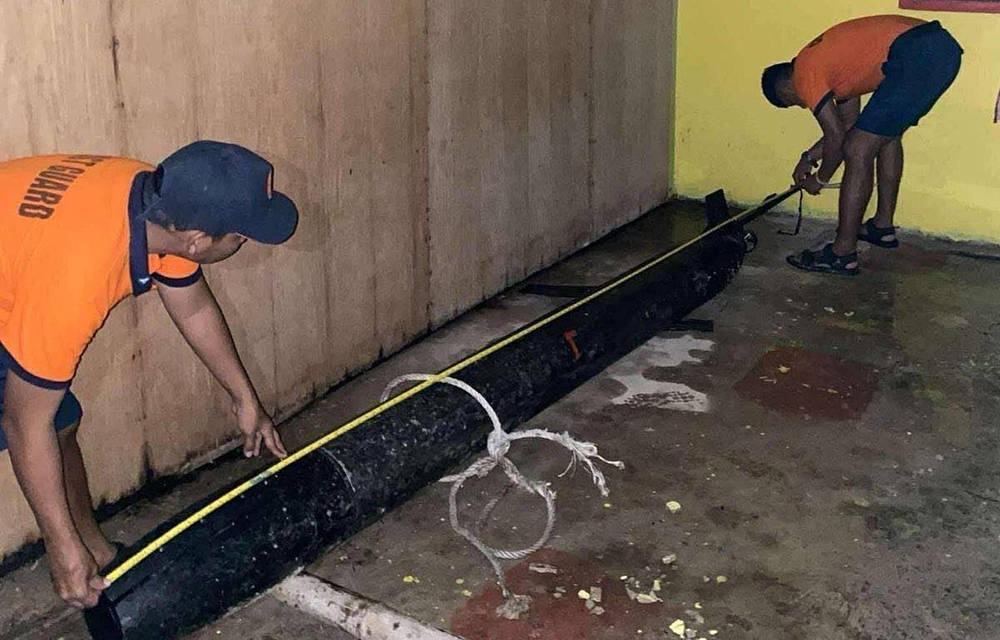
Meanwhile on 30 September, the Philippine government announced that local fishers had discovered a 12-foot long underwater drone. The government said the incident fits a pattern of Chinese-deployed underwater drones being used to conduct illegal maritime surveillance on the nation, although it came short of accusing the Chinese government of operating the drone.
“The Philippine Coast Guard remains vigilant in safeguarding our maritime domain and protecting the livelihoods of our fisherfolk,” PCG Commandant Admiral Ronnie Gil Gavan said in a release. “We commend the quick action of the local fishermen for reporting this find. This incident highlights the need for continued community awareness and a whole-of-nation approach to deter unauthorized activities in our waters.”
