






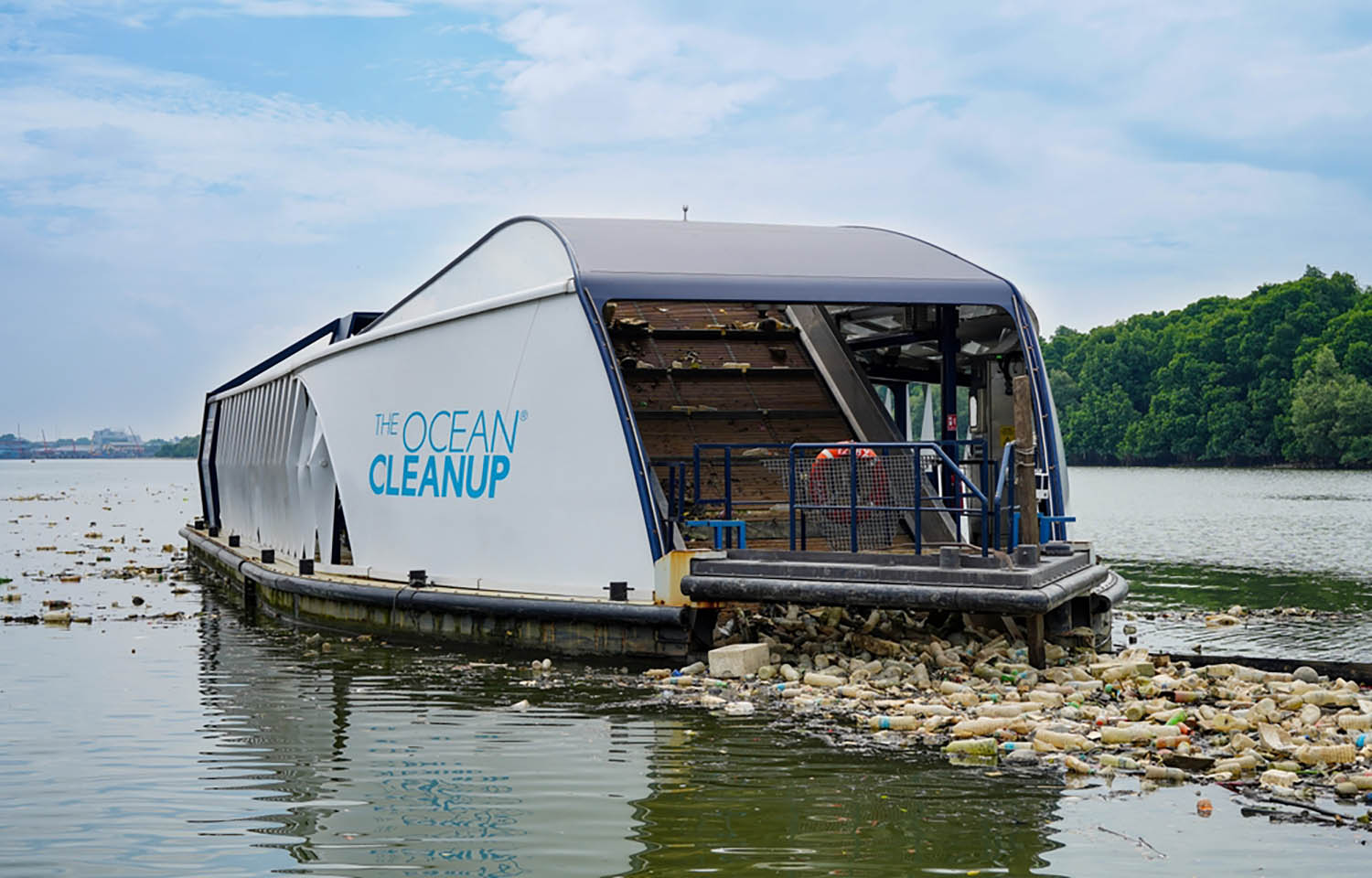
Back to Blue, a joint initiative between the media brand Economist Impact and Japanese nonprofit The Nippon Foundation, aims to ensure the world’s oceans are free from the impacts of marine pollution – not just plastic – by 2050 through a bold new roadmap.
After two years of consultation, the published roadmap, titled “A Global Ocean Free from the harmful Impacts of Pollution by 2050: Roadmap for Action,” provides a framework for global stakeholders to reference evidence on the impact and extent of marine pollution in order to address and eliminate it.
“All the scientists that we spoke to throughout this process said this is something they are extremely worried about, but we don't have a lot of data to drive action,” Back to Blue Initiative Head of Engagement Jessica Brown said. “The goal of the roadmap and the goal of Back to Blue is to bring together a holistic, global, data-driven understanding of ocean pollution and use that as a tool to drive action from decision-makers and policymakers in government, as well as in the private sector.”
Marine pollution can be visible, such as in the case of plastics, or invisible, such as in the case of nutrients including fertilizers and sewage, chemicals including PFAS contaminants, pharmaceuticals including antibiotics, heavy metals, radioactivity, oil, and one of the other 300,000 unknown synthetic chemicals in use today. These pollutants mostly originate from land-based sources.
Published on the heels of the recent Global Plastics Treaty, negotiations for which have recently hit an impasse, Back to Blue intends for the roadmap to tackle both visible and invisible forms of pollution that affect oceans and human health.
“Work is now underway to arrive at a plastic pollution treaty, but marine pollution involves more than plastics and microplastics, with chemical pollution being equally problematic for marine ecosystems and, ultimately, human health,” United Nations Secretary-General’s Special Envoy for the Ocean Peter Thomson said.
Back to Blue's primary objectives with the roadmap are to close the data gap in pollution statistics, develop solutions to address pollution’s impacts, engage stakeholders, and secure necessary funding.
Implementation, which Back to Blue is seeking through the help of a UN body, is expected to begin in 2025, with a comprehensive data map of ocean pollution projected to be completed by 2040.
“The purpose of having data about ocean pollution is to drive action. That's something we took clearly from the conversations we had: Don't try to make it perfect. Get as far as you need to get to drive action,” Brown said. “That's important for the roadmap, and we've been very clear not to recommend the establishment of a new database.”
The roadmap covers four key data gaps that the industry needs to address to achieve a more comprehensive map of ocean pollution.
One is the scale gap, where most existing data is hyperfocused on a single pollutant or specific area. Another is the FAIRness gap that ensures data used to form policies follow the principles of findability, accessibility, interoperability, and reuse of digital assets. Third is the geographical coverage gap, highlighting the need to include deep and open-ocean regions, as well as coastal waters of the global south, and the last is a long-term monitoring gap, which requires the provision of studies tracking the impacts of pollution over time rather than only point-in-time studies to address.
Tackling challenges specifically related to invisible pollution will be difficult – if not impossible – to ever fully address, Brown said.
“I'm not sure we ever can, but there's a lot that we can do to get to our ultimate impact goal,” Brown said. “We can get better at using data, uncover data that already exists, and identify where the main data gaps are to ultimately drive action to address the impact of ocean pollution.”
Though some challenges are demanding, the roadmap emphasizes early and active private sector involvement is crucial to combating marine pollution. This includes understanding the private sector's needs, identifying how and what data it uses, and ensuring it maintains participation at every stage of the process.
“Sometimes, it [relates to] regulation, and that's why this data is really important to policymakers so they are able to regulate in an evidence-based way,” Brown said. “But, do know that there is a lot that the private sector does independently of regulation as well. Working with the investment community will be critical. We need to work with the stakeholders who can influence the decisions that those companies that may be polluting in the ocean – whether inadvertently or not – make,” Brown said.
Once implementation is hopefully handed over to a UN body, Back to Blue recommends establishing a global task force supported by a secretariat; publishing a Global Ocean Pollution Assessment and Action Plan every five years; establishing four independent stakeholder groups for science, data, policy, and business and finance; and convening a network of independently operated and funded implementation partners across UN member nations.
