



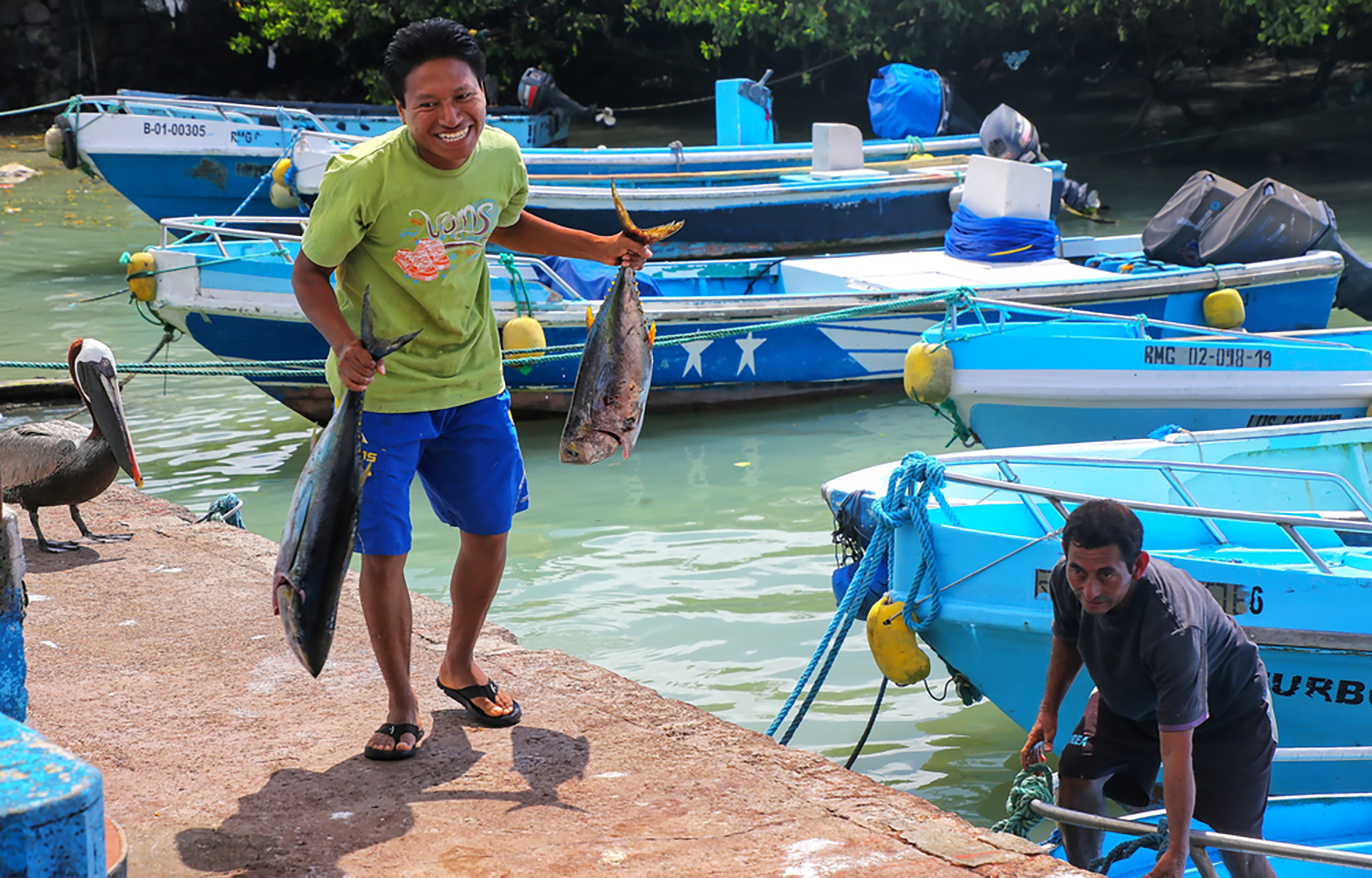
Ecuador President Daniel Noboa has established a temporary mechanism of economic compensation for the nation’s industrial fishing sector, looking to mitigate the impact of surging fuel prices caused by the Iran war.
The plan, which is especially geared toward tuna-fishing fleets, will have a limit of up to USD 10.5 million (EUR 9 million), and only properly registered vessels that meet legal and tax requirements are eligible for the compensation. According to the decree, companies must acquire the fuel at a regular price and then request reimbursement from the state.
Rafael Trujillo, executive director of the National Fishing Chamber (CNP) in Ecuador, said in a CNP blog post in April that the price of diesel surged 141 percent compared to the same month in 2025.
“This abrupt increase impacts operating costs, where the fuel component of the cost structure has risen from 33 percent to over 55 percent and redefines the very conditions under which fishing activity can remain viable,” he said.
The new funding comes after CNP representatives negotiated with the government for measures that will help the fishing sector alleviate the jump in operational costs caused by high fuel prices. CNP President Bruno Leone said that the newly established mechanism will mostly benefit smaller tuna-fishing vessels.
“From what we know unofficially, the funds will go mostly, if not all, to small ships. Ecuador has a fleet of 540 ships,” he told Radio Sucre. “We are going to see how the government is going to divide the funds for those ships. What we do know is that large tuna boats are not going to be given anything, which is good because we have to help the smallest ones at this time.”
The compensation is likely to cover operations for about two to two and a half months for eligible participants, Leone said.
“Hopefully by that time, the war in Iran will be resolved, and [oil] prices will return to normal. If not, we will sit down again with the authorities to perhaps renew that facility, that support, for two more months,” he said.
At the same time fuel prices have surged, Leone also said that owing to the “Super Niño” weather phenomenon, CNP expects an 11 to 12 percent drop in volume of tuna catch this year.
Nevertheless, improved prices are expected to result in similar total value compared to 2025.
Leone highlighted that these trends have played out as Ecuador’s exports of non-traditional products such as tuna are on the rise.
“Being a small country, it is a source of tremendous pride that Ecuador is the first in the world in banana exports, first in shrimp exports, and second in the world in tuna exports,” he said. “These are very valuable things that Ecuador must take care of, and that’s what we are doing here.”
