






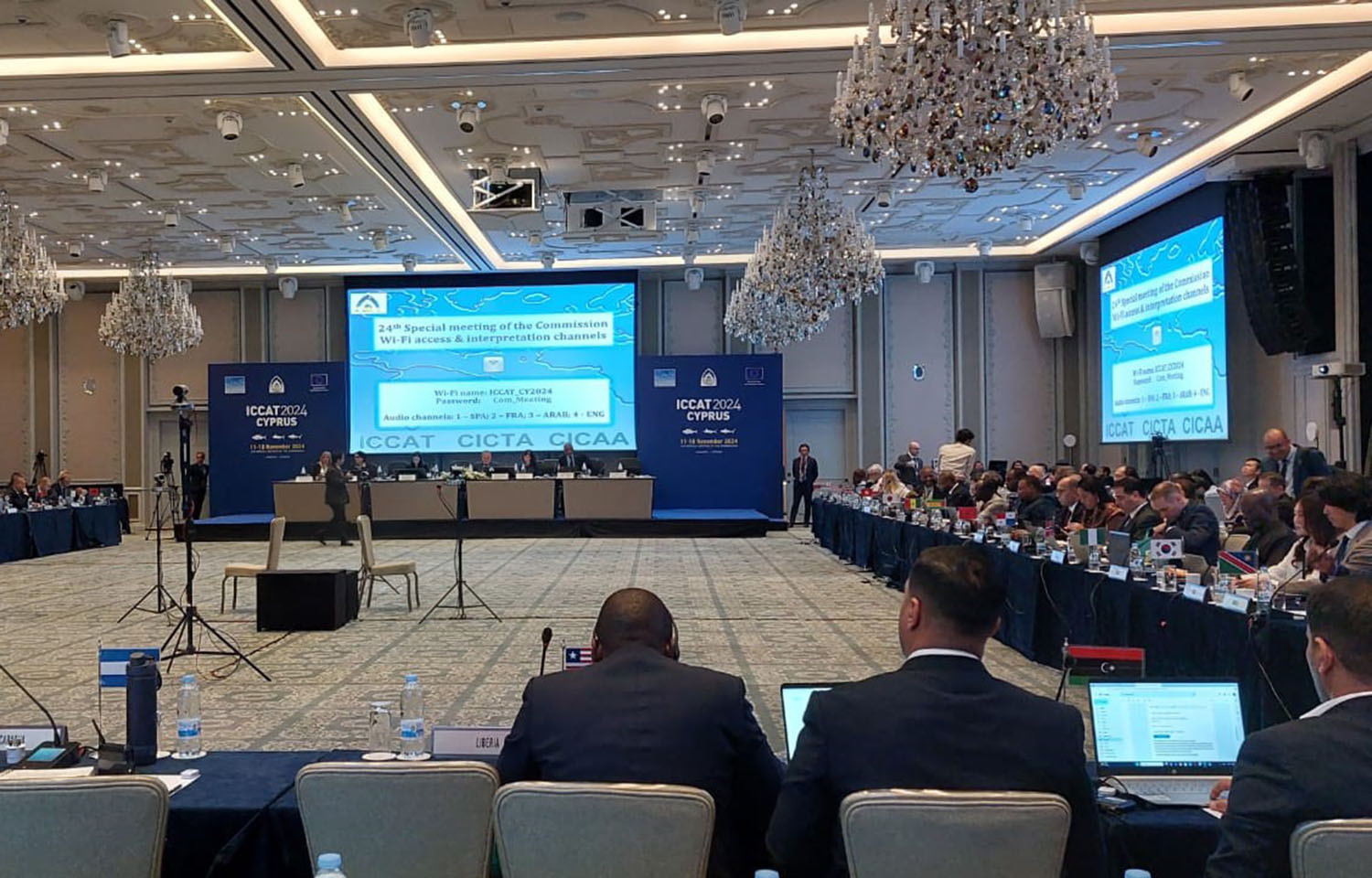
Fisheries trade body Europêche has welcomed the International Commission for the Conservation of Atlantic Tunas’ (ICCAT) recent decision to reduce a moratorium on fish aggregating devices (FADs) in the Atlantic Ocean.
ICCAT implemented a moratorium on FADs in 2019 that introduced closure periods for the use of the devices. FADs are frequently used in the Atlantic's bigeye tuna fishery and consist of floating objects that fishing vessels place in areas to attract fish.
The moratorium was in part in response to a report that the regional fishery management organization (RFMO) issued in 2018 that declared Atlantic bigeye tuna as overfished. The FAD requirements were part of its push to reduce fishing effort on the species and to start rebuilding its stock.
The devices have been a big topic in RFMOs, with NGOs pushing for stricter requirements on their use – advocating for requirements on marking schemes, ownership rules, and the use of biodegradable materials.
The rules ICCAT adopted in 2019 reduced the allowed number of FADs from 500 to 250 in 2020 and further to 300 in 2021. It also enacted a two-month moratorium on the devices which took effect in 2020 and later increased to three months in 2021.
Now, the RFMO has reduced its FAD moratorium from 72 days to 45 days after the E.U., countries on the Ivory Coast of Africa, and Central American countries pushed the commission to take action to avert economic impacts.
Europêche pointed out that throughout the moratorium and restrictions, little evidence accumulated to show that they had an impact on the bigeye tuna stock. ICCAT’s Standing Committee for Research and Statistics said it could not demonstrate its effectiveness in helping the bigeye tuna stock, but Europêche said it did have a big economic impact.
“The FAD moratorium has had serious socioeconomic consequences, particularly for African canneries, with many, especially in Ivory Coast and Cabo Verde, forced to shut down,” Europêche said. “This has resulted in the loss of thousands of jobs in Africa, most of which were held by women who supported their families.”
Europêche said that in addition to the canneries closing down, half of the European purse seine fleet operating in ICCAT’s regulated waters disappeared.
“Two of which, operating solely in the Atlantic with no alternatives, were unable to continue. These businesses, which faced unfair competition from Asian interests, were key suppliers of tuna to the European Union,” Europêche said.
European Tuna Group Director Anne-France Mattlet said relaxing the moratorium was the right move but took too long to implement.
"It is unfortunate that it took such severe socioeconomic impact to prompt a reduction in a moratorium whose effectiveness remains unproven,” Mattlet said. “While this decision comes too late for two European shipowners who have already been forced to cease operations, we hope it will provide some relief to the remaining European tropical tuna purse seine fleet.”
