



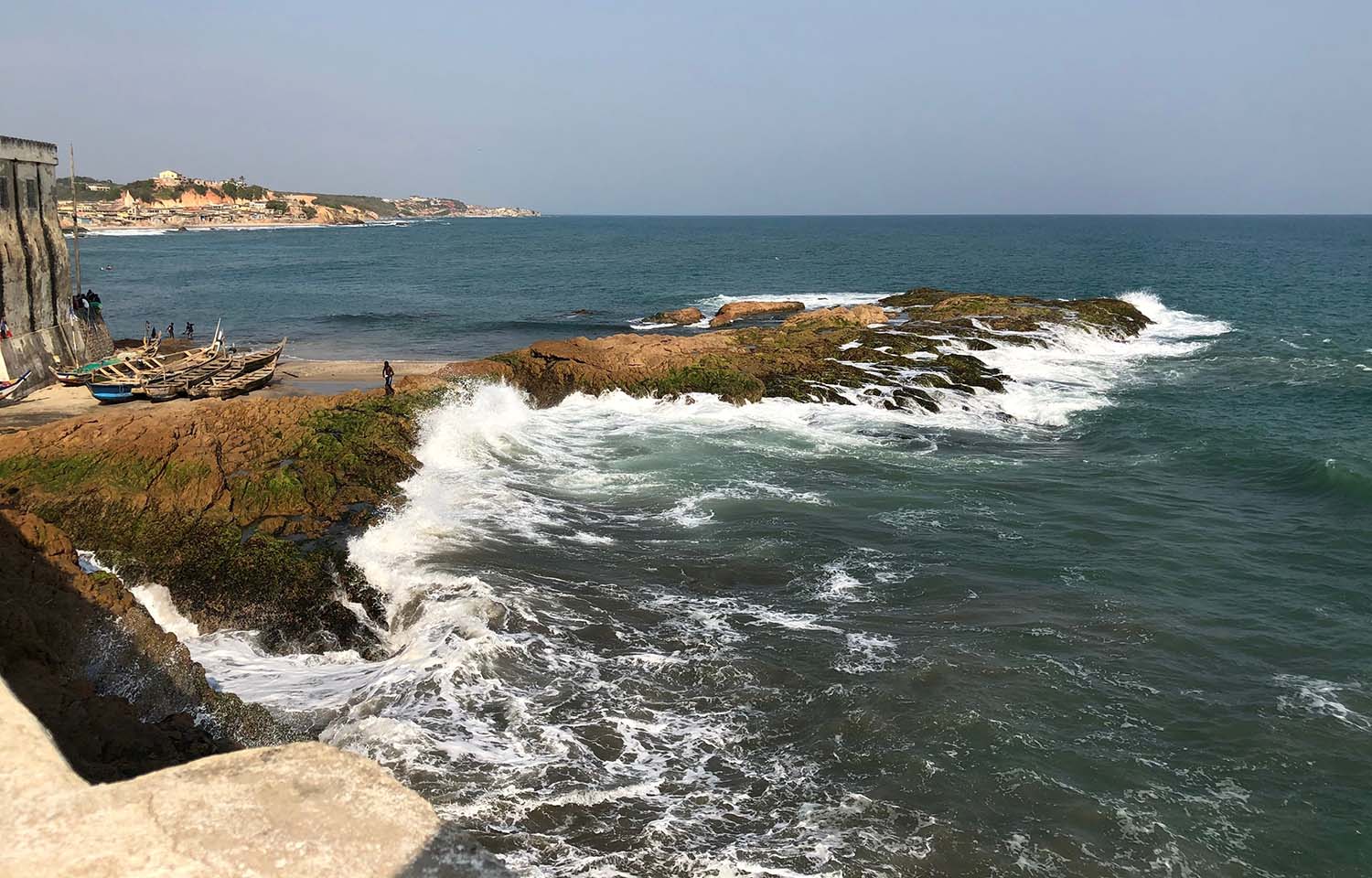
Ghana declared its first-ever marine protected area (MPA) on 14 April, protecting 686 square kilometers of waters along the West African country’s Greater Cape Three Points area.
The MPA is home to 21 coastal water communities, according to a report by Ghana News Agency, and was declared by Ghana Vice President Jane Naana Opoku-Agyemang.
Environmental Justice Foundation CEO Steve Trent said in a release that the MPA declaration is a “defining moment for Ghana,” as the country’s fisheries are facing increasing pressure that’s affecting coastal communities.
“A well-resourced, well-enforced protected area will safeguard vital ecosystems and help secure the livelihoods and food security of millions of Ghanaians for generations to come,” Trent said in the release. “Ghana is providing leadership in action, showing a global audience what positive, community-led marine governance looks like.”
Naana Opoku-Agyemang said the move “was firmly anchored on both national and international laws that reinforced Ghana’s position in ocean governance and marine conservation,” per Ghana News Agency, and that scientific evidence suggested a steady decline of Ghana’s fish populations due to increased pressure on existing stocks.
“The Government has chosen to act boldly, and the MPA that we declare today is a critical measure in our national strategy,” Naana Opoku-Agyemang said during the declaration ceremony. “The protection of this area goes far beyond conserving fish; it secures the ecological foundation upon which sustainable fisheries and the communities that depend on them must be built.”
"EJF applauds and congratulates the Honorable Emelia Arthur, minister of fisheries and aquaculture, for her outstanding leadership in delivering Ghana's MPA,” Trent added. “This achievement, secured through the dynamic leadership of Minister Arthur alongside the many contributions of the leading Ghanaian NGO, Hen Mpoano, will help underwrite the health and benefits of Ghana's marine natural resources for years to come.”
Arthur assumed her ministerial position in early 2025, and the declaration of the MPA aligns with pledges she made early on to tackle such issues as overfishing, illegal fishing, limited funding, and inadequate data collection that have plagued Ghanaian fisheries.
“I want to be remembered as a minister under whose regime Ghana’s production went up and Indigenous knowledge was respected and integrated with scientific knowledge in improving fisheries in this country,” Arthur said upon her appointment.
