





The International Commission for the Conservation of Atlantic Tunas (ICCAT) has adopted a management procedure for Atlantic swordfish, but another proposal to strengthen the commission’s ban on shark finning was derailed by Japan and China.
ICCAT held its annual meeting from 11 to 18 November and had already completed a management strategy evaluation for North Atlantic swordfish. NGOs like The Pew Charitable Trusts pushed for the ICCAT – a regional fishery management organization (RFMO) – to adopt the strategy to move away from annual quota negotiations toward an automated system that makes management decisions less political and more science-based.
Esther Wozniak, a manager on Pew’s international fisheries team working in the Atlantic and Eastern Pacific fisheries, said ICCAT’s adoption of a management procedure for swordfish is an important milestone in the RFMO’s efforts to modernize fisheries management.
“Thanks to leadership over many years from Canada, the United States, and the European Union, ICCAT has demonstrated that long-term, sustainable visions for healthy fisheries can extend across all commercial fish populations,” Wozniak said in a release.
The swordfish management procedure is not the first ICCAT has adopted. ICCAT set a harvest strategy for Atlantic bluefin in 2022, which according to Wozniak has already streamlined quota negotiations and management for the species.
Another key portion of the new management procedure is the adoption of a climate change test which will help tailor how ICCAT addresses the fishery as the stock shifts.
“Not only will this be ICCAT’s first non-tuna species under a management procedure; it is the first to consider the future impacts of climate change when determining catch limits,” Wozniak said. “This fishery is worth millions of dollars each year and is important to coastal communities around the north Atlantic. This decision sets the stage for continued efforts to future-proof ICCAT species health, despite a warming ocean.”
As ICCAT saw success in adopting a new management procedure for swordfish, a separate push to tighten rules and strengthen ICCAT’s shark-finning ban was derailed after Japan and China voted against its adoption.
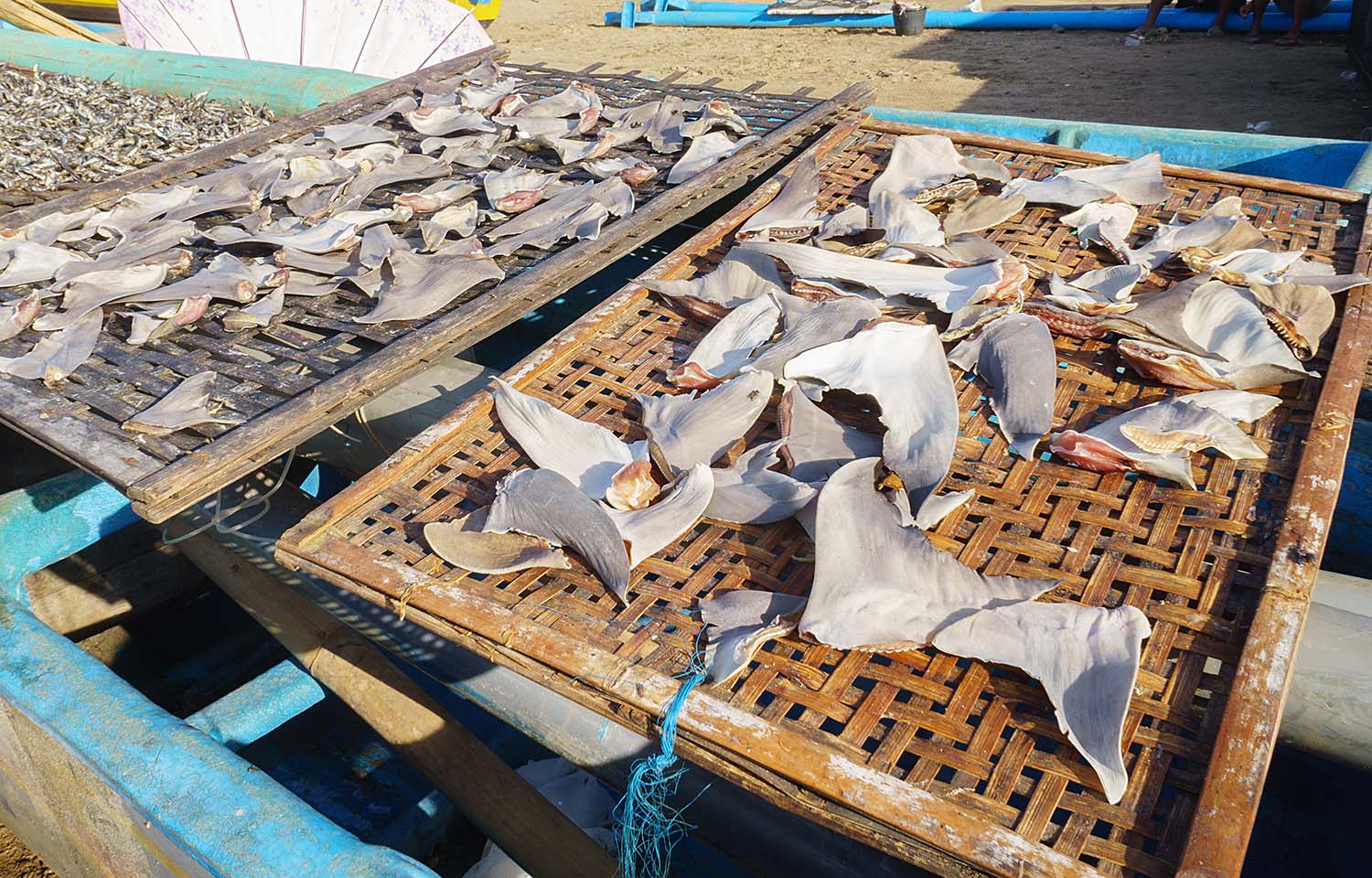
According to the Ecology Action Center (EAC) – which attended negotiations at ICCAT – 42 different co-sponsors representing 80 percent of ICCAT member parties put forward a “fins naturally attached” (FNA) policy. An FNA policy requires any sharks being landed by a fisher have their fins still intact – and also considers shark fins found onboard a vessel unattached from a shark as evidence of illegal shark-finning.
Shark conservation advocates have been pushing for FNA policies for years, and NGOs like Sharkproject International successfully pushed the Marine Stewardship Council to adopt the policy in the fisheries standard it released in 2022 – though it also later delayed the implementation of that standard after a number of complaints unrelated to the FNA policy.
“Fins naturally attached is no longer merely ‘best practice’ but increasingly a bare minimum expectation for sustainable fisheries management,” Animal Welfare Institute Marine Program Director Susan Millward said in 2021.
Despite many organizations considering FNA policies a bare minimum necessity, ICCAT still has no FNA policy.
“We are exasperated that a strong, enforceable shark finning ban has once again been blocked by essentially two countries, despite clear scientific advice and overwhelming support from governments and conservationists alike,” Shark Advocates International President Sonja Fordham said. “This failure marks 20 years of an ICCAT finning ban that is unacceptably difficult to enforce, continuing the risk of atrocious waste for some of the Atlantic’s most vulnerable animals.”
Belize, the U.S., Brazil, Canada, U.K., and E.U. have all pushed to strengthen ICCAT’s shark finning ban for years, and the proposal gained additional support from the Republica of Korea, Costa Rica, and the Philippines at the latest meeting.
“We urge countries to continue implementing FNA rules at the national level and to press on with the work of this unprecedented coalition to close finning ban loopholes at all international fisheries bodies,” Fordham said.
While ICCAT failed to enhance its shark finning ban, it did finalize protections for devil rays, mantas, and whale sharks, and according to the EAC it took seps to improve compliance with its existing reporting requirements on shark catches. The U.K. pushed for a ban on retention of manta and devil rays, and the E.U. secured similar protections for whale sharks.
“We’re grateful to the U.K. and E.U. for closing gaps in the protection of several threatened species that have been overlooked by fisheries bodies despite longstanding protected status under wildlife treaties,” Shark Trust Director of Conservation Ali Hood said. “At the same time, we highlight the need to extend safeguards to similarly vulnerable sharks that have yet to garner the conservation spotlight, such as longfin makos and common threshers. We also urge all ICCAT Parties to join the U.K. in reducing the egregious bycatch of endangered shortfin makos, as a matter of priority.”
