






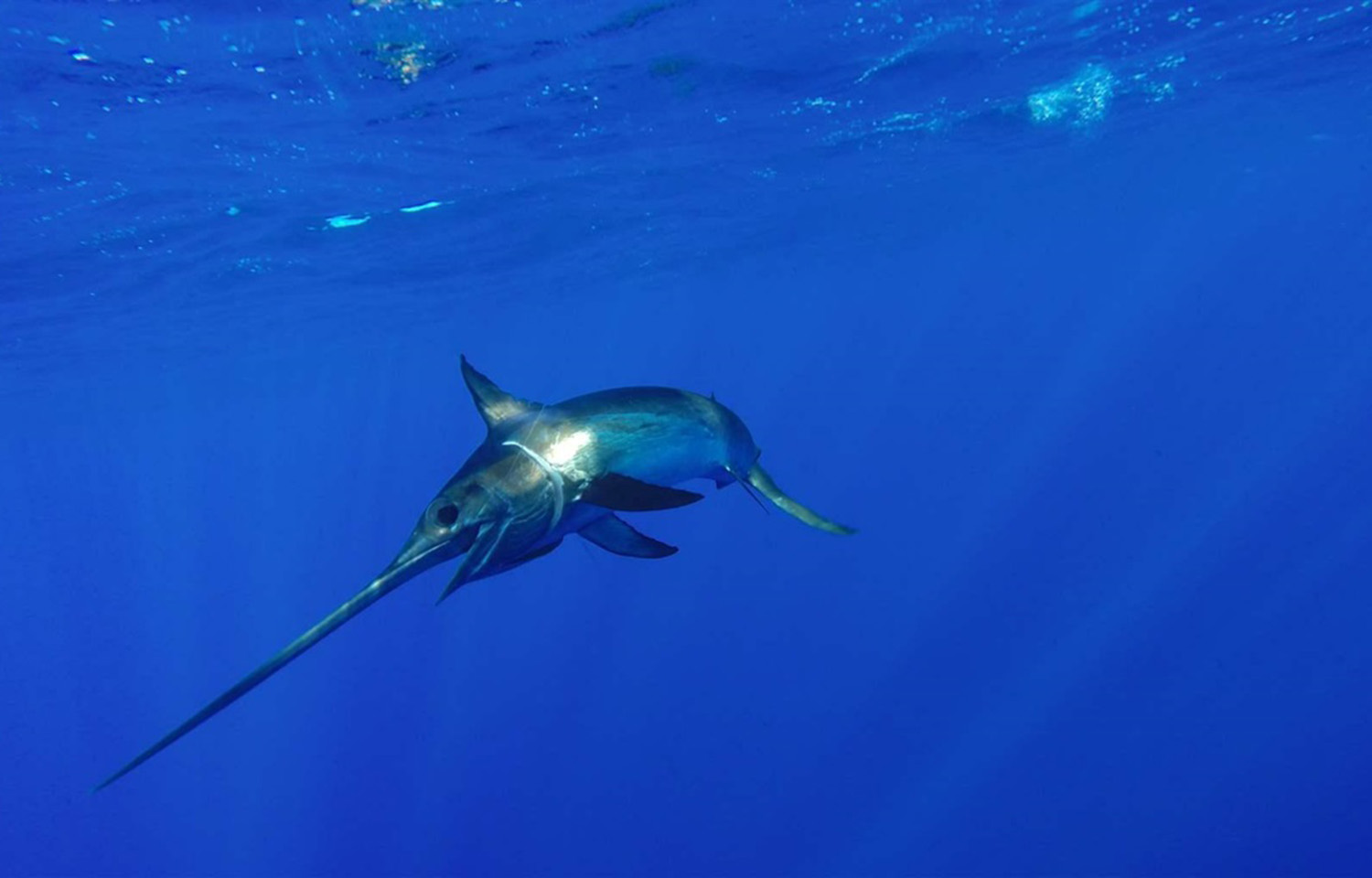
The Pew Charitable Trusts is pushing the International Commission for the Conservation of Atlantic Tunas (ICCAT) to adopt a new harvest strategy in a shift to how it would manage North Atlantic swordfish.
ICCAT is holding one of its annual meetings from 11 to 18 November and is considering a long-term harvest strategy which would set new rules for how it tackles setting the North Atlantic swordfish quota. A harvest strategy, also known as a management procedure, helps regional fishery management organizations (RFMOs) like ICCAT set how it will manage catch limits and other rules for years or even decades to come, which can help reduce contentious annual negotiations.
Disagreements between members states in RFMOs can cause management issues for species as different countries push for different levels of quota. The Indian Ocean Tuna Commission (IOTC), for example, has continuously failed to address yellowfin tuna overfishing as member states fail to agree to quotas that are in line with scientific advice.
ICCAT has already completed a management strategy evaluation of North Atlantic swordfish, which simulates different fishing activities and environmental conditions to evaluate whether rules would meet the RFMO’s objectives.
Esther Wozniak, a manager on Pew’s international fisheries team working in the Atlantic and Eastern Pacific fisheries, told SeafoodSource harvest strategies are becoming a modernized way to manage fisheries, especially at RFMOs.
“It takes a lot of the politics out of it and makes it very science based. With harvest strategies, everyone has come together, and there’s pre-agreed rules on how much the catch should increase or decrease by based on the data that they’re getting from the fisheries,” she said. “This sets a more stable approach to the overall management.”
Having a set management plan in place before issues arise helps streamline the negotiations by making sure any decision making is strongly rooted in pre-existing guidelines that were agreed to in advance.
Wozniak said that ICCAT has already set a strong precedent for management procedures and harvest strategies that help the organization make decisions quickly. ICCAT set a harvest strategy for Atlantic bluefin in 2022 which she said is already benefitting management of the species.
“We always joke now that the panel for bluefin is a lot more straightforward because they’ve handled the most important bit by adopting a management procedure or harvest strategy for bluefin,” Wozniak said.
Wozniak said the RFMO has also set a harvest strategy for North Atlantic albacore, and that too has already been beneficial.
“It’s stably increased catch based on the science, including when there was Covid and ICCAT didn’t meet, they were able to just look back and say, ‘hey, according to the harvest strategy, we should increase the catch by this much,’” she said.
Those two successful uses of harvest strategies within ICCAT provide strong examples to the RFMO that harvest strategies work, and that they can streamline conversations around species and avoid political wrangling.
Another key aspect of the proposed harvest strategy for North Atlantic swordfish is the inclusion of a climate change test.
“They’re simulating how the fishery systems are going to react. They’ve also included elements of climate change to see how to stabilize the fisheries based on different changes,” Wozniak said. “This would be the first harvest strategy that’s climate change-tested at ICCAT, and we really think that’s the future of fisheries management. That’s why we’re really excited about having them adopt this harvest strategy for North Atlantic swordfish, and the work’s been going on for a while.”
Wozniak said that with the work that’s already gone on, ICCAT just needs to move the proposal across the finish line this year – a move which should over time also increase the total catch level.
Alongside the North Atlantic swordfish harvest strategy’s inclusion of climate change is a push to adopt climate change in the RFMO’s overall management approach. Wozniak said ICCAT has finally agreed on a plan of action, and now just needs to have it adopted.
“The joint experts group developed this, and we need it adopted by the commission in order for them to actually move forward with that work – and they’re going to have it be part of a working group,” Wozniak said. “That’s something else that we’re really looking out for.”
Management strategy evaluation is also a part of the climate change action plan, because it is an efficient way to include climate change in its decision making.
“Management strategy evaluation to develop a harvest strategy is the most straightforward way to do it, because there are models that you can put into that simulation to show you how the fisheries will react to different climate change impacts,” Wozniak said. “That’s something else I’m going to be there championing for every day.”
