






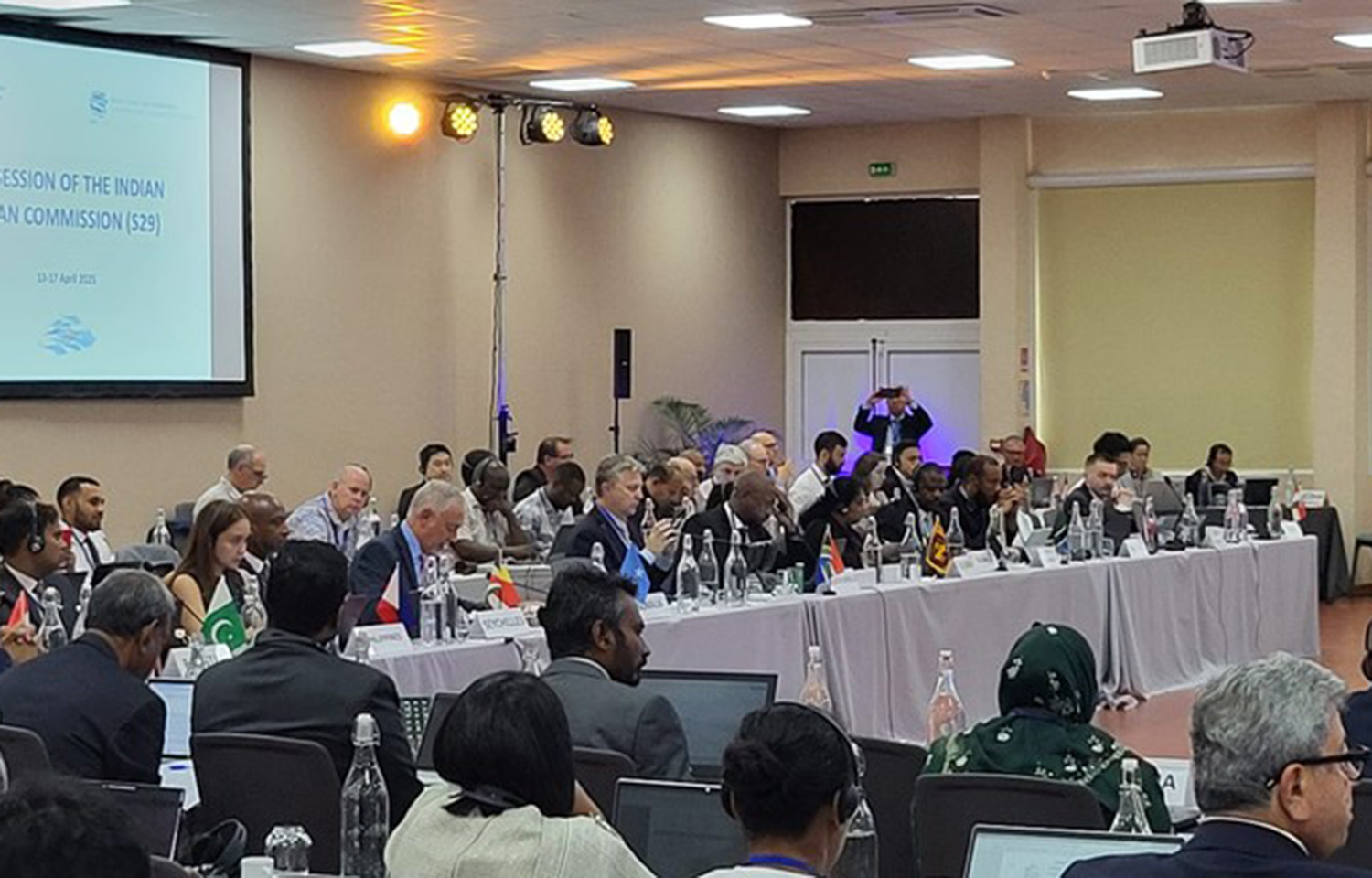
The Indian Ocean Tuna Commission (IOTC) has finalized the adoption of a management procedure for skipjack and bigeye tuna by determining how new rules will be implemented.
The IOTC first adopted a management procedure for the two fisheries – worth more than USD 5 billion (EUR 4.3 billion) – at its annual meeting in 2024 but had not yet issued any clear guidance on how those procedures would be implemented.
“While these rules were adopted last year, there had been no guidance for how to apply them on the water,” Glen Holmes, a senior officer with The Pew Charitable Trusts’ international fisheries program, said.
Now, the regional fishery management organization (RFMO) has followed through on that initial proposal in a move celebrated by environmental NGOs and fishing organizations alike.
Holmes called the new guidance a welcome step forward but cautioned member states to continue working together to ensure overfishing is avoided.
Fisheries trade body Europêche also welcomed the new guidance and supported the IOTC’s new management procedures.
“The adoption of catch limits for skipjack and bigeye, following the previous establishment of management procedures for these stocks, marks a notable advancement toward an efficient, science-based management framework for tropical tunas,” the trade body said.
Establishing a management procedure has been one of the biggest sticking points for the RFMO of the last several years. The IOTC has been criticized for failing to address overfishing of yellowfin tuna in particular for several years, and a scientific report released by the IOTC in 2022 indicated the catch had to be cut by 30 percent to save the stock.
The stock was first declared overfished in 2015 and had been overfished every year since.
A new assessment by the IOTC’s Scientific Committee, however, gave the stock a green rating after revising its models and addressing recommendations from independent reviews of the stock.
While yellowfin is now back in positive territory and skipjack and bigeye are under more sophisticated management, environmental NGOs and the industry are aligned on making sure the IOTC follows through on its work to maintain the long-term sustainability of the stocks.
“We now have the tools to ensure the long-term sustainability of skipjack, bigeye, and yellowfin; now, we need consistent, inclusive implementation across all fleets to make it happen,” Europêche Tuna Group Director Anne-France Mattlet said.
Holmes similarly said there’s a likelihood catch limits could be breached, which would leave the stocks in the same predicament.
In addition to the progress on tuna, the IOTC also took steps on shark conservation that Holmes said is a step in the right direction. Among those efforts are improvements to mako shark management, stronger rules on shark finning, and restrictions on fishing with wire leaders that can cause bycatch.
“Improved guidance on landing sharks with fins naturally attached is also a welcome step to prevent shark finning, but there is still more that can be done to limit future mortality including a complete mako retention ban,” Holmes said.
Europêche cautioned there are some signs the future of the IOTC's ability to manage fisheries is in question. Adoption of the skipjack measure was conducted through a voting procedure, rather than by full consensus of all the member countries – which Europêche said could indicate a shift that would jeopardize the IOTC’s ability to enforce its measures.
It said uneven obligations between member countries are a sign of the growing rifts. Indonesia was exempted from requirement to deploy IOTC-certified observers to monitor at-sea transshipment, which Europêche said creates loopholes that could be exploited and increase the risk of illegal, unreported, and unregulated fishing. Discussions about shark finning bans, monitoring of gillnetting, and other measures also failed to advance due to what Europêche said are a small group of countries.
“The growing divide between fleets bound by strict oversight and those operating with minimal controls is extremely worrying,” Europêche Tuna Group President Xavier Leduc said. “We are witnessing the emergence of a two-speed IOTC: one where certain fleets are held to the highest standards of transparency and sustainability, and another where loopholes and leniency prevail.”
