






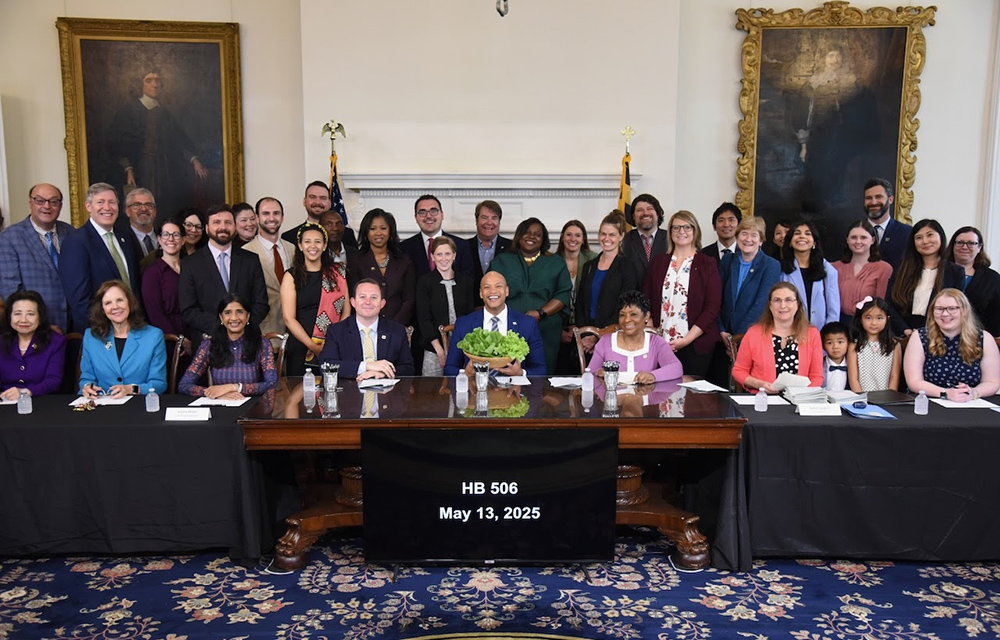
Maryland Governor Wes Moore has signed into law legislation designed to improve the health of the Chesapeake Bay and simplify reporting for the state’s aquaculture sector.
“We have a responsibility to hand over the state to the next generation better than we found it. That’s not just a moral priority; that’s an economic imperative,” Moore said in a statement. “The Chesapeake Bay Legacy Act will uplift every sector of our bay economy, from agriculture to aquaculture. Together, we will protect and preserve our natural heirlooms and drive economic growth. Those missions aren’t in conflict; they’re in concert.”
According to conservation nonprofit Chesapeake Bay Foundation (CBF), the Chesapeake Bay Legacy Act will take significant steps toward improving the water quality of the Chesapeake Bay watershed. The state law will consolidate state water quality monitoring programs to improve data quality and increase coordination on cleaning up the watershed. It also establishes the Maryland Leaders in Environmentally Engaged Farming (LEEF) Program, which incentivizes improving agricultural conservation to reduce pollution into the Bay.
The Chesapeake Bay Legacy Act also simplifies reporting for oyster aquaculture companies in Maryland. The legislation streamlines the review process for aquaculture leases and allow them to continue operations while waiting for permit renewals. According to the state government, Mayland’s shellfish aquaculture sector provides an economic impact of more than USD 13 million (EUR 11.6 million) every year.
“Governor Moore’s Chesapeake Bay Legacy Act brings hope for a healthier and more resilient future. This legislation gives farmers, oyster growers, and restoration practitioners the tools they need to succeed, and in turn, will reduce pollution in our rivers and streams,” CBF Maryland Executive Director Allison Colden said in a statement.
The influx in state government support comes at a critical moment for conservation efforts, as the administration of U.S. President Donald Trump has proposed massive cuts to grant funding from both NOAA and the U.S. Environmental Protection Agency (ESA). The Chesapeake Bay Foundation has warned that cuts to federal agencies and grant programs will hurt conservation efforts in the Chesapeake Bay.
“With federal cuts and rollbacks looming heavily on our state, Maryland’s environmental leadership is more important than ever. This Act will help maintain forward momentum and ensure that investments in clean air, clean water, habitats, and local economies are secured,” Colden said. “We appreciate the Moore-Miller administration’s dedication to a healthier Chesapeake Bay and look forward to helping implement these solutions statewide.”
