






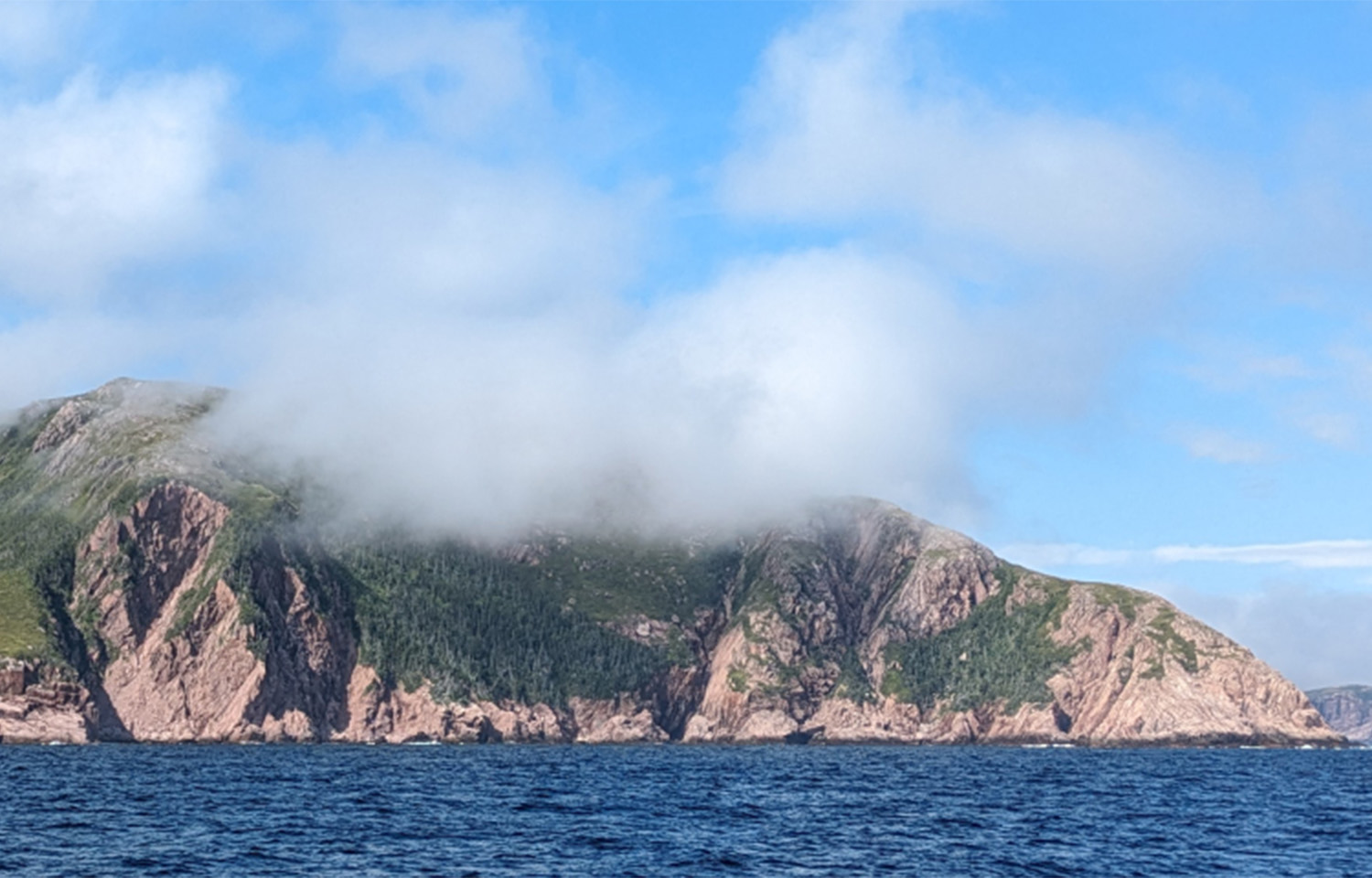
The Canadian province of Newfoundland and Labrador has withdrawn from a memorandum of understanding (MoU) that would have established a national marine conservation area (MCA).
The MoU was signed between the government of Newfoundland and Labrador, Miawpukek First Nation, Qalipu First Nation, and the town of Burgeo in June 2023 to determine whether the conservation area was feasible. Newfoundland and Labrador Minister of Environment, Conservation, and Climate Change Chris Tibbs has now announced the government is terminating that MoU, along with an MoU covering the redesignation of Sandbanks Provincial Park as a national park in Canada.
The initial proposed area for the monument, which would have been titled the South Coast Fjords National Marine Conservation Area, was 9,114 square kilometers and, according to Parks Canada, would have protected an ecologically rich area which includes migration routes for 20 species of whale, Atlantic cod, redfish, and leatherback sea turtles.
“This ecologically rich marine environment is a productive marine ecosystem and biodiversity hotspot,” Parks Canada said in a summary of its efforts. “It is among the most productive marine environments in Atlantic Canada and is home to the largest tides in Newfoundland.”
However, the area was also heavily opposed by members of the fishing and aquaculture industries, and Tibbs cited the importance of those industries in its decision to withdraw.
“This government is committed to strengthening conservation efforts and protecting our province’s environment,” Tibbs said. “However, given the potential risk to aquaculture, fishing, and mining sectors and the viability of the communities who rely on them, the provincial government is unable to proceed with the feasibility assessment of a national marine conservation area on the south coast of the island and redesignation of Sandbanks Provincial Park.”
Fishing industry groups like the Fish, Food, and Allied Workers Union (FFAW) and aquaculture representatives like the Newfoundland Aquaculture Industry Association (NAIA) and Cooke Inc. both pushed against the area, calling it an overreach. NAIA claimed the area was being pushed by outside lobbies that wouldn’t be economically impacted by the new conservation area.
NAIA said it was pleased with the province’s decision to withdraw from the MCA, which it said could have crippled the local economy on the south coast.
“With this decision today and by continuing to work with industry and community leaders, we can ensure aquaculture and other industries such as the fishery are a part of a more prosperous and resilient future for southern Newfoundland,” NAIA Executive Director Keith Sullivan said in a release.
The government’s decision comes after provincial elections in Newfoundland and Labrador in October 2025 resulted in a Progressive Conservative majority government, overturning the previous Liberal government majority that had held for a decade.
Newfoundland and Labrador Premier Tony Wakeham, the leader of the Progressive Conservative party, had outright stated the party’s opposition to the creation of new conservation areas.
“Specifically, we cannot support the establishment of a national marine conservation area on the South Coast, as it risks shutting down aquaculture operations and undermining the future of the very communities that rely on them,” Wakeham said during his provincial election campaign. “Our position is clear: We will not support the marine protected area because it puts the aquaculture industry at risk.”
The FFAW said Newfoundland and Labrador’s decision to pull out of the MoU delivers on Wakeham’s commitment to the fishing and aquaculture industries in the province.
“We thank Premier Wakeham and the provincial government for following through on their promise to withdraw support for this proposed NMCA,” FFAW President Dwan Street said in a release. “This decision shows respect for fish harvesters and recognizes the real economic harm this proposal posed to adjacent communities.”
FFAW said the MCA threatened owner-operator fisheries “from the outset” of the proposal and that the region is already sustainably managed and overseen by Canada’s Department of Fisheries and Oceans.
“This announcement is an important step in pushing back against baseless marine closures that unfairly target fish harvesters under the guise of conservation,” FFAW Secretary-Treasurer Jamie Baker said. “Fish harvesters have led the way in sustainable fisheries management and deserve decisions based on real science, fairness, and transparency instead of ideology.”
Cooke CEO Glenn Cooke also applauded the move and, in a statement to SeafoodSource, said the move to withdraw from the MoU will save jobs.
“These proposed marine protected areas aren’t based on science and threaten people’s livelihoods in rural communities. I also thank federal MP Clifford Small and former Hermitage Mayor Steve Crewe who fought against this at every step of the way,” he said. “We need to grow our own food in Canada, and the foreign-funded special interest groups lobbying for these closures should be investigated; their activities are far from charitable.”
Michael King, a member of the House of Assembly representing Burgeo – the town involved with the MoU – said he was “deeply disappointed” by the government’s decision to withdraw the agreement and that Burgeo was not involved in the decision-making and policymakers refused to meet with officials from the town.
“To terminate this process before allowing a feasibility study to gather the necessary facts and make an informed decision is a failure in leadership,” King said in a statement. “What kind of decision-making is this? Minister Tibbs owes the communities in my district an explanation of how he arrived at a fact-based decision on this matter. I can already tell you his answer – he didn’t.”
King said the fisheries and aquaculture interests would have had a chance to be included in the feasibility study and that there was a “productive path forward through continued dialogue,” which is now moot due to the government’s decision.
“Many residents in Burgeo ... had questions and concerns, and the current process was designed to address them. Was it perfect? No. Did it need improvements? Yes. But it did not get the opportunity to reach that potential,” he said.
