






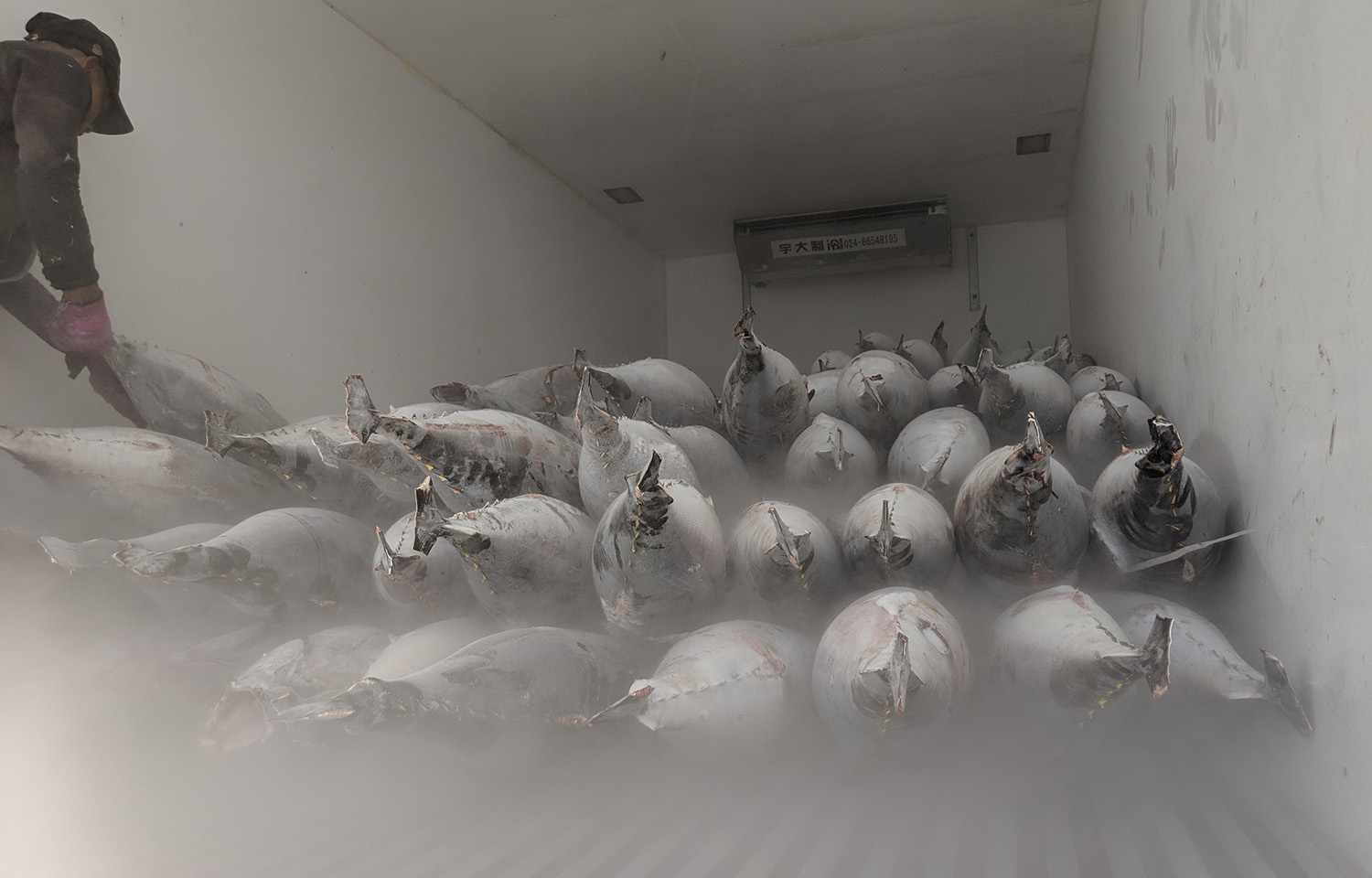
A recently launched partnership in Taiwan has set up a fishery improvement project (FIP) for the nation's tuna fishery, aiming to achieve certification to the Marine Stewardship Council standard.
Ocean Outcomes (O2), a U.S.-based nonprofit, partnered with the Taiwan Tuna Longline Association (TTLA), the largest fishing vessel member association in Taiwan, in April 2024 to improve fishing practices among Taiwanese longline tuna vessels. Now, that partnership has launched its first FIP, applying to 41 TTLA vessels with a combined catch of 3,500 metric tons (MT) of Pacific albacore, bigeye, and yellowfin tuna.
The new FIP is the second in Taiwan that O2 has announced this year. The organization established a FIP with Fue Shin Fishery that aimed to improve environmental and labor standards on 10 longline tuna vessels in the Indian Ocean. That FIP applied to albacore, skipjack, bigeye, and yellowfin tuna, with a similar goal of achieving MSC certification.
The new FIP with TTLA, O2 said, is the first launched by the association and is working to achieve MSC certification by 2029.
"This project not only reflects our long-term commitment to marine conservation but also highlights our leadership in promoting transparency in fisheries and raising industry standards,” TTLA Chairman Ming-Hsin Lee said in a release.
O2 said TTLA vessel owners will be working to support science-based fishery management strategies, increase environmentally friendly fishing practices, and support initiatives to improve human rights onboard fishing vessels participating in the FIP.
“Through the FIP, we will work closely with stakeholders domestically and internationally to ensure that our fisheries management meets international standards while satisfying the growing market demand for sustainable seafood products,” Lee said. “We will continue to lead in advancing sustainable fisheries and preserving valuable marine resources for future generations.”
O2 said that expanding utilization of e-logbooks and observer data will be key to the FIP’s progress, as will work to reduce impacts on non-targeted species. The FIP will also work to support collaboration across takeholders to improve working conditions onboard vessels, O2 said.
The TTLA has over 400 tuna longline vessels and, according to O2, is the largest tuna industry association in Taiwan. TTLA Secretary General Ke-Chen Yang said its members are committed to both safeguarding the environment and human rights at sea.
"The launch of this FIP further strengthens our dedication, ensuring we make concrete progress in resource conservation, fisheries management, and social responsibility,” Yang said. “Through collaboration and innovation, we are focused on creating a safer, more respectful, and secure work environment for our crew while preserving valuable marine ecosystems and providing high-quality seafood that meets international standards to the global market.”
Taiwan has the second-largest distant-water fishing fleet in the world, with an estimated 1,100 vessels employing as many as 35,000 migrant workers. Its fishing industry has been subject to an array of both criticism and calls for better governance from both within the industry and from outside NGOs and governments.
In 2022, nonprofit group Global Labor Justice-International Labor Rights Forum sued Kaohsiung, Taiwan-based FCF Co. – a tuna-fishing company that supplies Bumble Bee Foods with tuna – and, ultimately, reached a settlement in 2023 that saw Bumble Bee remove claims about its fishing practices and working conditions. Global Labor Justice has also organized a multi-year campaign advocating for Wi-Fi to be installed on Taiwanese fishing vessels to help combat labor abuses.
FCF has been criticized by other groups and was recently targeted by NGO Shark Guardian, which accused it of failing to address environmental and human rights breaches within its supply chain.
FCF has maintained that it is making progress on its policies, and Tony Lin of the Taiwan Tuna Association has been critical of some NGO action which he said ignored the work the fishing industry has been doing.
The U.S. government has also focused on Taiwan’s tuna fishing industry in recent years. Taiwan was listed in the U.S. Department of Labor’s 2022 List of Goods Produced by Child Labor or Forced Labor and in the U.S. State Department’s 2022 Trafficking in Persons Report (TIP) report for issues related to its fishing fleets, remaining on the list in 2024.
In March, a delegation from the U.S. Department of Labor met with the Taiwanese fishing industry to assess and review the industry’s efforts to enhance the rights of crewmembers onboard its fishing vessels.
O2 said its partnership with TTLA will help improve working conditions onboard vessels and advance other social responsibility efforts.
“By fostering a culture of sustainable practices and innovation, we aim to empower the fishing community to not only meet international standards but also lead the way in responsible fishing practices,” Kevin Lin, who supports O2’s work in Taiwan, said. “Together, we’re building a more resilient future for the industry, where sustainability, social responsibility, and profitability go hand in hand.”
