





Conservation groups warn that draft legislation being considered in U.S. Congress could gut the Marine Mammal Protection Act (MMPA), legislation designed to safeguard vulnerable whales, dolphins, and other species from commercial fishing activities and other potential threats.
“If this bill were to become law, it would significantly hinder the ability to take any conservation actions for marine mammals,” wildlife biologist and television host Jeff Corwin said in his testimony. “More dolphins, whales, sea otters, and other marine mammals will be killed and injured, and incentives to develop new technologies and methods to reduce those human impacts on marine mammals would disappear.”
On 22 July, the U.S. House Subcommittee on Water, Wildlife, and Fisheries held a hearing to discuss several bills, including one bill submitted by U.S. Representative Nick Begich (R-Alaska) that would make major updates to the MMPA. Among the changes included in the bill are new definitions for terms, the removal of timelines, and changes to what science can be used to inform management decisions.
Republicans behind the bill claim it would reduce uncertainty and streamline permitting processes.
“As the decades have passed, we’ve also seen how [the MMPA’s] implementation, particularly in the use of vague or overly precautionary standards, has led to confusion, delay, and unintended harm,” Begich said. “We’ve seen essential projects like energy development, port construction, and even fishery operations held up not because of clear science but because of uncertainty and subjective interpretations. This draft aims to bring clarity, objectivity, and balance back into the implementation of the MMPA.”
As an example, U.S. Representative Bruce Westerman (R-Arkansas) pointed to the Pacific Northwest, where sea lion predation has been one factor impacting the recovery of West Coast salmon populations. While some in the region would like to authorize sea lion take to reduce predation, he said, the MMPA’s sea lion protections complicate the issue.
“What’s clear is that the MMPA as it currently exists is not always meeting its intended goals,” Westerman said.
U.S. Representative Jared Golden (D-Maine) also raised concerns with current MMPA enforcement, pointing to a recent incident in the Maine lobster fishery, where a “worst case scenario” analysis was used in a biological opinion that nearly shuttered the fishery.
While the U.S. District Court of Appeals for the District of Columbia ultimately ruled in favor of the commercial lobster industry, determining that regulators overstepped their authority in using overly pessimistic assumptions, lawmakers and commercial fishers have continued to use the incident as an example of conservative protections harming the fishing industry.
“I have serious concerns with the MMPA, and I believe that changes need to be made to the law to ensure it does not end up shutting down entire fisheries in the communities that they support,” Golden said.
The draft bill would also extend a moratorium on new lobster industry regulations related to North Atlantic right whales until 2035 – a provision that has been welcomed by the Maine lobster industry, including the Maine Lobstering Union, the Maine Lobster Association, the New England Fishermen’s Stewardship Association, and the Downeast Lobstermen’s Association supporting the legislation.
However, Democrats and conservation groups claim the law is a Trojan Horse designed to undermine protections for vulnerable species.
“What concerns me most are the bills that are leading to the majority’s plan to gut and shred the Marine Mammal Protection Act,” U.S. Representative Val Hoyle (D-Oregon) said. “The MMPA has protected whales and dolphins for over 50 years; no marine mammal species has gone extinct in U.S. waters since it passed, and that’s remarkable. With this new proposal, instead of directly shredding these protections, they’re tinkering around the edges, hoping we wouldn’t notice.”
Lawmakers on the subcommittee also said that the more stringent data requirements could hurt species for which there is limited data, effectively stripping them of protections.
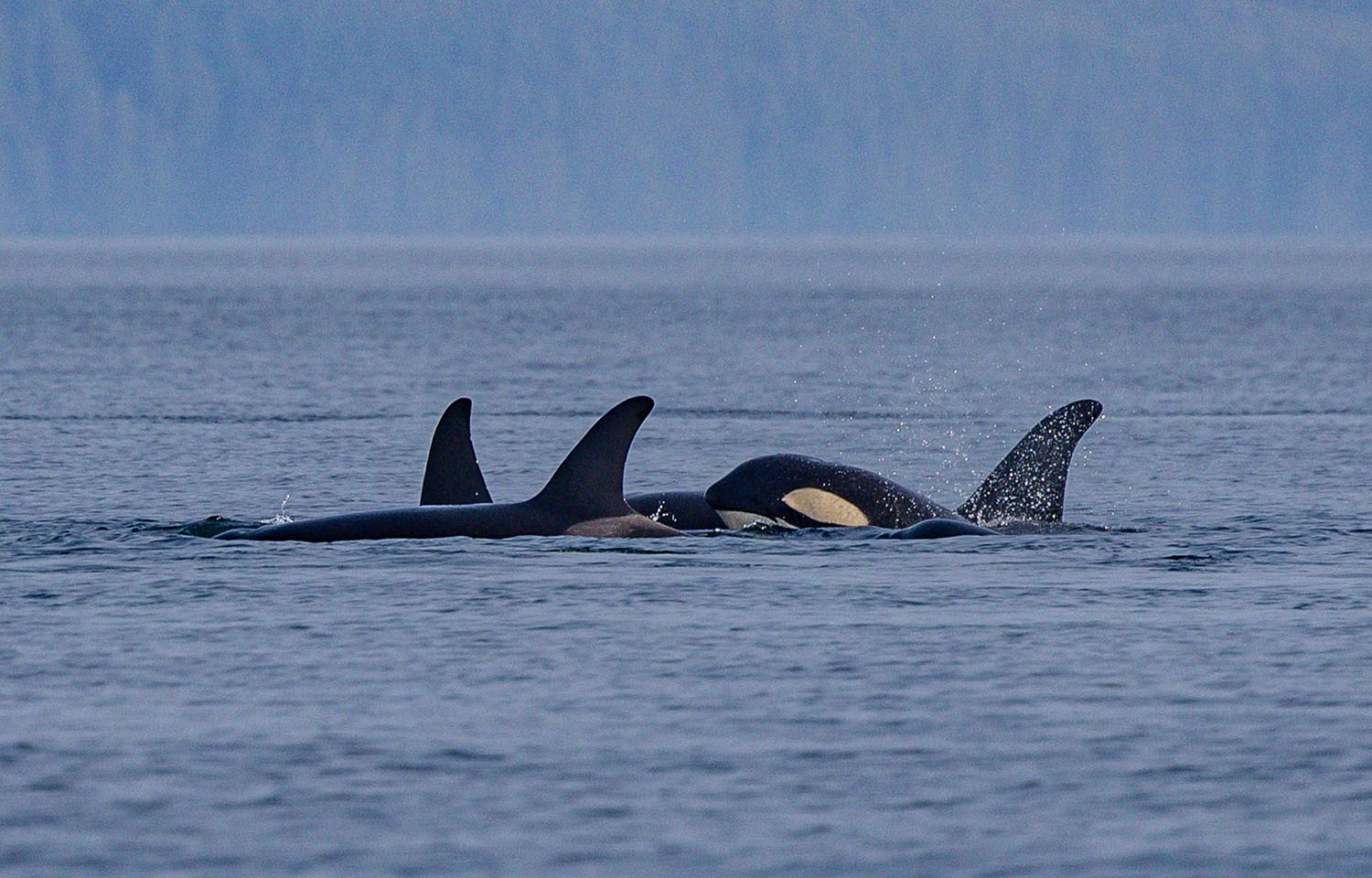
“This bill amounts to a death sentence for many marine mammals, and one of Team Extreme’s most dangerous proposals yet,” U.S. Representative Jared Huffman (D-California) added. “It is a direct threat to vulnerable species like the southern resident killer whale, which has just 73 individuals left and cannot survive with an additional five to 10 deaths every year. Under this bill, several more deaths annually would be brushed off as negligible by the standard that being proposed.”
The proposal has also been heavily criticized by conservation groups.
“The notion that this bill, or elements of this bill, could move forward and undermine all of the extraordinary efforts made since the MMPA was originally enacted in 1972 is heartbreaking,” International Fund for Animal Welfare (IFAW) Senior Marine Campaign Manager Kathleen Collins said in a statement. “The blood of thousands of marine mammals will be on the hands of Congress, and the entire well-being of the ocean ecosystem could very well be altered.”
“The Marine Mammal Protection Act has ensured for decades that marine mammal populations can recover when their members are accidentally harmed or killed by human activities,” Defenders of Wildlife Senior Attorney Jane Davenport said in a statement. “This disaster of a bill lowers the bar set by the MMPA from recovery to mere survival, gutting scientific management in favor of blatant giveaways to industries like big oil and big fisheries.”
The legislative push comes as U.S. President Donald Trump’s administration is working to reshape the federal government’s approach to species conservation and environmental protection.
Despite Treasury Secretary Howard Lutnick’s earlier claim during his nomination hearing that he had no intention of splitting up NOAA Fisheries’ functions, the Trump administration has proposed moving NOAA Fisheries’ Endangered Species Act and Marine Mammal Protection Act responsibilities to the U.S. Fish and Wildlife Service (USFWS).
The government claims the shift would “reduce redundancies and streamline permitting activities.” Currently, USFWS oversees MMPA in regards to polar bears, walruses, sea otters, and manatees, while NOAA Fisheries oversees whales, dolphins, porpoises, seals, and sea lions.
The Trump administration may not get its way this year; the Senate version of the Department of Commerce funding bill rejects the move, stating in a report that the White House did not submit its request early enough for lawmakers to consider in the fiscal year 2026 budget cycle.
Still, the Trump administration has pushed hard to pull back conservation spending and management in its first several months back in office. Trump’s Department of Government Efficiency (DOGE) oversaw mass layoffs at both NOAA and the Environmental Protection Agency, clawed back funding dedicated to conservation, and attempted to freeze grant funding.
