



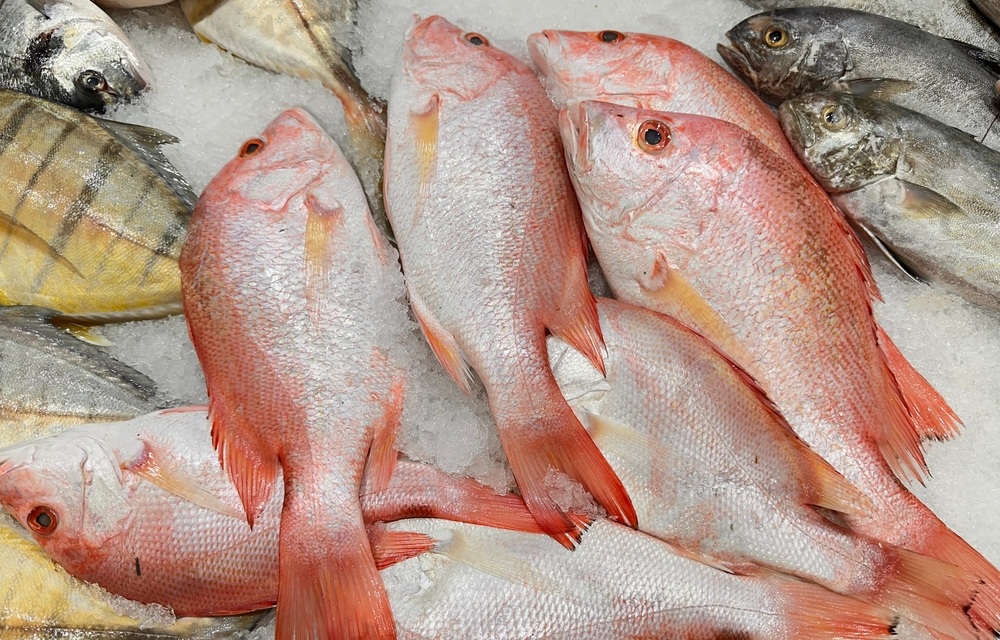
A group of 10 U.S. senators have penned a joint letter to NOAA Fisheries demanding the agency do more to prevent illegal red snapper from reaching U.S. markets.
“The continued ability to sell illegally harvested red snapper into the U.S. market is a powerful financing source for the [Mexican] cartel and undermines both U.S. fisheries management and national security,” the senators stated in their letter. “We would appreciate NOAA Fisheries’ action in more aggressively applying its existing authorities to ensure that illegally harvested red snapper is not sold in the United States.”
The senators represent the five states bordering the Gulf of Mexico, currently referred to as the Gulf of America by the administration of U.S. President Donald Trump.
The U.S. Coast Guard frequently observes and interdicts Mexican fishers operating illegally in the U.S.'s exclusive economic zone (EEZ). Using small vessels called lanchas, the fishers are able to cross the maritime boundary, harvest red snapper, and then return to Mexico to sell their catch. The U.S. Department of the Treasury claims the lancha operations are overseen by the Gulf Cartel and, in 2024, issued sanctions against several individuals it claimed led the illegal harvesting.
While Coast Guard interdictions were down last year, the service actually seized more illegally harvested red snapper than it has since 2021. The Coast Guard seized 15,859 pounds of red snapper in fiscal year 2025, an increase of 28 percent year over year. The U.S. government has also begun prosecuting the Mexican fishers it detains, a new policy meant to disincentivize the illegal practice.
In their letter, the senators expressed appreciation for the Coast Guard’s efforts to stop illegal harvesting in the Gulf of Mexico but asked NOAA Fisheries to do more to prevent the red snapper that is illegally caught from being delivered to U.S. markets.
“The Coast Guard has demonstrated sustained and effective operational enforcement through repeated interdictions and seizures; however, the continued presence of Mexican lanchas in U.S. waters suggests that enforcement at sea, by itself, is insufficient to eliminate the incentive to fish illegally,” the senators stated. “We urge NOAA to use its import-restriction authorities, and other applicable authorities, to address this problem in a targeted and proportionate manner that supports law-abiding U.S. fisheries.”
The Southern Shrimp Alliance (SSA) also put out a statement in support of the joint letter.
“The U.S. shrimp industry is grateful to Senator [Bill] Cassidy, as well as all of our Gulf state Senators for demanding that NOAA Fisheries use the authority given to it by Congress to meaningfully respond to the illegal fishing of Mexican lanchas in U.S. waters,” SSA Deputy Director Blake Price said in a statement. “From our experience with the Section 609 program, our industry had proven that access to the U.S. market can be used to meaningfully improve standards in foreign supply chains. NOAA Fisheries has full authority to implement a meaningful response to the cartel-linked lanchas. It is well past time to use it.”
Lawmakers have become increasingly interested in preventing illegally caught red snapper from reaching domestic markets. In July, the Senate passed the Illegal Red Snapper and Tuna Act, which would direct NOAA and the National Institute of Standards and Technology (NIST) to develop a standardized chemical test that can detect the country of origin of certain fish, including red snapper. The legislation has yet to be taken up by the U.S. House.
