






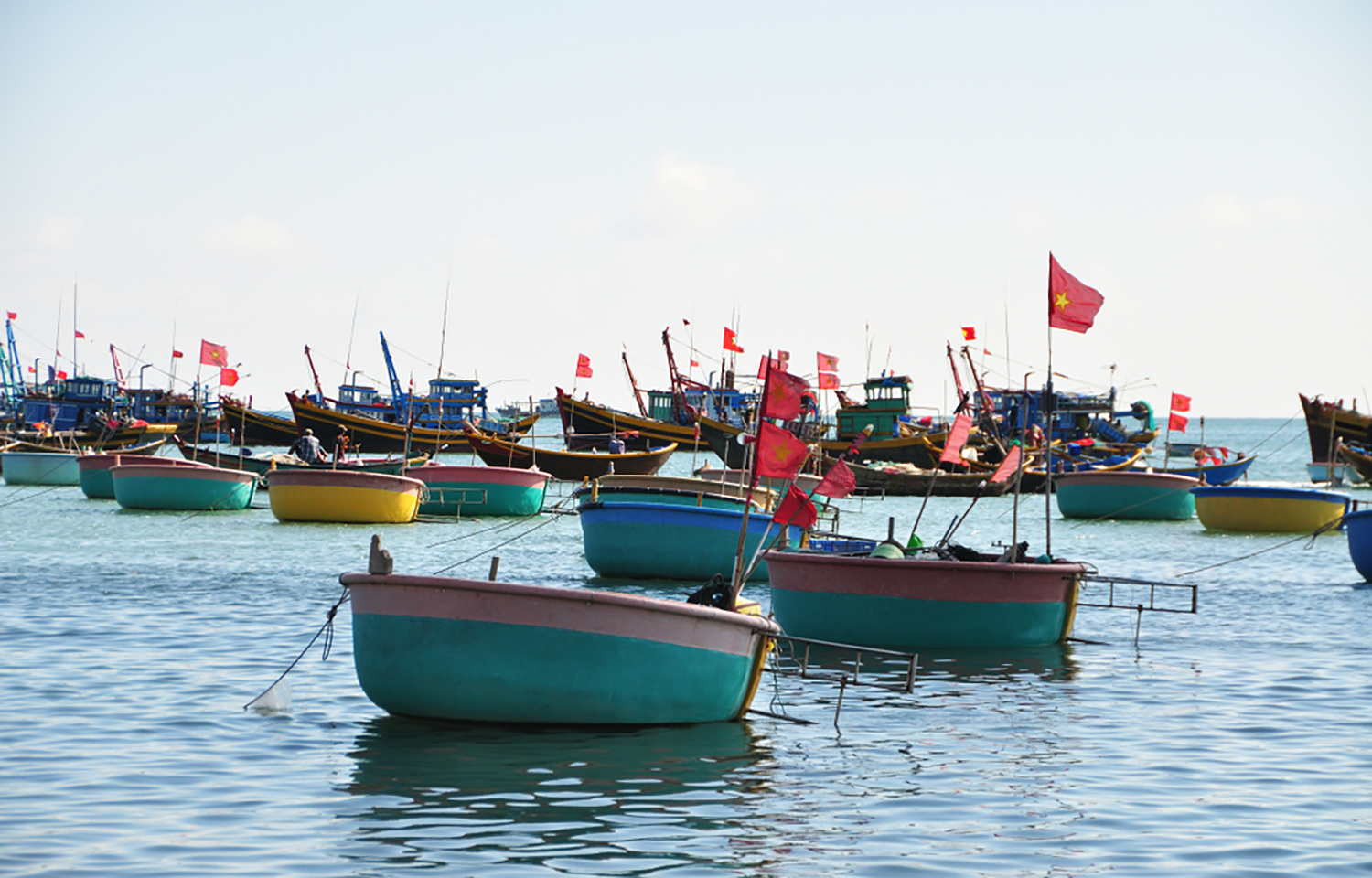
Vietnam has asked the U.S. to review a decision that would block imports of seafood caught from 12 Vietnamese fisheries starting 1 January 2026, saying the move threatens exports and the livelihoods of hundreds of thousands of the country’s fishermen and factory workers.
NOAA informed Vietnam’s Directorate of Fisheries on 26 August that the fishing methods used in several of Vietnam’s fisheries were not deemed “comparable” under the U.S. Marine Mammal Protection Act (MMPA). Products harvested within the listed Vietnamese fisheries, which include tuna, swordfish, grouper, mackerel, mullet, crab, squid, and scad, would be halted at the U.S. border starting next year, according to the Vietnam Association of Seafood Exporters and Producers (VASEP).
Under NOAA’s latest assessment, 14 Vietnamese fisheries were recognized as comparable under MMPA, while 12 were not, VASEP said.
Deputy Minister of Agriculture and Environment Phung Duc Tien convened an interagency meeting on 3 September to address the issue, and VASEP gathered member companies on 8 September to assess the impact and coordinate responses, VASEP said.
The trade group described the decision as a “shock,” especially given years of regulatory reforms Vietnam has undergone, citing the nation’s 2017 Fisheries Law, strong local enforcement, participation in the U.S. Seafood Import Monitoring Program (SIMP), and possessing “dolphin-safe” certification for tuna exports as evidence of the work the country has put in.
It warned the move could slash shipments and trigger wider disruptions across the supply chain.
Beyond direct losses, VASEP said raw material supplies could tighten because several countries that sell seafood to Vietnam, including Indonesia, the Philippines, South Korea and Taiwan, also failed to secure full comparability for some of their fisheries. The group added that unclear transition rules risk unsettling companies’ production plans.
VASEP urged the Vietnamese government to take emergency steps in the interim, including hiring U.S. legal and technical advisers such as former NOAA officials, forming an inter-ministerial task force to work with NOAA on procedures and transition mechanisms, and accelerating upgrades to monitoring and bycatch-mitigation systems.
Longer term, it asked for expanded international cooperation, new technology for monitoring and bycatch reduction, and training for fishermen, as well as assistance from various ministries to lobby U.S. counterparts and help firms diversify the markets to which they sell.
To that end, on 15 September, Industry and Trade Minister Nguyen Hong Dien wrote to U.S. Commerce Secretary Howard Lutnick, asking the U.S.’s Commerce Department and NOAA to reconsider the move to avoid “serious disruptions” to bilateral trade and protect Vietnamese jobs. The minister also requested fair treatment in an ongoing antidumping review of Vietnamese shrimp.
Vietnamese Ministry of Foreign Affairs' spokesperson Pham Thu Hang said on 25 September her country will continue to work “constructively” with the U.S. to resolve the issue, according to Vietnam News Agency.
The U.S. is the largest destination for tuna from Vietnam, purchasing USD 387 million (EUR 329.5 million) worth of the fish in 2024. In August 2025, the sales value of tuna exports to the U.S. dropped nearly 21 percent from August 2024 to USD 29 million (EUR 24.7 million). The export value over the first eight months has also contracted 4 percent year over year to USD 234 million (EUR 199.2 million), VASEP said.
