



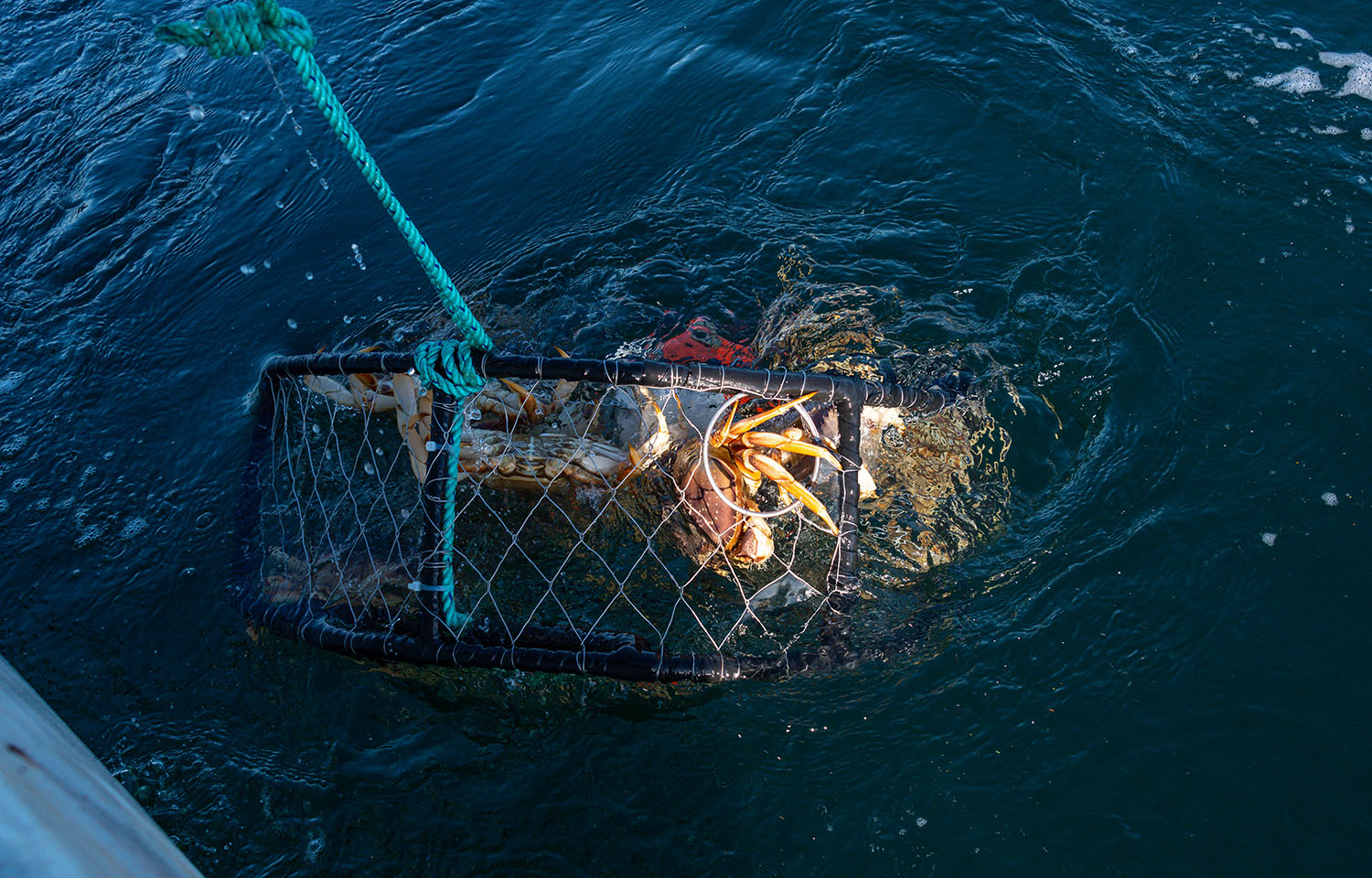
The U.S. state of Washington is set to open the northern portion of its coast to commercial Dungeness crab harvesting after delaying the season for weeks due to low meat yields.
Washington officials first notified crabbers that the season would be delayed in November after testing revealed that crabs in multiple areas of the state did not reach the state’s criteria for minimum meat yields. Officials were forced to push back the season's start date multiple times before testing results improved enough to open the southern part of the state – from Klipsan Beach south to the Oregon border – on 15 January.
Now, officials say that conditions in the northern portion of the state – from Klipsan Beach north to the Canadian border – have improved sufficiently for them to open. The start date for that area will be 11 February, but harvesters can begin pre-soaking traps beginning 8 February. It is the last section of the U.S. West Coast to open up for commercial Dungeness crab harvesting.
The commercial season was delayed through the end of 2024, but Washington law enforcement officers reported two instances of illegal Dungeness crab harvesting in December.
First, a Washington Department of Fish and Wildlife (WDFW) officer discovered an individual with 27 Dungeness crabs, 22 of which were female and unlawful to possess and four of which were undersized. The individual was charged and the crabs were returned to the water. Later that month, WDFW officers cited a group illegally harvesting crabs from the Puget Sound – 57 of the 62 Dungeness crabs in their possession were undersized.
“Out of the four subjects, only one had a shellfish license,” WDFW said in a social media post. “The subjects were cited for multiple violations, and the crab were released back into the water.”
Commercial Dungeness crab harvesters will have to contend with new electronic monitoring requirements put in place by the Washington Fish and Wildlife Commission. While crabbers have had to fill paper logbooks since 2008, the new program requires them to equip their vessels with state-approved electronic monitoring devices. The devices must be powered at all times, allowing regulators to track all commercial crabbing activity in the state around the clock.
Some crabbers have sued the state to block the electronic monitoring requirements, teaming with Washington, D.C.-based law firm the New Civil Liberties Alliance (NCLA) to challenge them in court.
“The desire of agencies to always know a regulated party’s location is not driven by legitimate regulatory needs,” NCLA Senior Litigation Counsel John Vecchione said in a statement. “We need this suit to remind the agency that our constitutions – state and federal – don’t allow that.”
