






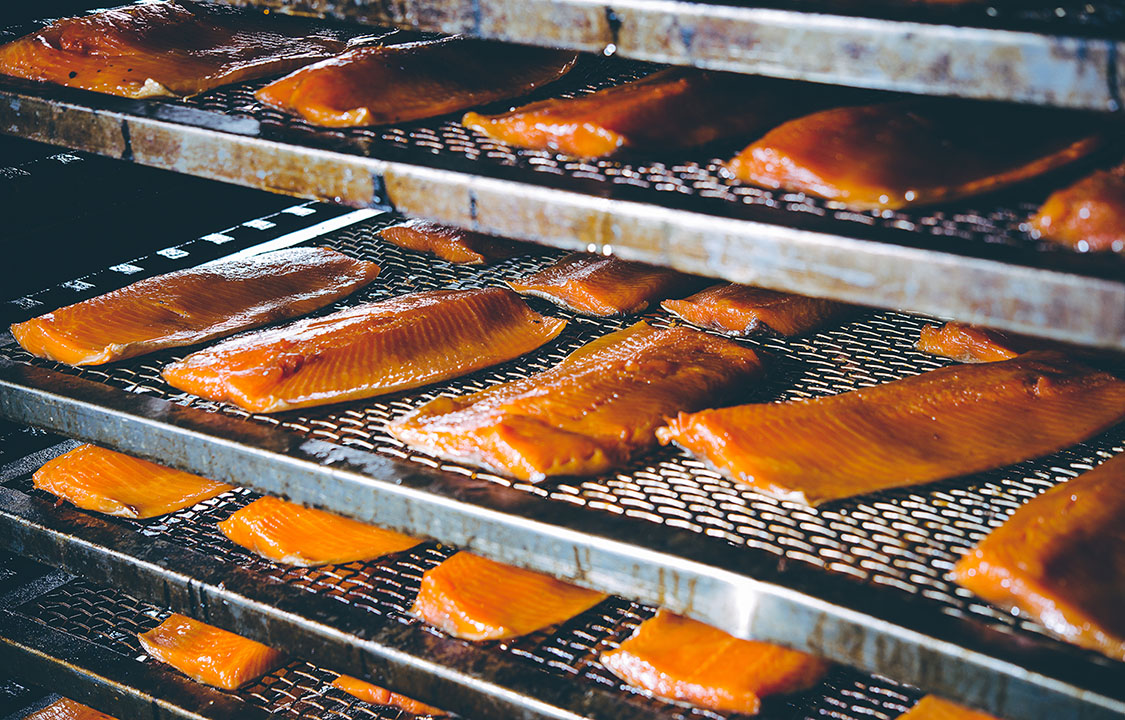
The European Union is planning a new initiative to upgrade its regulations on Listeria monocytogenes, in a move that could cause complications for the bloc’s smoked salmon industry, which objects to the need for more rules.
Previously, producers were required to show that listeria was not detected in a 25-gram portion of ready-to-eat food in sufficient quantities that its growth over time would exceed 100 colony-forming units per gram (cfu/g). Now, that requirement will apply to ready-to-eat foods in all situations during their entire shelf life.
Large and sometimes deadly listeria outbreaks in the E.U. have often been linked to cold-smoked salmon products, and an outbreak tied to Lerøy Seafood resulted in more than 700 reports of listeria contamination between August 2022 and November 2023.
Critics of the proposed regulation, in feedback given directly to the European Commission, said those outbreaks would in some cases still have happened even with the new regulations. The Chilled Food Association (CFA), which has helped establish best practices for chilled food since its founding in 1989, said the new regulations will do little to curb listeria outbreaks, as the current issue is a lack of enforcement rather than a need for regulations. The association pointed out that despite the E.U. promoting new guidance and rules regarding listeria, its prevalence only increased.
“It is apparent from the E.U.s now double its 2008 listeriosis rate, that the legislation and guidance are not being enforced effectively or risk-focused in those countries where rates have escalated,” the CFA said. “The current legislation is effective when enforced. It does not need to be changed.”
Salmon Scotland agreed with the CFA’s assessment and said that the current legislation is sufficient to tackle the issue when enforced.
“We firmly believe in the demonstrated efficacy of HACCP-based systems, adherence to good hygiene practices in the production environment, compliance with industry guidance, the adoption of best practice and a risk-based approach to decision making in all food businesses,” Salmon Scotland wrote. “It has been well-proven through epidemiological data, and indeed our own data, that this approach is effective.”
Other companies said the new regulations, rather than helping curtail listeria, could actually make it more difficult to combat. Mowi Lębork, Mowi's Polish production unit, said in comments provided to the European Commission that a lack of guidelines about conducting storage tests will cause more issues.
“Manufacturers will not be able to prove that listeria will not reach the 100 cfu/g limit at the end of its expiration date. It has not been specified how and how many tests should be performed, in what period, how to interpret the results and how to take them into account in the assessment of the effectiveness and correctness of HACCP,” the company said.
The European Salmon Smokers Association (ESSA) said that the regulations are not providing enough detail for harmonized implementation across the industry – and that if not done correctly the regulations could increase the number of alerts and recalls and cause a loss of consumer confidence in most E.U. markets, where the level of Listeria monocytogenes is already low.
“We believe the [European] Commission and the E.U. as a whole should also focus its efforts on the elimination or reduction of Listeria monocytogenes at primary producers levels,” the ESSA said.
European Parliament recently passed changes to regulations for smoked salmon processors, including rules governing the “stiffening” process, whereby processors reduce the ambient temperature of fresh salmon fillets to between -4 and -14 degrees Celsius to make slicing easier.
That process has now been given a 96-hour time limit, in a move that salmon processors said could lead to large-scale job losses. The European Commission Deputy Head of Food Hygiene Paolo Caricato said that the new rules will improve food safety.
However, salmon processors argued the process provides additional safeguards against Listeria monocytogenes, and that the move will only create more food waste and increase prices for consumers. The Polish Association of Fish Processors said fillets kept at stiffening temperatures remain safe for as long as 180 days, and said the new regulations lacked scientific justification.
