




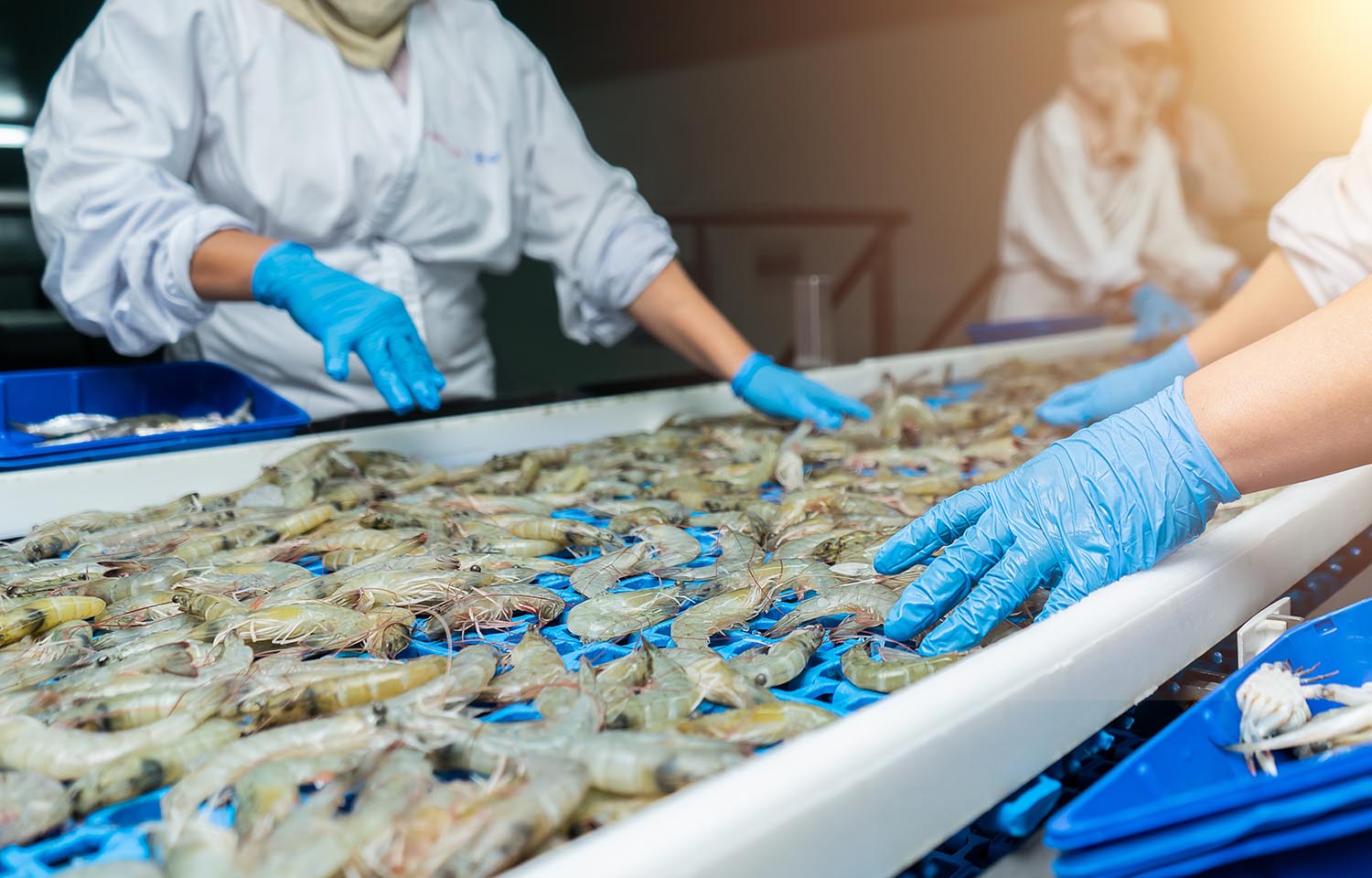
Foreign food inspections conducted by the U.S. Food and Drug Administration (FDA) have plummeted under U.S. President Donald Trump’s second term, according to an investigation by news outlet ProPublica.
“Basic regulatory oversight functions have been decimated,” Consumer Reports Food Policy Director Brian Ronholm told ProPublica. “There’s an enhanced risk of more outbreaks.”
Though the administration refused to provide the publication data on its inspections, a review of the FDA’s public-facing tracker showed that inspections were down roughly 30 percent compared to previous years. If the federal government stays on its current trajectory, it’s on track to complete the fewest number of inspections since 2011, with the exception of the two years following the Covid-19 pandemic. The FDA’s chart currently lists 2,024 foreign food inspections for 2025 so far, which is down from 2,764 in fiscal year 2024.
The FDA was already struggling to complete just a fraction of the foreign food safety inspections it was supposed to, according to a Government Accountability Office (GAO) report released at the beginning of the year.
“FDA has consistently fallen short of meeting its annual targets for foreign food facility inspections. While FDA officials told us that FDA’s existing foreign inspection targets are unrealistic and unachievable, the agency has not identified an alternative annual target or communicated with Congress regarding this issue,” the GAO reported. “Since fiscal year 2018, FDA has conducted far fewer foreign food safety inspections than its annual target of 19,200 foreign food safety inspections.”
However, the ProPublica report suggests that mass layoffs and resignations of federal employees have left the government without the necessary staff to keep up with inspections of foreign food production facilities.
FDA inspectors have also been hampered by the loss of key budget and travel staff needed to organize trips to foreign facilities.
ProPublica claimed that 65 percent of those employees were let go or resigned in the first several months of Trump’s second term, leaving inspectors in charge of coordinating their own flights, hotels, and travel documents. Reimbursements for those trips have also been slow to be cleared, creating a backlog of unpaid expenses that further complicate inspectors’ work. ProPublica reported that foreign food inspections can cost USD 40,000 (EUR 34,561) a visit and often involve months of planning.
The ProPublica report notes that the decrease in foreign inspections comes as the FDA has delayed or scaled back other food safety measures.
Most notably, in March, the federal government once again announced it was delaying implementation of the Food Traceability Rule, a component of the 2011 Food Safety Modernization Act (FSMA) that requires companies that manufacture or hold food on premises to maintain detailed documentation, from January 2026 to 2028.
The new requirements are intended to help the FDA and retailers to quickly trace foodborne illnesses or recalls back through a supply chain, but the agency has continuously pushed back the enforcement date to give companies more time to come into compliance.
“Even those few entities who are well-positioned to meet the final rule’s requirements by January 2026 have expressed concern about the timeline, in part because of their reliance on receiving accurate data from their supply chain partners, who are not similarly situated,” the FDA explained in announcing the delay. “Therefore, FDA intends to allow industry additional time, across all regulated sectors, to fully implement the final rule’s requirements.”
ProPublica reported that the FDA has also suspended a quality control program for its pathogen and contaminant labs and scaled back its Foodborne Diseases Active Surveillance Network to cover just two pathogens: salmonella and E. coli.
