





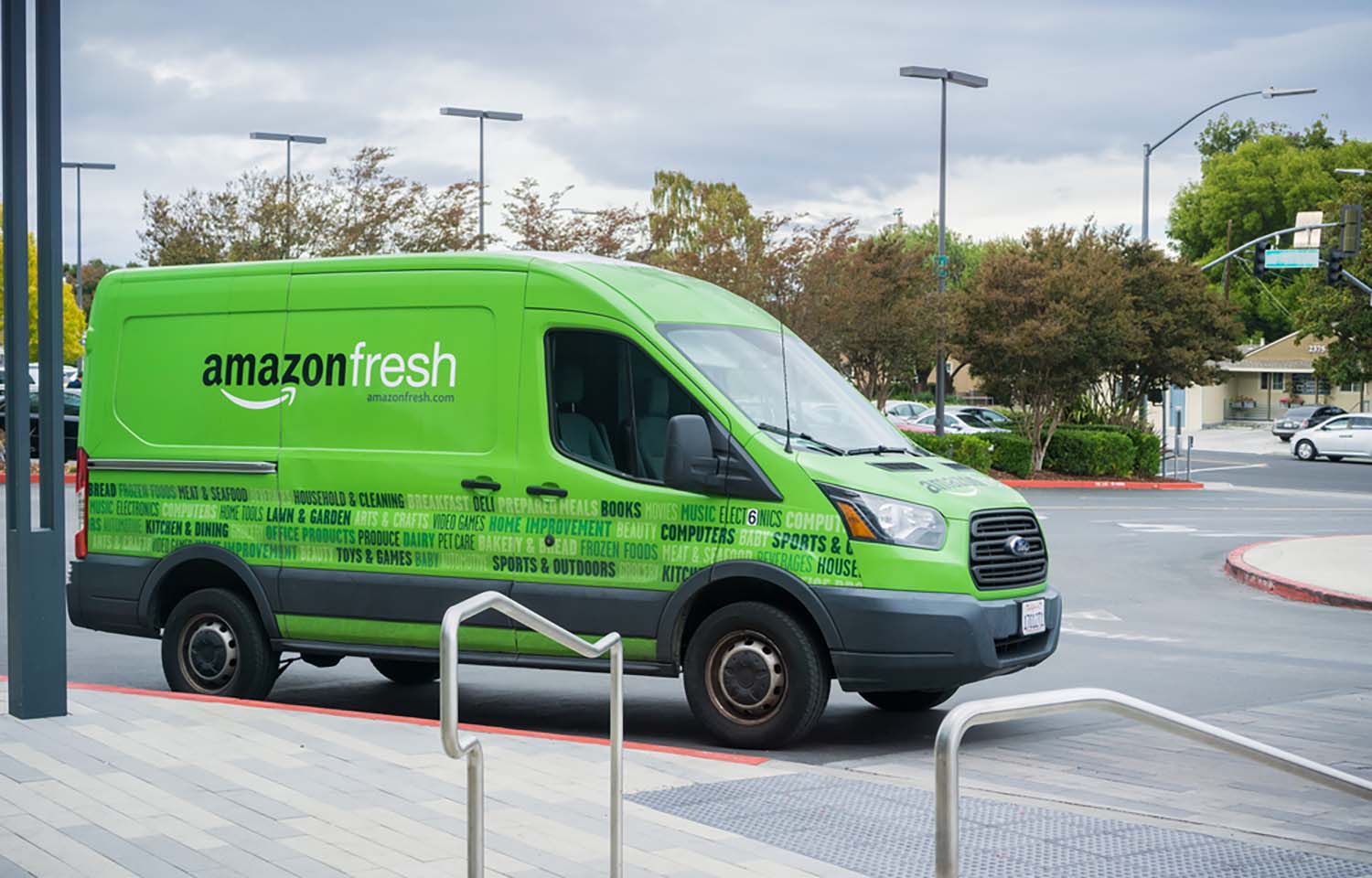
Retail giant Amazon announced on 13 August that customers in more than 1,000 U.S. cities can now shop for perishable grocery products – including fresh seafood – as part of its home delivery service.
After a successful test in cities such as Phoenix, Arizona, and Orlando, Florida, Amazon said that customers can now order fresh groceries across the country with their Same-Day Delivery orders. The company plans to expand the offering to more than 2,300 cities across the U.S. by the end of the year.
“This marks one of the most significant grocery expansions for Amazon as the company introduces thousands of perishable food items into its existing logistics network that is already optimized for speed and efficiency,” Amazon said.
Fresh seafood offerings that are part of the new service include Chilean sea bass fillets from Whole Foods Market, as well as other products like Mowi’s 12-ounce fresh Atlantic salmon portions priced at USD 9.99 (EUR 8.60).
Amazon’s specialized, temperature-controlled fulfillment network “ensures customers receive fresh, high-quality perishable grocery items, with every item undergoing a six-point quality check upon arrival and before leaving for delivery,” the company said.
Temperature-sensitive products are delivered in insulated bags that are recyclable in most cities’ and towns’ curbside recycling programs.
When Amazon began testing the service, many of the shoppers were first-time Amazon grocery customers who now return to shop twice as often with Same-Day Delivery service compared to those who didn’t purchase fresh food, according to Amazon.
"What’s more, early adoption in these regions showed the popularity of groceries among Prime members, with strawberries now consistently knocking AirPods out of the top five best sellers of all products sold,” Amazon said.
Same-Day Delivery is free for Prime members for orders over USD 25.00 (EUR 21.00) in most cities, or members can pay a Same-Day Delivery fee of USD 2.99 (EUR 2.56). For customers without a Prime membership, the service costs USD 12.99 (EUR 11.00), regardless of order size.
The new service is taking advantage of the explosion U.S. e-commerce grocery sales have undergone over the past few years.
E-commerce sales spiked 26 percent in the U.S. this July to reach USD 10 billion (EUR 8.6 billion) compared to July 2024, according to a recent Brick Meets Click Grocery Shopper Survey.
“Record-high household penetration, strong order activity, and solid gains in spending rates contributed to the exceptionally strong growth that helped online capture over 17 percent of total grocery spending during the month,” Brick Meets Click said in a press release.
Online grocery sales continue to experience “aggressive growth,” 210 Analytics Principal Anne-Marie Roerink told SeafoodSource.
“Expanded capacity, a home-centric meal landscape, and, above all, demographic shifts are likely to continue to fuel online growth,” she said.
Millennials are particularly turning toward purchasing groceries online, Roerink noted, adding that this demographic will make up the biggest share of total retail food and beverage spending in around two years.
“That means omnichannel strategies will be ever so important to grow fresh seafood sales online and in-store,” Roerink said.
To maintain pace with competitors like Amazon, fellow retail giant Walmart is aiming to boost grocery spending at its stores and online by offering its approximately 1.6 million employees a 10 percent discount on nearly all groceries, including meat, seafood, and frozen food, per CNBC. The discount previously applied only to fresh produce and most general merchandise items, such as clothing and toys. It used to only apply to other food items during the holiday season, according to CNBC.
The discount, which applies to 95 percent of regularly priced items across the store, is available immediately to U.S. employees after their first 90 days with the company, according to a memo from Walmart Chief People Officer Donna Morris.
“We’ve heard your feedback that these savings make a real difference for you and your families,” Morris said. “We have continued to hear that you would like to see this benefit expanded. In fact, it’s one of our most requested benefits.”
Walmart is also likely looking to retain employees who are worried about their food costs.
Overall food inflation rose 2.9 percent year over year in the U.S. in July, according to the U.S. Bureau of Labor Statistics’ Consumer Price Index. Food-away-from-home prices shot up 3.9 percent in the month, while food-at-home inflation stood at 2.2 percent.
As inflation grows, nearly all Americans (96 percent) are concerned about food costs, according to Circana’s July Shopper Survey, Roerink said.
“This has led to 65 percent more closely watching their grocery spending, 30 percent stocking up on good deals, and a growing popularity of private brands,” she said.
