





As tinned fish continues to draw in more customers, especially among younger generations, Bergen, Norway-based seafood brand King Oscar is attempting to capitalize on the growing market.
To do so, the 125-year-old brand, owned by food and beverage manufacturing company Thai Union since 2014, is diversifying its product offerings to a wide range of flavors.
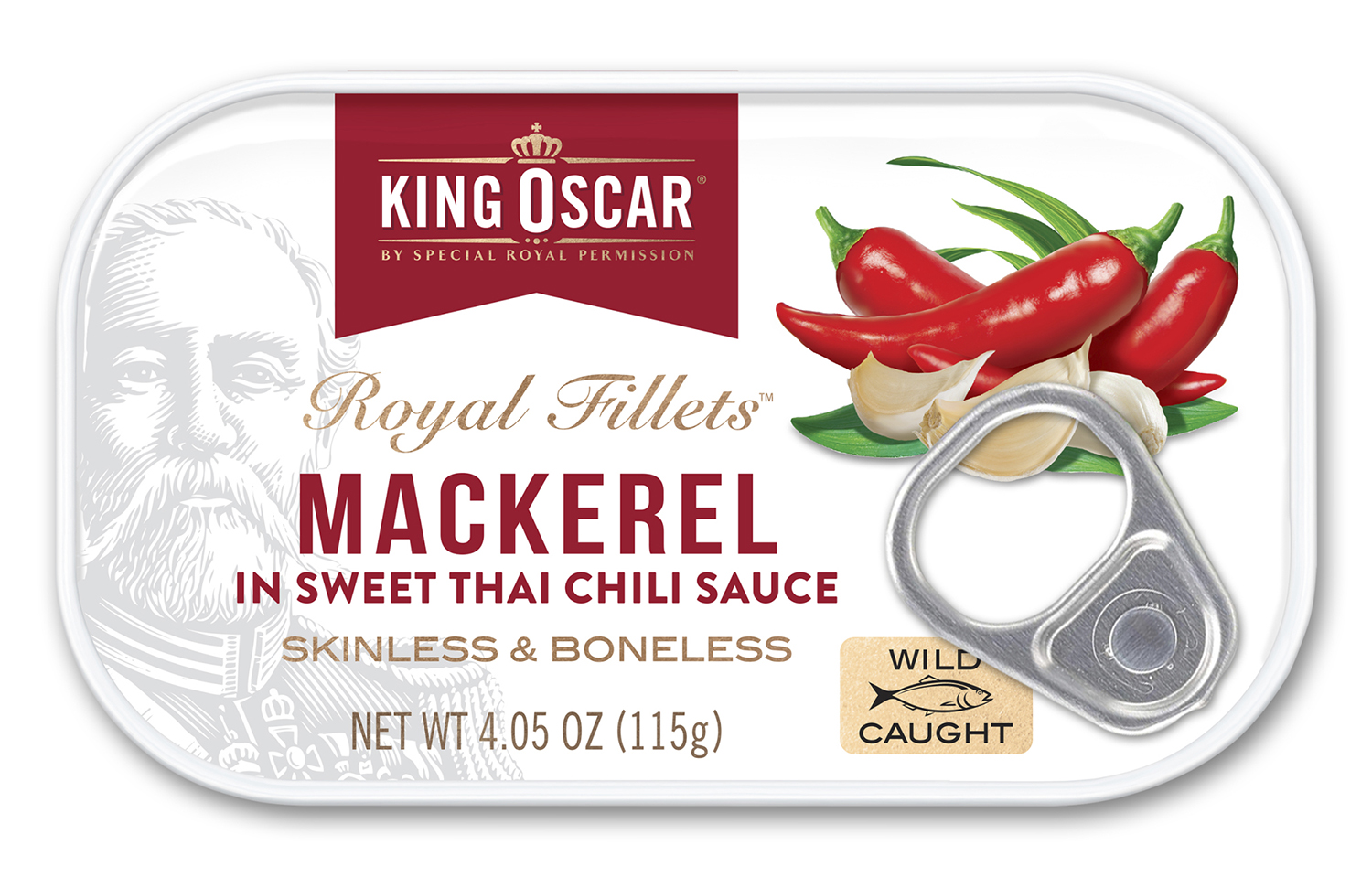
In addition to its traditional Premium Sardines product, the brand released Wild-Caught Mackerel in Sweet Thai Chili Sauce and King Oscar Kipper Snacks in Extra Virgin Olive Oil earlier this year.
The Sweet Thai Chili flavor was developed to “specifically meet consumer taste preferences for that perfect balance of sweetness and heat, capitalizing on the ‘swicy’ – sweet and spicy – trend with a bigger, bolder flavor experience,” King Oscar Director of Marketing and Business Development Lara Berman told SeafoodSource.
She also said that the recent releases aim to broaden the brand’s reach to a younger, more female audience.
“These products are loved by foodies looking for healthy, high-protein products with minimal prep times to fit into their busy lifestyles,” Berman said.
The innovation has paid off for the firm as the Sweet Thai Chili product has become one of the fastest-selling flavors for the supplier over the first six months it has been on shelves – both at a “major retailer partner” and on e-commerce sites, according to Berman.
As a result, in the firm’s most recent fiscal quarter, King Oscar Mackerel sales by value surged 63 percent year over year while sales of King Oscar Kipper Snacks rose 21 percent.
Berman attributes part of the success to the firm capitalizing on evolving consumer preferences, saying that during Covid-19, consumers were motivated to explore new recipes, ingredients, and meals so “a whole new generation of tinned fish consumers was born.”
“From Sardine Girl Summer to ‘Seacuterie’ Boards to tinned fish reviews on TikTok and Reddit, the social media trend blossomed [during Covid-19] and continues to this day,” Berman said.
The impact of TikTok has been particularly significant for tinned seafood, as food influencers have showcased recipe ideas, seacuterie boards, and other content that frames tinned seafood as an affordable form of luxury for multiple years now, 210 Analytics Principal Anne-Marie Roerink said during the recent “U.S. Seafood Performance H1 & Q2 2025” webinar.
In 2023, former Mowi Director of Communications Ian Roberts told SeafoodSource that social media was becoming more important for seafood companies and brands to pay attention to.
“This communication landscape is rapidly changing, and while our company is very active in what has been ‘traditional’ media, we are also reaching out to credible experts who engage in new platforms as well, including TikTok,” Roberts said at the time. “There is no doubt that the next generation of seafood consumers will learn about seafood from online influences, and we want to be sure we are engaging in those spaces.”
Now, combined views across the hashtags #tinnedfish, #sardines, and #tinnedfishtok ranged from 90 million to 290 million in the first half of this year, Roerink said.
This has led to consumer demand for sardines inclining 13 percent over the past year, while demand for mussels is up 12 percent and mackerel rose 7 percent, according to Tastewise’s 2026 Food & Beverage Trend Forecast.
“Mussels, mackerel, and sardines can deliver on the top claims driving both snacks (protein, premium, intense flavor) and seafood (sustainability, tinned, salty),” Tastewise said. “These species are culturally familiar and nutrient-dense, showing double-digit interest growth in social media discussion but a slight decline on menus, showing the increased growth of the snacking and take-home market.”
Americans’ increasing preference for premium tinned fish is benefitting other brands, too, such as Dover, New Hampshire, U.S.A.-based EcoFish, which owns the Freshé and Henry & Lisa’s Natural Seafood brands.
“The canned fish category had been stale for many decades prior to this. There was very little quality or innovation in the category,” EcoFish Founder and President Henry Lovejoy recently told SeafoodSource. “Consumers have evolved a lot in the past 10 years [with] many now seeking higher-quality natural and sustainable options in all food categories. This is bringing consumers into the space who previously avoided it. They are happy to pay more for quality and sustainability.”
