





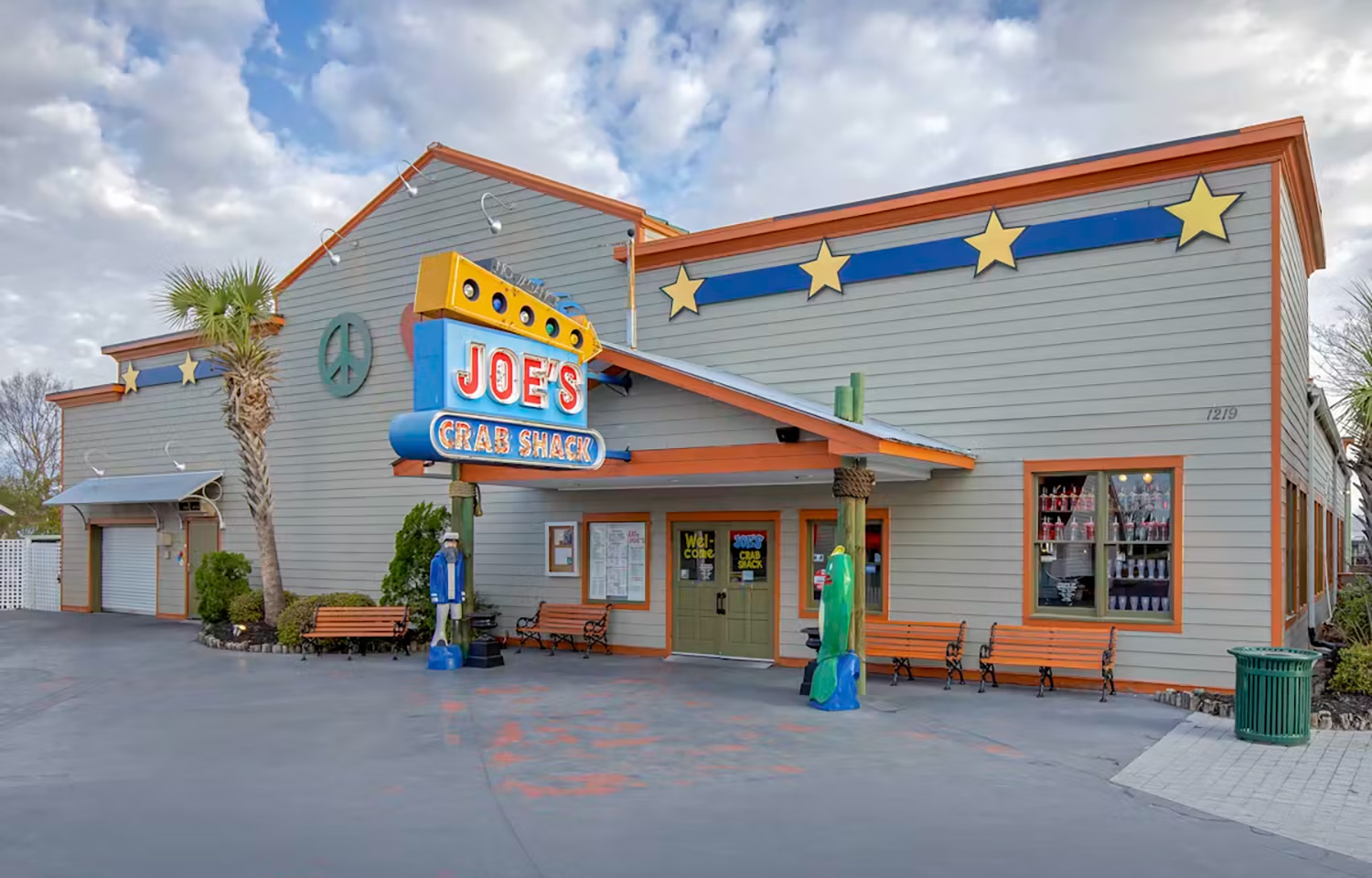
Restaurant operator Landry’s Restaurant Group has steadily closed Joe’s Crab Shack, McCormick & Schmick’s, and Oceanaire Seafood Room locations this year, in some cases replacing them with other restaurant concepts.
The Houston, Texas, U.S.A.-based company operates more than 500 restaurants, including Morton’s The Steakhouse and Bubba Gump Shrimp Co.
At one time, Joe’s Crab Shack had nearly 150 restaurants operating across the U.S., but after multiple closures this year, it now has just 18 left open, according to The Street, which attributed the closures to lease expirations, declining sales, and strategic shifts by Landry’s.
Joe’s Crab Shack closures over the past year have included locations in San Diego, California, U.S.A.; Fort Myers and Kissimmee, Florida; and Kemah and Corpus Christi, Texas.
Joe’s Crab Shack has been a “dying brand” for over 15 years, Pacific Management Consulting Group Founder and CEO John Gordon told SeafoodSource, who noted that during that period, Landry’s acquired Joe’s Crab Shack, sold it, and then reacquired it.
The reacquisition took place in 2017, when Landry’s won a bankruptcy court auction for the assets of Houston, Texas-based Ignite, which was the parent company of Joe’s Crab Shack and Brick House Tap Tavern at the time.
Landry’s has also steadily closed McCormick & Schmick’s Seafood & Steakhouse locations in recent years, including a restaurant in Portland, Oregon, in March of this year, which was the last location in the state, per KGW8. In Atlanta, Georgia, Landry’s also announced that one of its restaurant concepts, Mastro Ocean Club, will soon take over a former McCormick & Schmick’s location in the city, What Now Atlanta reported.
Similarly, earlier this year, Landry’s shuttered its Oceanaire Seafood Room restaurant in Atlanta and put in a Dos Caminos restaurant instead, which is a Landry’s Mexican restaurant concept, per What Now Atlanta.
Landry’s declined to reveal the specific number of restaurant locations it has closed in recent years, but Senior Vice President and Chief Administration Officer Karim Tamir told SeafoodSource that “locations, markets, and customer patterns naturally change.”
“As a company with over 500-plus locations, some of which have been open for over 20 years, we make the strategic decision to close certain locations given traffic patterns and new developments,” he said.
The seafood restaurant closures are not surprising, according to Darren Tristano, CEO of Chicago, Illinois-based consulting firm FoodserviceResults.
“Red Lobster seems to epitomize the seafood category – highly competitive, expensive protein, high prices, and some consumers just don’t like seafood and create a veto vote on attending in groups,” he told SeafoodSource.
With so many upscale independent and chain restaurants offering fish and shellfish, there are limited reasons to go to a restaurant that solely specializes in seafood, Tristano explained.
“You can get good fish at most steakhouses and polished/upscale restaurants,” he said.
Price volatility is also difficult for operators to maintain specials and consistent pricing, he emphasized, so the “market price” on high-end fish and shellfish can be a “difficult ask for a consumer.”
Regarding price volatility, restaurants have recently warned of the negative effects tariffs are beginning to have on the industry.
“Operating a restaurant is becoming increasingly difficult due to economic and regulatory pressure and a nearly 5 percent increase in wholesale food costs since last year,” National Restaurant Association (NRA) President and CEO Michelle Korsmo said in August. “These new tariffs on food and beverage items will exacerbate the situation. With restaurants operating on very tight margins, many operators may have no choice but to increase menu prices – something they are reluctant to do because we know Americans may have to make the choice to dine out less frequently if prices go up.”
For seafood-specific restaurants, Tristano said “the category has been and continues to be saturated, and closures will bring it into balance.”
While some upscale seafood restaurant concepts may be struggling, there has been increased demand overall for fine-dining.
Higher-income households in the U.S. surged to new highs over the last two years, per the NRA, which said that in 2024, there were 57.7 million households with an annual income of USD 100,000 (EUR 86,000) or more, which marked an increase of 5 million from 2022, according to the U.S. Census Bureau.
“Growth in the number of higher-income households is a positive sign for restaurants, as this demographic group represents the majority of spending in the industry,” the NRA said.
Households with incomes of USD 200,000 (EUR 172,000) or higher are responsible for 24 percent of the total spending on food away from home, while households with incomes between USD 100,000 (EUR 86,204) and USD 199,999 (EUR 172,409) account for 35 percent of industry spending, according to the U.S. Bureau of Labor Statistics.
