






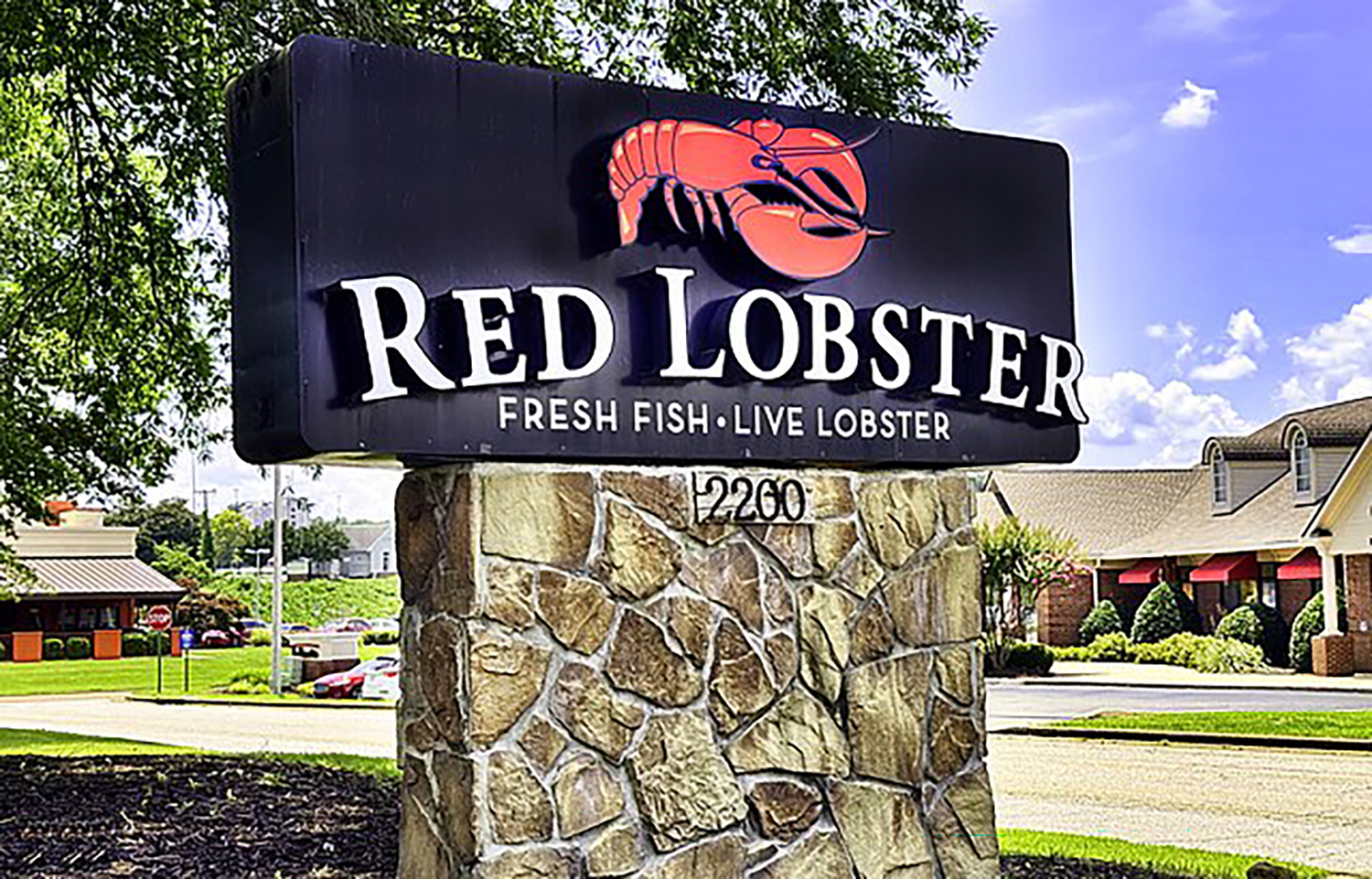
Orlando, Florida, U.S.A.-based restaurant chain Red Lobster recently shuttered two restaurant locations in Michigan and Texas as it continues to attempt to turn around its financial performance.
After filing for bankruptcy in May 2024, the chain has implemented several turnaround measures, such as new menu offerings, expanded cocktail options, marketing partnerships, a new catering service, and more.
Despite these efforts, it has struggled to find solid financial footing and has lost money in four of its last five quarters, according to Bloomberg.
Bloomberg reported that onerous real estate arrangements have resulted in around 100 chronically unprofitable restaurants draining profits from the rest of the chain. The firm closed two such locations – one in Bangor Township, Michigan, and one in El Paso, Texas – in March.
Red Lobster CEO Damola Adamolekun told The Wall Street Journal that the chain may continue to make similar moves and would potentially have to close additional restaurants.
According to FoodServiceResults CEO Darren Tristano, this comes as the casual dining industry as a whole in the U.S. continues to suffer from a glut of restaurant locations. As a result, weaker-performing locations “will be in the crosshairs of closure,” he said.
Tristano added that each closure decision will not be taken lightly, though, as closing a restaurant location is not as simple as it may seem.
“There are costs associated with closing stores like asset writedowns and lease liquidation expenses that can be more difficult for a chain versus operating at a loss to reduce these expenses,” Tristano said.
Even though Red Lobster is having challenges with its turnaround, the overall U.S. restaurant industry is growing.
Consumer spending at restaurants grew 3 percent year over year in 2025, according to Circana’s 2026 Definitive U.S. Restaurant Ranking Report. Consumers collectively spent USD 1 million (EUR 867,000) at restaurants every minute last year, and 99.7 percent of the U.S. adult population visited at least one of Circana’s top 50 restaurants, which includes Red Lobster.
The firm’s top 50 restaurants account for 61 percent of the entire restaurant industry’s sales, despite representing only 24 percent of all restaurant locations.
The restaurant sector, according to Circana, remained resilient despite a landscape of uncertainty marked by economic disruptions, weather events, and shifting consumer habits.
“Restaurant operators proved they are highly adaptable and innovative in navigating the widespread uncertainty of 2025. Those who maintain that forward-thinking, resilient mindset in 2026 will continue to find success and drive industry growth,” Circana Senior Vice President and Food Industry Advisor David Portalatin said.
