


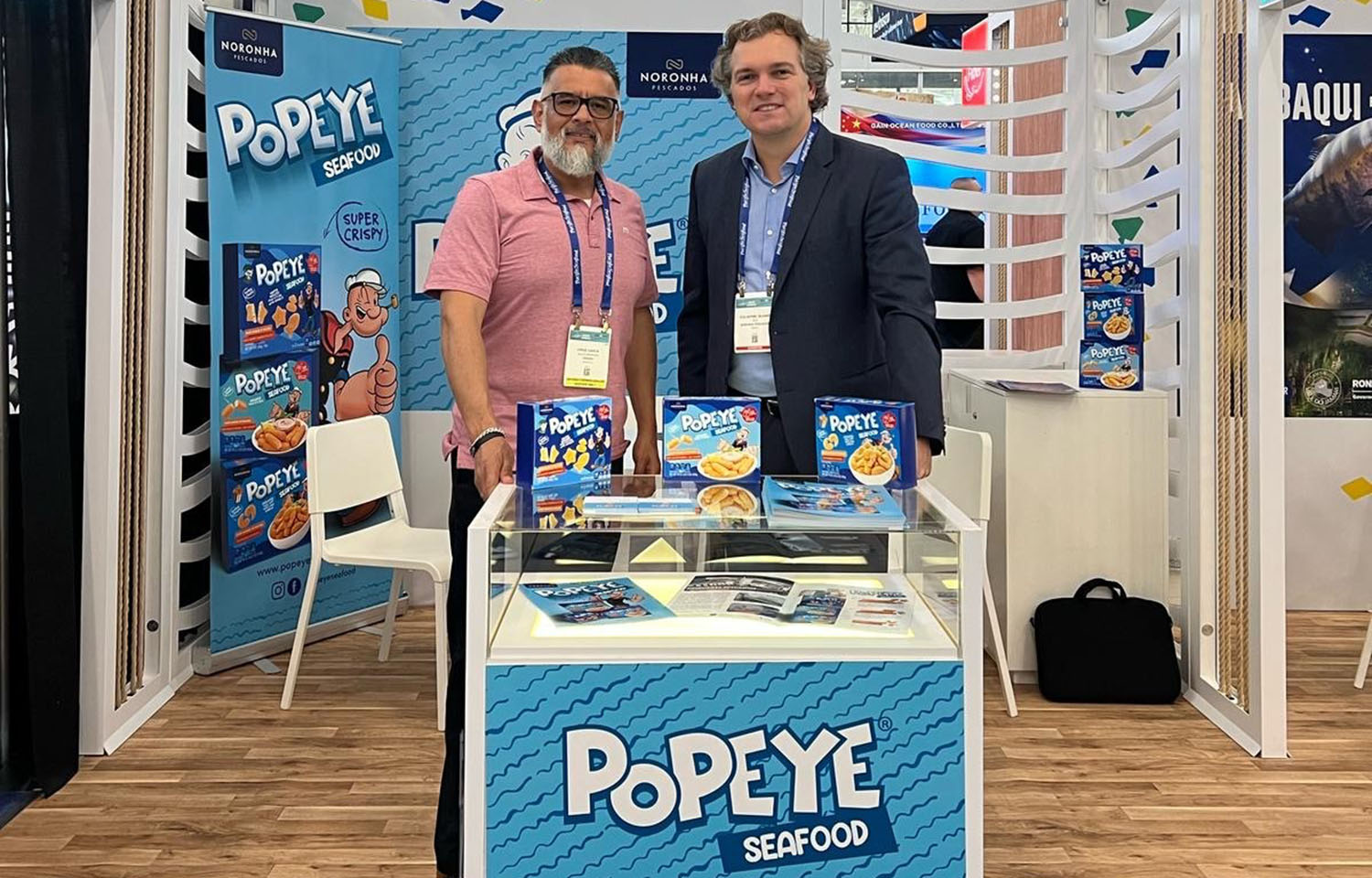
Brazil-based Noronha Pescados is entering the U.S. market, debuting its new Popeye Seafood brand as it works to gain a foothold with new consumers.
The 55-year-old seafood distributor, which boasted USD 55 million (EUR 51 million) in sales last year, is launching the Popeye Seafood brand internationally – first in the U.S., followed by Brazil, Mexico, and Canada, with other countries planned under an aggressive international expansion plan. The company signed a licensing deal with the owners of the American cartoon character Popeye, and plan to use him as a symbol for the brand due to his iconic status.
Noronha Pescados Director Guilherme Blanke told SeafoodSource the new brand garnered significant interest from major U.S. grocery buyers at Seafood Expo North America, which ran from 16 to 18 March in Boston, Massachusetts, U.S.A.
“We are very happy with the response we got in Boston. The best thing for us was that everyone who came through the booth saw Popeye as a very friendly brand and character,” Blanke said. “Retailers said, ‘I want to sell these,’ and people as consumers said, ‘Where I can buy these products to give my kids?’”
The line, which will be available for retail buyers in 60 to 90 days, includes breaded wild Alaskan pollock and spinach shaped into fish, starfish, and anchor shapes; breaded wild pollock sticks; and breaded popcorn shrimp. The MSC-certified pollock is supplied by Trident Seafoods and American Seafoods, while the shrimp is supplied by a variety of ASC and BAP-certified suppliers.
While some of the initial products are geared towards children, the fish fingers, popcorn shrimp, and a variety of planned future products will be popular among adults for appetizers and entrees, Blanke said.
The idea of licensing the iconic Popeye character, which turns 95 this year, emerged from the distributor’s search for a strong identity for its international expansion.
“With Popeye, we’re already starting with a brand that has strong recall with our target audience," Blanke said. “In addition to being well-recognized by audiences over 30 years old – who often make food purchasing decisions – it has a strong name and an incredible connection to the sea.”
While the products will also be available in Brazil, Noronha Pescados chose to target the U.S. market first, Blanke said, because “besides having a much higher per capita fish consumption than Brazil, the country has a public that highly values breaded products in their daily lives. We will innovate in this market with our products and recipes to meet a public that is always looking for something new.”
Next, the company plans to export the products to the Middle East, Europe, the U.K., and other South American countries beyond Brazil, according to Blanke.
To support Popeye’s international growth, the company is expanding its breaded seafood production facility in Brazil and plans to open distribution and processing units in Miami, Florida, U.S.A., as well as Portugal and Dubai.
Noronha Pescados is investing USD 5 million (EUR 4.6 million) to add processing equipment to its existing facility, which Blanke said will increase capacity from 200 metric tons to 600 metric tons monthly. The project will be completed by the end of this year, or early 2026.
The expansion is also supported by a USD 1 million (EUR 926,280) marketing investment plan over the next three years, along with partnerships with seafood promotion agencies such as the Alaska Seafood Marketing Institute and the Genuine Association of Alaska Pollock Producers (GAPP).
The growth strategy also includes expanding the Popeye Seafood portfolio, staring with Alaska pollock fillets.
“In the second half of the year, we will launch other products from our mix under the Popeye brand, such as frozen cooked shrimp, cod, and salmon portions, among other products,” Blanke said. “We will also develop ready-to-eat dishes, always aiming to associate fish with spinach, reinforcing the concepts of sustainability and healthiness, and linking these concepts to Popeye."
The company is also researching adding canned seafood, including salmon, tuna, mahi, and shrimp, under the Popeye brand.
"In Brazil, we have a very wide product range ... we have the same expertise in species and presentations for the American market as well,” Blanke said.
Thanks to the aggressive growth plan, Blanke said he expects Popeye Seafood to contribute 50 percent of the company’s sales growth over the next few years, projecting total sales for Noronha Pescados to reach USD 150 million (EUR 129 million) by 2029.
The company, which has been focused on sustainable seafood initiatives for years, intends to associate Popeye with sustainability initiatives, including preserving the Amazon Rainforest and allocating part of the profits from the Popeye brand to environmental projects.
“We want Popeye to become a great protector of the Rainforest," Blanke said.
