






Zaandam, Netherlands-headquartered Ahold Delhaize will close 32 underperforming Stop & Shop supermarkets by the end of the year.
Quincy, Massachusetts, U.S.A.-based Stop & Shop, owned by Ahold Delhaize, announced the closures in May and revealed the list of closures 12 July. They include five stores in the state of Connecticut, eight in Massachusetts, 10 in New Jersey, seven in New York, and two in Rhode Island. After the stores are closed, Stop & Shop will operate more than 350 stores across five states. Stop & Shop said its employees at impacted locations will be offered other opportunities within the company.
“Stop & Shop is proud of the deep roots and community ties we have developed as a neighborhood grocer of more than 100 years,” Stop & Shop President Gordon Reid said.
Reid said the closures were intended to “create a healthy base for the future growth of [the] brand.”
“Stop & Shop is focused on growing through large, multi-year price investments and a stronger customer value proposition – both in-store and online,” Reid said. “This means we’ll be focused on delivering lower everyday prices, as well as even more savings for our customers through strong promotions.”
Stop & Shop said it has remodeled more than 190 stores with the customer shopping experience in mind, Reid said.
"These stores are outperforming other Stop & Shop stores that haven’t been remodeled,” he said. “We’re taking these learnings and implementing them at other stores as we build upon our strong foundation, similar to our new Boston flagship location – opened last month in the Allston Yards development.”
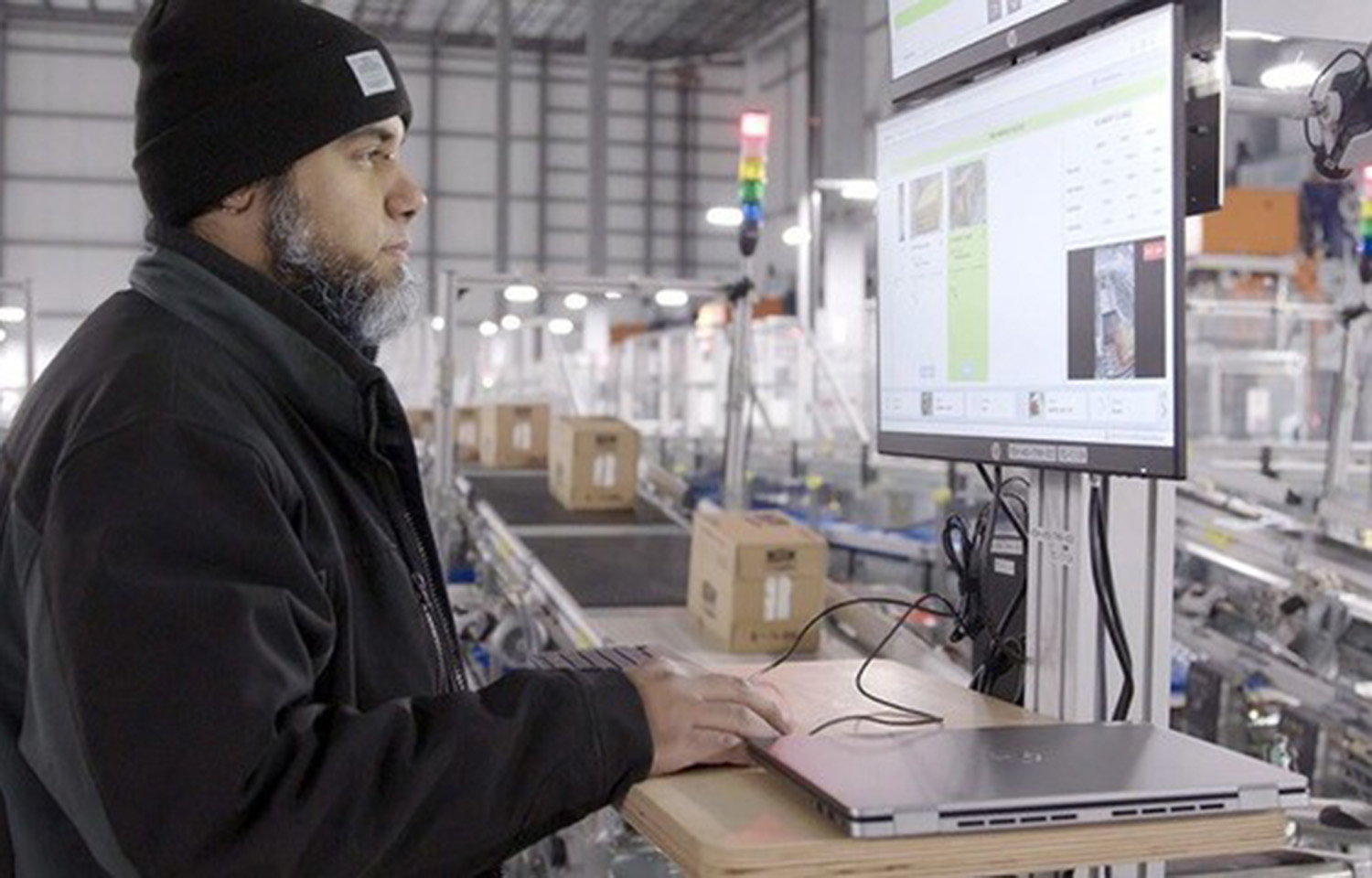
Separately, U.S. retail giant Walmart is enhancing distribution of its perishable products by building five new high-tech perishable distribution centers and expanding four other distribution centers, Walmart U.S. Executive Vice President of Supply Chain Operations Dave Guggina said.
Its first high-tech distribution center in Shafter, California, U.S.A., has been operational since 2021, while the second in Lancaster, Texas, U.S.A. is ramping up operations. The next distribution centers to open will be in Wellford, South Carolina, U.S.A.; Belvidere, Illinois, U.S.A.; and Pilesgrove, New Jersey, U.S.A.
“Collectively, these facilities bring around 2,000 new jobs into these communities and our supply chain network,” Guggina said.
Walmart is also expanding four traditional perishable distribution centers by adding more than 500,000 square feet of automation per site to increase capacity for fresh products. The company will expand its facilities in Mankato, Minnesota, U.S.A.; Mebane, North Carolina, U.S.A.; Garrett, Indiana, U.S.A.; and Shelbyville, Tennessee, U.S.A.
“That’s why we’re adding state-of-the-art tech to our facilities: to enable greater speed and capacity that allows us to serve customers even more reliably,” Guggina said.
The high-tech distribution centers can store double the number of cases and process more than twice the volume of a traditional perishable distribution center – more than doubling the number of cases processed per hour, according to Guggina.
To that end, Walmart is upgrading its Winter Haven, Florida, U.S.A., distribution center to integrate the new technology into the space.
“Our goal is to learn more about the feasibility and requirements of retrofitting an existing grocery building with automation technology, similar to how we have approached our ambient distribution center in Brooksville, Florida," Guggina said.
