






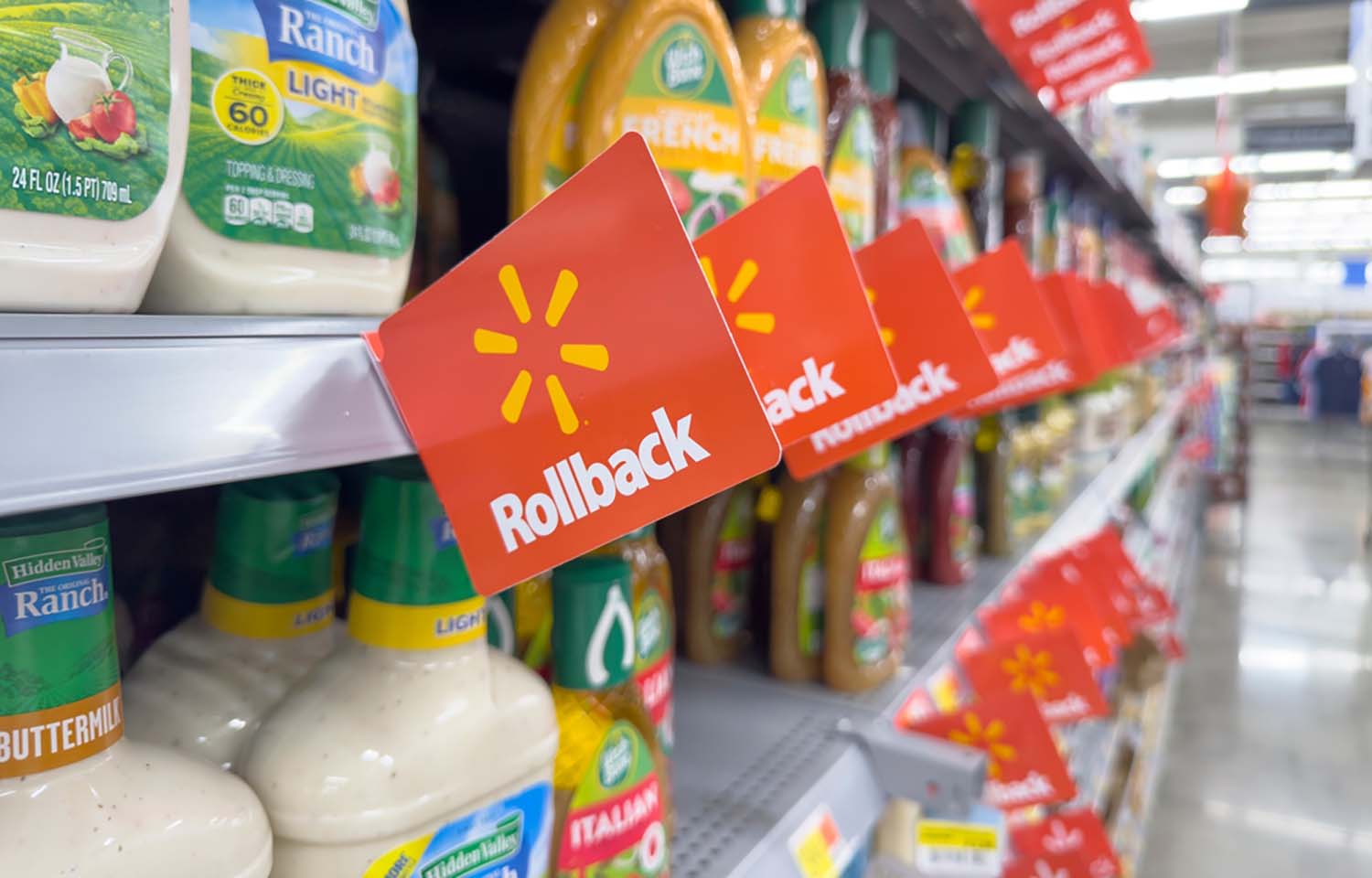
Retailers in both the U.S. and Canada have implemented price drops in order to entice shoppers, many of whom are seeking value wherever they can find it amid continued global trade uncertainty.
Bentonville, Arkansas, U.S.A.-based retail giant Walmart rolled back prices on 7,400 items in the second quarter of its 2026 fiscal year, which is 2,000 more than the same period last year, per Supermarket News.
Walmart U.S.’s comparable sales (excluding fuel) grew 4.6 percent during the period, which ended 2 August, while comparable e-commerce grocery sales soared 26 percent.
CEO Doug McMillon said on a recent investor call that the firm has seen strong back-to-school sales and expects a solid holiday season at the end of the year; as a result, Walmart increased its sales outlook, now expecting its net sales to grow between 3.75 percent and 4.75 percent for the full fiscal year compared to its previous forecast of between 3 percent and 4 percent.
McMillon explained that merchants have responded “creatively and urgently” to avoid placing additional pressure on customers and members due to U.S. tariffs. Additionally, the impact of tariffs has been gradual enough that customer behavior has not shifted too dramatically, he said.
However, McMillon said that as Walmart replenishes inventory at post-tariff price levels, the retailer has “continued to see our costs increase each week.”
“We expect that trend to continue into the third and fourth quarters,” he said.
McMillon has been warning since May that Walmart may have to institute sweeping price increases if tariffs have continued – a move the firm has yet to implement en masse.
Smaller retailers in both the U.S. and Canada are similarly slashing prices in order to appeal to value-conscious shoppers.
Quincy, Massachusetts, U.S.A.-based Stop & Shop recently expanded its lower prices initiative to all of its stores. The rollout is expected to be completed by the end of August and is expected to be applied across nearly every department. Both national brands and Stop & Shop’s private-label products will be part of the initiative.
“With this latest effort, Stop & Shop has now implemented lower everyday prices across all of its 116 store locations in Massachusetts, delivering on its commitment to make groceries more affordable for local customers,” the company said.
The initiative is part of a broader, multi-year transformation strategy Stop & Shop announced in May 2024 that includes lower prices, store remodels, and a renewed focus on driving a better in-store experience for local customers.
M&M Food Market, based in Toronto, Ontario, Canada, is also lowering prices on more than 150 popular items.
The company operates more than 300 stores across the country and notes that 80 percent of its products are made in Canada, using a blend of domestic and imported ingredients “to ensure quality and value.”
“We know Canadians are looking for ways to stretch their grocery budgets without sacrificing quality, and this initiative ensures they can do exactly that,” M&M Vice President of Marketing & Innovation Tammy Sadinsky said.
The company offers a variety of frozen food, including seafood, along with meals and appetizers.
Price drops are not the only strategy retailers are turning toward this year.
Marlborough, Massachusetts, U.S.A.-based BJ’s Wholesale Club, which operates 88 stores, expanded its Fresh 2.0 Initiative to include meat and seafood earlier this year.
The strategy has paid off, as the firm’s comparable club sales, excluding gasoline sales, grew by 2.3 percent year over year during the second quarter of its 2025 fiscal year.
Chairman and CEO Bob Eddy said during a recent earnings call with investors that the meat category performed particularly well in the second quarter, with seafood also showing improvement, according to Supermarket News.
After performing “comprehensive market studies and competitive assessment” for meat and seafood last year, BJ’s found that the biggest opportunity was in assortment and presentation, according to Eddy. Therefore, the retailer optimized its assortment to “better reflect localized member preferences, adding items that members wanted and removing less relevant ones,” he said.
BJ’s also added signage and dividers in its coolers for cleaner presentation and easier navigation, similar to changes the company made when it first launched the Fresh 2.0 initiative in produce.
