





Red Lobster and Rubio’s Restaurants filing for bankruptcy, higher menu prices, and lower foot traffic have created a challenging environment for many U.S. restaurant operators, yet major foodservice distributors continue to grow their sales.
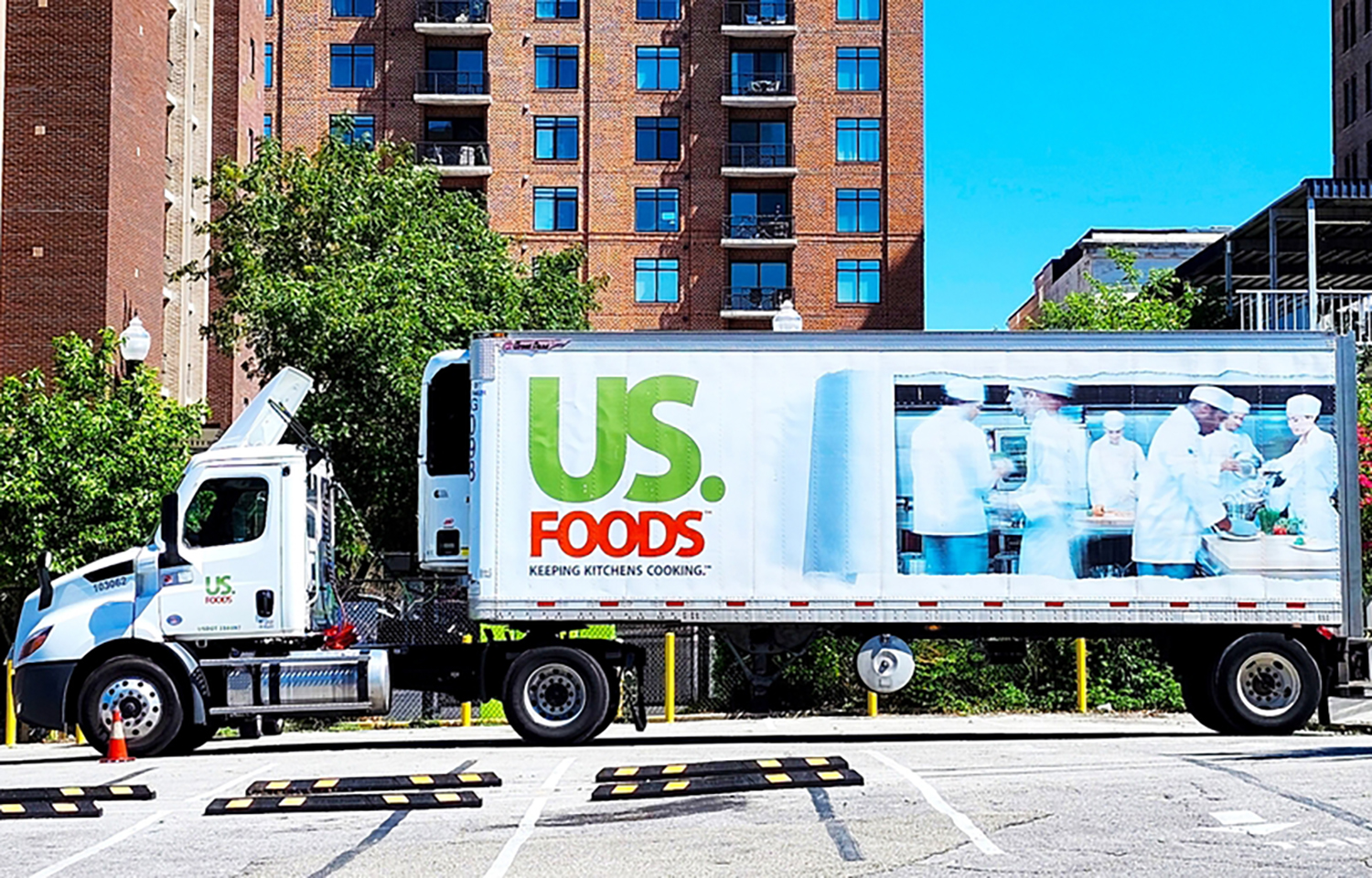
Rosemont, Illinois, U.S.A.-headquartered US Foods reported a 4.8 percent year-over-year net sales hike in Q1 2024, amounting to USD 8.9 billion (EUR 8.2 billion). Its gross profit increased 4.8 percent to USD 1.5 billion (EUR 1.4 billion), and adjusted EBITDA inclined 5.6 percent to USD 356 million (EUR 327 million).
“Our results for the first quarter were in line with our expectations, demonstrating the strength of our business model and our ability to win in any environment as we overcame both internal and external headwinds to start the year,” US Foods CEO Dave Fittman said. “Our differentiated model and strong value proposition are resonating with our customers which has helped propel us to grow share with independent restaurants for twelve consecutive quarters,” Fittman said.
Based on its strong quarterly performance, US Foods has reaffirmed its full-year 2024 projections of net sales between USD 37.5 billion (EUR 34.5 billion) and USD 38.5 billion (EUR 35 billion), along with an adjusted EBITDA range from USD 1.69 billion (EUR 1.55 billion) to USD 1.74 billion (EUR 1.6 billion), according to Fittman. The company’s board has also authorized a USD 1 billion (EUR 919 million) share repurchase program, citing its solid performance.
To ensure that it can maintain its momentum, US Foods has decided to focus more on its core broadline distribution business and has begun seeking strategic alternatives for its Chef’Store cash-and-carry retail business.
Though the company is pursuing a sale of the brand, it will continue with previous plans to open five new Chef’Store locations later this year. After the additions, the Chef’Store portfolio will include 95 locations in 14 states, according to Supermarket News.
“As we move through this review process, we will remain fully committed to supporting the business, our associates, and our customers,” US Foods said.
Houston, Texas, U.S.A.-based foodservice giant Sysco also reported an increase in sales and profits in its fiscal third quarter of 2024. Its sales increased 2.7 percent year over year to USD 19.4 billion (EUR 18 billion), while its gross profit increased 5.2 percent to USD 3.6 billion (EUR 3.3 billion). The company’s operating income increased 3.8 percent to USD 722 million (EUR 663 million), and adjusted operating income increased 8.4 percent to USD 799.3 million (EUR 734 million).
Sysco has attributed the increase in gross profit to positive volumes, as well as “continued progress with effective management of product cost inflation and our strategic sourcing initiative.”
“Our third-quarter performance demonstrated disciplined efforts to deliver strong profit growth, despite a softer macro backdrop,” Sysco Board Chair and CEO Kevin Hourican said. “The agility and accountability of the leadership team enabled us to deliver our profit objectives for the quarter, despite softer sales and case volumes.”
Hourican cited lower restaurant traffic as impacting Sysco's case sales by volume.
U.S. restaurant traffic came out of the gate in 2024 with a slow start in January, declining in the high single digits year over year, Hourican said during an early May investor call. While February and March foot traffic decreased at a slower pace, the resulting lost business impacted case volume growth, according to Hourican.
“It is our belief that restaurant menu prices have impacted foot traffic, and this is something that needs to be addressed more broadly by the industry,” Hourican said. “The industry needs to take actions to improve affordability for end consumers.”
Fewer restaurant visits nationwide mean Sysco needed to work harder achieve higher sales and profit, Hourican said.
“We converted the negative traffic at restaurants into sales and case growth at Sysco by taking market share, profitably,” he said. “With that said, we are focused upon improving local case volume performance through a set of specific actions, inclusive of continued investments into our people, process, and technology in local sales.”
