


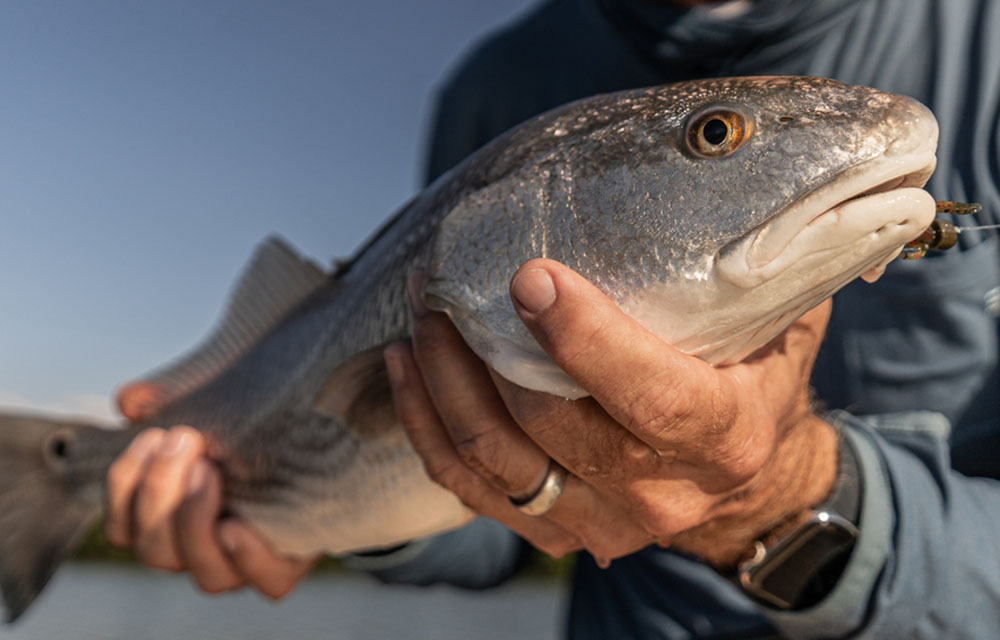
Hawai’i-based mariculture startup Ocean Era said it has secured the final permit needed to launch a red drum farming demonstration 40 miles off the coast of Florida.
With Velella Epsilon, Ocean Era plans to raise up to 20,000 red drum in a single net pen about 40 miles off the coast of Sarasota, Florida, U.S.A. According to a U.S. Environmental Protection Agency (EPA) permit, the project is expected to produce a total fish harvest weight of 46,750 pounds with an 85 percent survival rate.
The Velella Epsilon project has been in development for several years as the company worked to secure key permits from the U.S. government, with vocal opposition from some conservation groups opposed to commercial offshore fish farming in the Gulf of Mexico, currently referred to as the Gulf of America by the administration of U.S. President Donald Trump. In announcing the final permit, Ocean Era CEO Neil Anthony Sims emphasized that Velella Epsilon was only a demonstration, not a commercial endeavor.
“It's very gratifying to – at last! – receive this final permit for our demonstration project. But ... this project is for just a single batch of red drum, to be grown 40 miles offshore. It's maybe 1 percent the size of a commercial fish farm,” Sims said in a LinkedIn post. “The red drum are a native species, with millions of juveniles that are already released into the wild each year – deliberately – to supplement the recreational fishery.”
Despite receiving initial approval for the project in 2020, Ocean Era has faced several challenges from conservation groups, delaying its launch for years. In 2025, the EPA granted the project the first federal permit authorizing offshore finfish farming in U.S. federal waters. Conservation groups were quick to denounce the decision.
"The EPA's decision to approve this permit for the Velella Epsilon project is deeply disappointing and dangerous. Industrial aquaculture operations like this introduce pollution, threaten native fish populations with disease and genetic disruption, and put Gulf Coast communities who rely on clean water and healthy fisheries at risk. This project is a gateway for the expansion of factory fish farms in our open waters," Healthy Gulf Executive Director Martha Collins said at the time.
Sims pointed out in his announcement that the permitting process took too long and needs to be reformed. He pointed to the Marine Aquaculture Research for America (MARA) Act – legislation that was introduced in the U.S. Congress last year – as an example of legislation that could improve the permitting process for offshore aquaculture.
“So ... we do not like to complain, but ... it really should not be this hard! It shouldn't take eight years for the permits for a short-term demonstration project such as this!” Sims said. “If America wants seafood abundance, if we want healthy, delicious fish on our plates, and if we want to be less reliant on other countries for our seafood, we need to figure out how to grow the fish ourselves. We can't do that by just sitting on the beach and wishing for fish.”
