






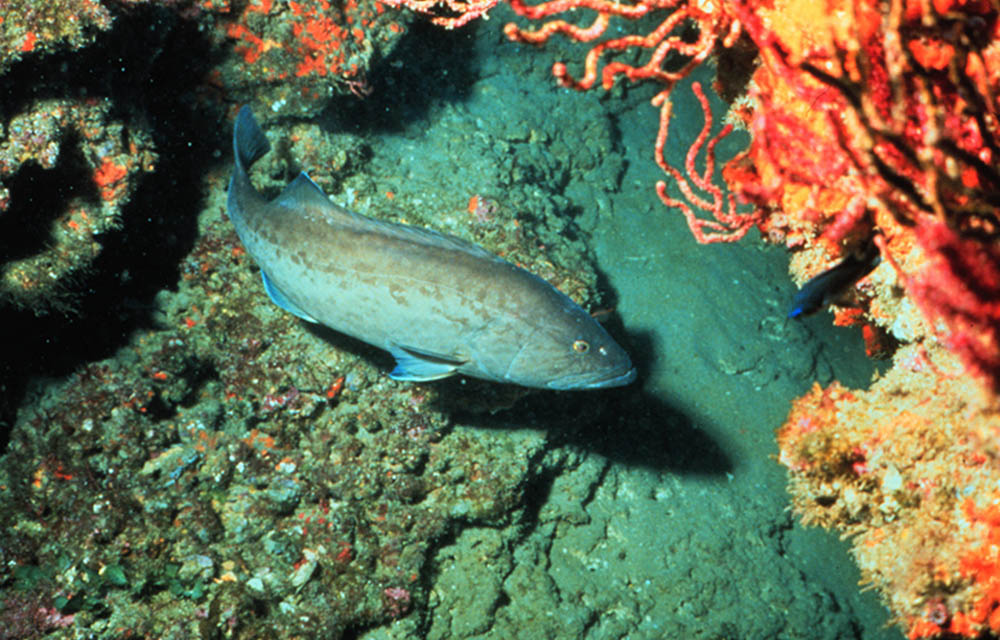
The U.S. Court of Appeals for the 11th Circuit ruled that gag grouper regulations for the Gulf of Mexico were passed appropriately, rejecting a constitutional challenge to the fishery management council structure brought by two Florida fishers.
Dominick and James Russo of Sarasota, Florida, U.S.A.-based FFC Seafood challenged NOAA Fisheries’ Amendment 56, which slashed the allowable biological catch of gag grouper from 3.12 million pounds in 2023 to just 444,000 pounds in 2024. Citing harm to their business to the 85 percent decrease in allowable biological catch, the brothers sued to vacate the regulation in 2024.
In the lawsuit, the Russos challenged the constitutionality of the Gulf Council which proposed Amendment 56, arguing that members of the council do not align with the Appointments Clause of the U.S. Constitution. There have been multiple legal challenge to the regional fishery management councils’ structure in recent years; though the government maintains that the councils are merely advisory in function, plaintiffs argue that their ability to veto regulations makes them officers of the U.S. Therefore, the councilors fall under the Appointments Clause and should be appointed by the president, they argue. Under the current structure, councils are made up of a combination of state representatives and those nominated by the governors.
Courts have largely agreed with the substance of these challenges, determining that the councilors do hold authority that is limited to officers under the Appointments Clause. Instead of ruling that the councils are unconstitutional or requiring councilors to be appointed by the president, however, the courts have simply removed the unconstitutional veto power they hold. Both the Third Circuit and the Fifth Circuit have issued rulings eliminating councils’ pocket veto powers while keeping the council structure and the regulations they’ve proposed in place.
In the Russos’ case, the district court technically ruled in the brothers’ favor but ultimately agreed with the other courts in concluding that the veto powers should “be severed from the Act as unconstitutional.” However, the district court kept the gag grouper rule in place.
Now, the Eleventh Circuit has weighed in, agreeing that the veto powers are unconstitutional but ruling that the gag grouper regulation being challenged was approved legally and should remain in place.
“We have concluded, like the Third and Fifth Circuits, that the Council’s veto powers give it significant authority, but all agree that the veto powers had no effect on the gag grouper rule,” the court stated in its 3 September ruling. “Instead, the Council made an advisory proposal, which the Secretary independently adopted. This two-step process, as we have explained, does not involve the exercise of significant authority by the Council. Because the Secretary exercised the authority to promulgate the regulation independent of any authority of the Council, the Appointments Clause does not justify invalidating the gag grouper rule.”
Public interest law firm Pacific Legal Foundation – which represented the brothers in court – expressed disappointment with the court’s decision.
“The Russos asked the court to protect their ability to make a living fishing in the Gulf, and unfortunately, the court left these restrictions in place,” Pacific Legal Foundation attorney Michael Poon said in a release. “While the court recognized that members of the Gulf Fishery Management Council are unconstitutionally appointed, it allowed the quota reduction adopted by these officials to stand. The law is clear that actions taken by unconstitutionally appointed officials are void, and we are considering our next steps.”
