






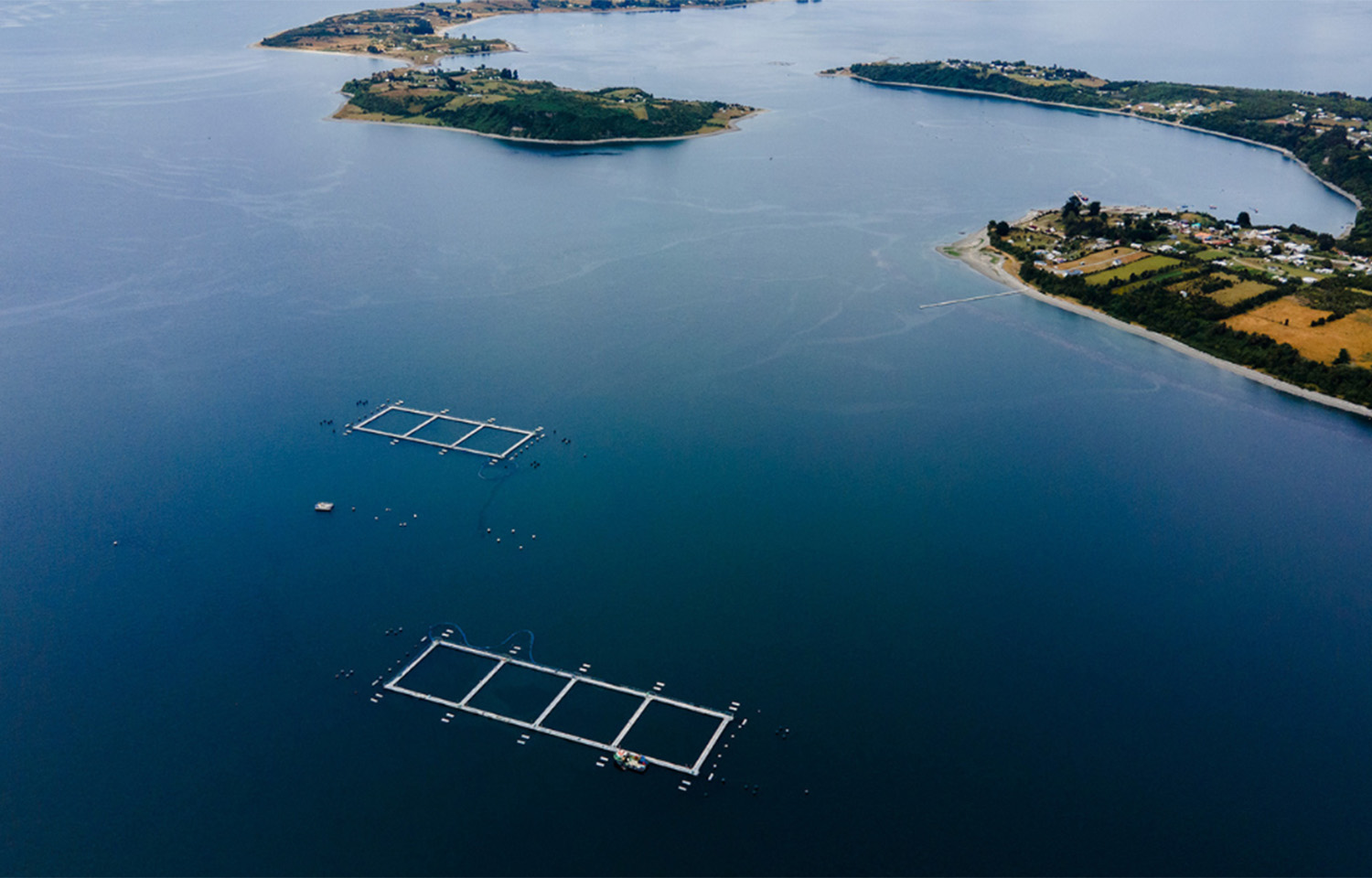
For much of the past 20 years, Chile’s salmon industry has been impacted by crises, regulatory tightening, and political conflict. But according to Multi X CEO Cristián Swett, the tide may finally be turning.
Speaking at the 2026 North Atlantic Seafood Forum in Bergen, Norway, Swett said the industry is currently entering a new phase akin to that of its earlier trajectory. Swett said that in the early 2000s, Chile was widely seen as the global salmon industry’s growth engine, with the country’s extensive fjords, suitable water temperatures, and political support allowing production to expand rapidly.
“I joined the industry in 2001 and by that time Chile was growing fast,” Swett said. “It was an innovative country. It was cost-efficient. It had strong social and political support.”
At that time, the country appeared poised to challenge Norway for global leadership in terms of farmed salmon production. But the momentum stalled dramatically after the infectious salmon anemia (ISA) crisis struck in 2007.
“We lost 75 percent of our biomass of Atlantic salmon,” Swett said. “In 2008, we harvest 400,000 metric tons [MT] of Atlantic salmon. In 2010, it was only 100,000 MT.”
The ISA outbreak triggered sweeping regulatory changes, including stricter environmental controls and a complete restructuring of Chile’s farming model. Further shocks followed, including a massive algal bloom in 2016 that wiped out roughly one-fifth of the industry’s biomass in just three months.
At the same time, the industry faced increasing territorial constraints. Chile’s government expanded marine conservation areas, while new legislation created mechanisms for indigenous groups to claim maritime space. According to Swett, Chile now has 41 percent of its marine territory under some form of protection, rising to about 60 percent in the regions where salmon farming operates.
Many of these new claims overlap with existing aquaculture concessions.
“Around 95 percent of the concessions have some conflict with another interest in Chile,” Swett said.
The impact on industry expansion has been dramatic. Historically, Chile granted dozens of new aquaculture concessions each year. In recent years, approvals have virtually stopped, with just two concessions given in the past six years.
Underlining the slowdown, Swett highlighted that in 2006, Norway was producing only 9 percent more than Chile. Today, it’s 50 percent more, he said.
Political dynamics have also added uncertainty with the now outgoing government – led by President Gabriel Boric – adopting a critical stance toward the salmon sector, strengthening regulatory oversight and environmental scrutiny.
“Right now, we have an extensive, complex, uncoordinated, and constant regulation,” Swett said.
Despite these challenges, he believes that from 2023, the political and social climate began shifting.
A key moment came when thousands of salmon industry workers mobilized against proposed legislation that could have further restricted production, he said.
“That day 10,000 salmon workers came out and took the streets. They said they were proud to be salmon farmers," he said.
Since then, several developments have helped change the debate, including the rejection of large indigenous maritime claims, increased scrutiny of NGO funding, and stronger regional political support for aquaculture.
Recent local elections also produced governors in all major salmon-producing regions who back the industry.
“Now in every single space where we produce salmon, we have a local authority that supports the activity,” Swett said.
With political backing strengthening, a new government coming into power, and regulatory reform under discussion, Swett believes Chile’s salmon sector may finally regain room to expand.
“The incoming authorities are very supportive of the salmon industry. They know how important it is. They know the economic potential it has, and they acknowledge all the problems brought by the regulations,” he said. “We are optimistic. We have the landscape and the risk is a lot lower. We have social and political support. The uncertainty is a lot lower, and there’s a broad alignment to simplify the regulations.”
There is also a backlog of potential production capacity waiting for regulatory decisions.
“There are 200 concessions, new concessions that are just there waiting to be granted, and 250 concessions that are low productive concessions that have requested a relocation,” Swett said. “It definitely looks like the future is brighter.”
