


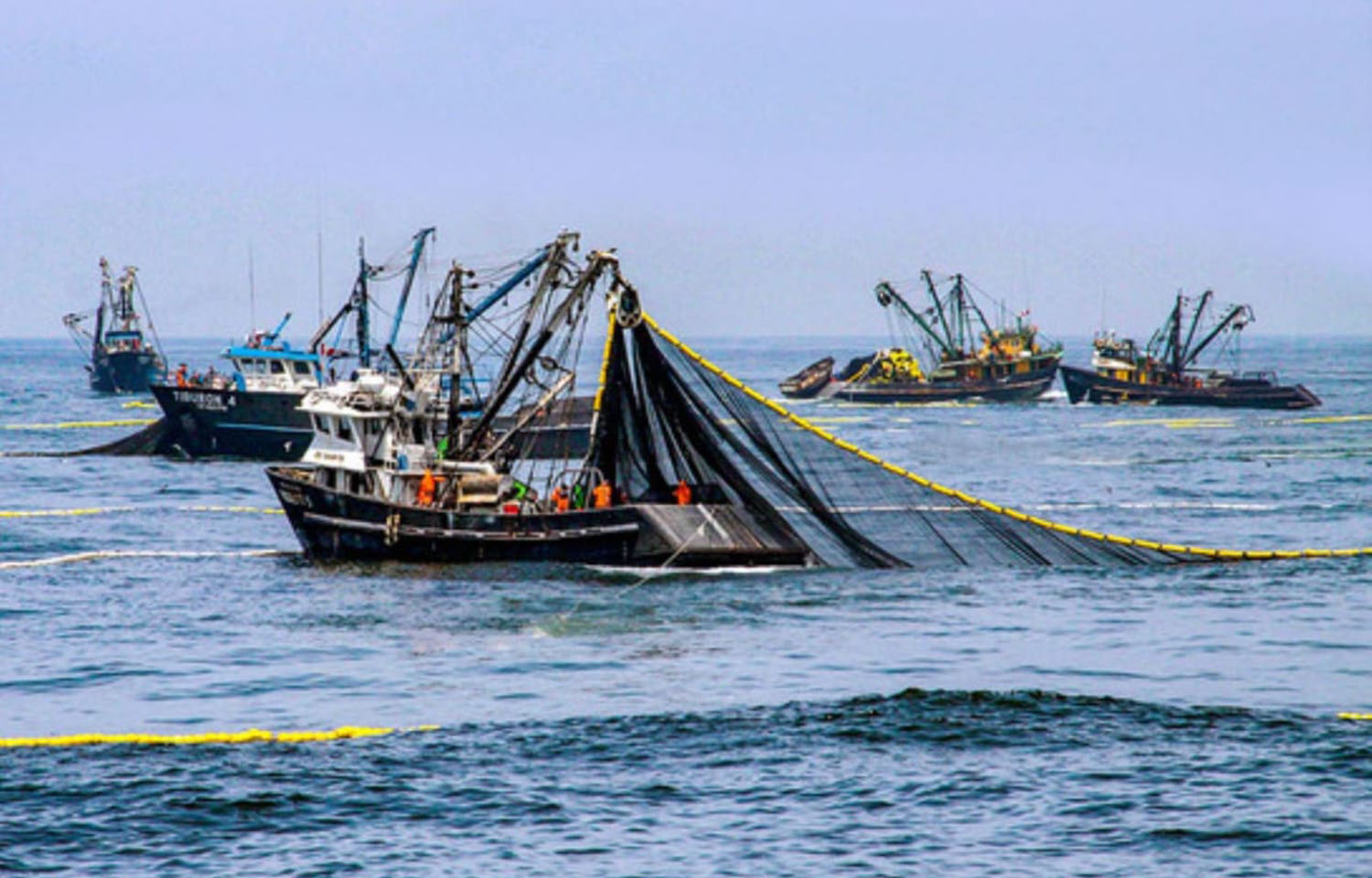
Local media in Peru are reporting that surveys by the Peruvian marine Research Institute (IMARPE) are indicating unfavorable conditions for the second anchovy fishing season.
Diario de Chimbote reported a meeting between Peru’s ministry of production (PRODUCE), the National Fisheries Society (SNP), and IMARPE indicated a second fishing season is unlikely to take place. According to the publication, preliminary results indicate a high presence of juvenile anchovies and high sea temperatures will make it difficult to fish for anchovy.
The official report has not been released by IMARPE, but the institute began its study on 15 September, which it planned to conclude on 7 October.
According to Diario de Chimbote, the meeting – which also included the vice minister of fisheries and representatives from the industrial sector – included information about the condition of the anchovy stock, which remained at a lower weight.
IMARPE’s recent weekly oceanographic bulletin indicates much of the same, highlighting sea surface temperatures that are multiple degrees Celsius above normal. The report also forecasted more incoming warm water for the remainder of the month of October, and more warm water is expected to reach the equatorial Pacific Ocean between November and December.
Given all of those factors, PRODUCE is likely to announce the second season will not take place, Diario de Chimbote reported.
The cancellation of Peru’s anchovy season will have a widespread impact on global fishmeal and fish oil supplies, as the fishery supplies as much as 20 percent of raw materials for the industry. The closure of the first season took place after just 471,000 metric tons (MT) of catch, well behind the quota of 1.9 million MT, and that cancellation has already impacted global fishmeal and fish oil supplies.
The results will likely be similar to the last time Peru decided to close and cancel seasons. Peru closed the country’s second anchovy season in early 2024, catching just 75 percent of the 1.682 million MT quota. That early closure followed up the cancellation of the first season, which was also due to the effects of El Niño.
That cancellation had huge economic impacts on the country’s economy, costing an estimated USD 1.4 billion (EUR 1.25 billion) and setting back the nation’s fishing industry.
The SNP has been calling for the Peruvian government to support the fishing industry amid the disruptions caused by El Niño, and SNP President Jessica Luna, in a recent op-ed posted in Peru 21, called on the government to continue to strengthen IMARPE in the face of continued changes, and criticized Peru’s congress for not doing enough.
“Today, more than ever, it is necessary to strengthen science to make quick and effective decisions for fisheries management and mitigate the impact of El Niño,” Luna wrote. “The industrial fishing sector demands concrete measures to address this crisis. Science must guide decisions regarding the resource; the government must take steps to pull the sector out of intensive care.”
SNP commissioned a study by Apoyo Consultoría, which found that as many as 78,000 jobs could be lost in Peru as a result of the El Niño phenomenon in 2026 alone.
