



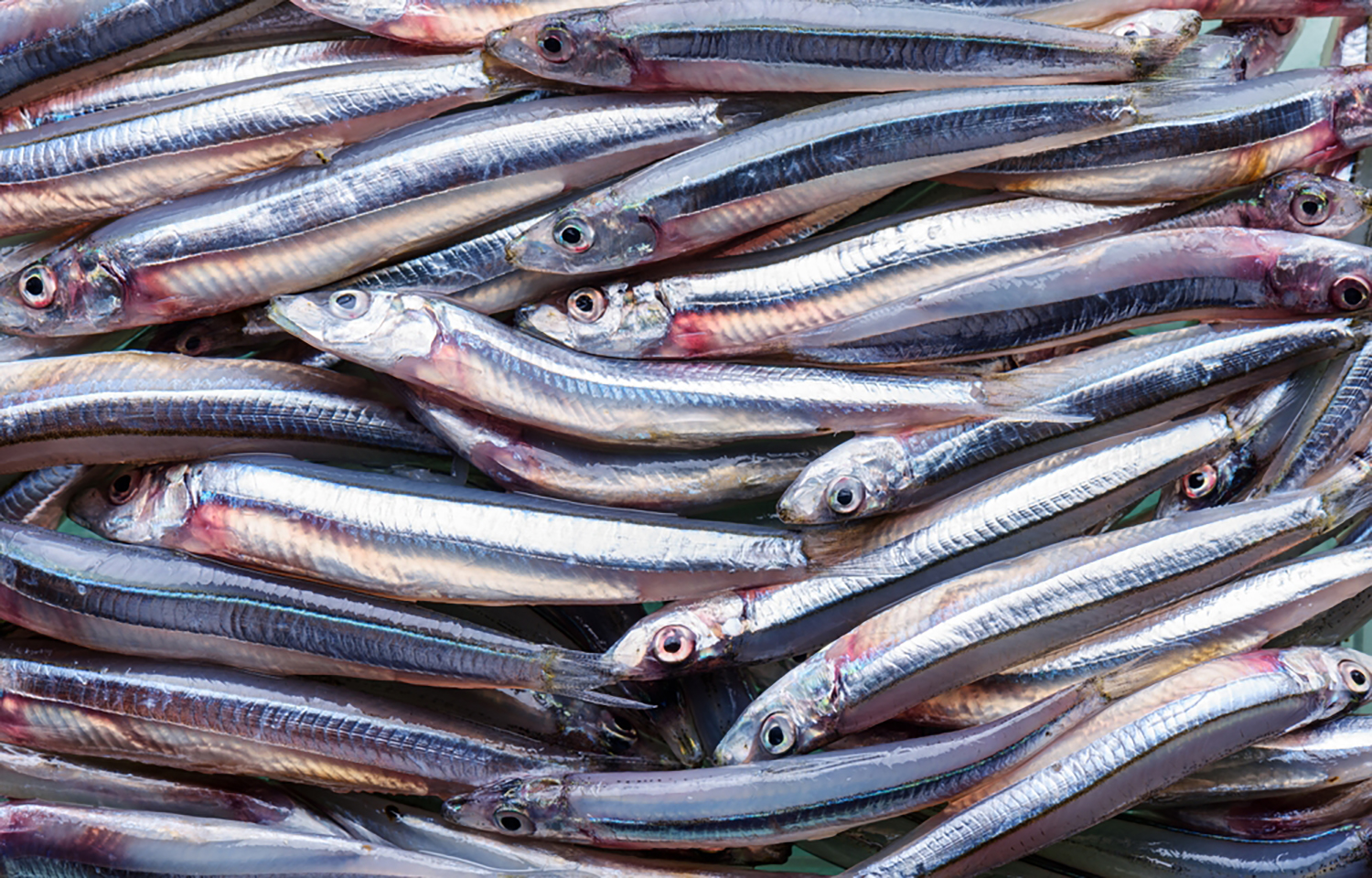
Peru’s anchovy industry is once again navigating a period of uncertainty as authorities have extended a pause in fishing due to a high presence of juveniles while warming ocean conditions linked to a coastal El Niño weather event continue to threaten operations.
Since February, Peru’s Multisectoral Commission in Charge of the National Study of the El Niño Phenomenon (ENFEN) has maintained a “Coastal El Niño Alert,” projecting that weak warm conditions are likely to persist until February 2027 and could intensify to moderate levels between May and August of this year.
Those conditions have already altered the behavior and distribution of pelagic species such as anchovies, forcing authorities and industry players to adapt quickly.
Peru’s Production Ministry (PRODUCE), in close coordination with the National Fisheries Society (SNP) and based on scientific assessments from the Peruvian Marine Research Institute (Imarpe), authorized an earlier start than usual to the first fishing season in 2026 for Peruvian anchovy (Engraulis ringens) and white anchovy (Anchoa nasus) in the nation’s principal fishing area: the North-Central zone.
The authority established a total allowable catch (TAC) of 1.9 million metric tons (MT) for the season, representing a more than 1 million MT drop from the 3 million-MT TAC set for the same season last year.
However, due to a high presence of juveniles in the catch, authorities have extended a halt to fishing operations that was originally set in place on 12 May. PRODUCE called for another two-week suspension on 27 May, which will last through 10 June. Up until the suspension, industry sources had reported landings reaching 453,000 MT, or 24 percent of the quota.
Despite the uncertainty, stakeholders in the anchovy fishery insisted that the government and industry stay the course and respect scientific-based decisions.
“Today, the scenario is one of high uncertainty, and the warm conditions that were projected have been occurring. The key is the permanent monitoring of oceanographic and environmental conditions for decision-making,” SNP President Jessica Luna said in a post on her organization’s website. “Precisely, the Peruvian anchovy fishery is recognized worldwide for this management based on scientific evidence and continuous monitoring.”
The maintained industry calls for evidence-based management are notable, especially as the country’s anchovy fishery has been heavily affected by El Niño weather patterns in recent years.
In January 2024, PRODUCE closed the country’s second anchovy season early, following the complete cancellation of the first season of 2023, which Luna previously called “the worst year in decades” and which led to more than USD 1.4 billion (EUR 1.2 billion) in lost fishmeal and fish oil export sales. Income for the fishing sector fell 17 percent, leading to a 0.5 percent hit to Peru’s GDP. Further, about 18,000 fishermen lacked income during the first nine months of the year, and some 3,500 small and medium enterprises in the anchovy-related value chain were heavily affected.
Regardless of the toll these decisions have taken on the industry, Luna emphasized that science still needs to be put first.
“In the face of the different projections, we must be cautious and continue to put science first. Responsible fishing to ensure the sustainability of the resource is the priority and that this continues to be an engine of economic and social development of our ports,” Luna said.
PRODUCE reinforced that the country’s legal framework encourages honest, mandatory reporting, driving scientific decisions based on real data. For instance, through mandatory electronic logs, the fleet reports bycatch in real time, providing Imarpe with accurate information necessary for it to adjust its biological evaluations and make timely decisions, contributing to the conservation of the resource while maintaining spawning biomass above reference levels.
Authorities also highlighted that Imarpe has received the international ISO 9001:2015 – Quality Management System certification, reaffirming the institutional commitment to excellence, continuous improvement, and the generation of reliable scientific information for the sustainable management of the country's marine resources.
“Fishing has to be sustainable, and we have to respect sizes and quotas. Imarpe plays a key role here: determining how much can be fished to maintain the biomass of the different species,” PRODUCE Minister César Quispe said. “The challenge now is to maintain this certification. This work will especially help PRODUCE’s fisheries administration.”
Quispe also stressed that the certification strengthens Imarpe’s prestige, fortifying the traceability, verifiability, and documentation of each stage of the scientific processes linked to the anchovy fishery.
Peru’s anchovy fishery is considered the largest in the world by volume. Its catch is used to produce about 20 percent of global fishmeal supplies.
The country divides its anchovy fishing areas into two regions – South and North-Central – with different capture limits and seasons set for each. The North-Central is Peru’s main fishing region, with capture measuring several times that of the South region.
