


Artificial intelligence has been making waves in the world of devices like self-driving cars and rocket launches, but not all the uses of the technology are so high-profile.
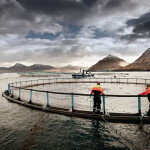
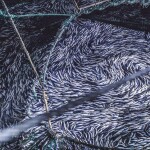
A case in point is Norway-based CageEye’s AI aquaculture system, which uses complex algorithms and neural networks to collect data on fish behavior. The system, which uses acoustic equipment to visualize fish inside enclosures, can analyze large amounts of data to understand behavior and feeding patterns of farmed fish.
“What we basically try to do is understand the fish. The key to this is to monitor the distribution of the fish in the cage, as this tells us more about its appetite and eventually even about its well-being,” Carlo Barth, science product lead at CageEye, said in a release. “This is no easy task, as we are talking about several hundred thousands of salmon in each cage, sometimes completely obscuring the water surface, causing possible detection errors.”
Detecting each individual fish on its own, let alone understanding what the movements and patterns of that fish mean, is a daunting task for any human team to understand, but with modern AI technology, like neural networks, understanding fish behavior becomes possible.
“Now we applied machine learning by training a neural network to drastically improve the detection algorithm, allowing us to detect the surface properly even if it is shielded. This makes our deliverables much more reliable,” Barth said.
CageEye took large amounts of data and fed it to the neural network the company created, with promising results.
“We ‘fed’ the algorithm with several hundreds of gigabytes of cleaned data. After a week the new algorithm had already surpassed the results of the original (non-self learning) one, and after two weeks, the accuracy was 20 times higher,” Kamil Czarnogórski, data scientist at CageEye, said.
That accurate data can then be used to determine feeding regimes, allowing farmers to maximize biomass and reduce environmental waste. The farmers can also use as little resources and energy as possible feeding the fish, while also improving the animals’ health and welfare. According to CageEye, feed waste has been reduced while fish stress levels have been decreased at test facilities.
CageEye CEO Bendik S. Søvegjarto said systems like theirs will be invaluable to both farmers and the future of the environment.
“The world population is still growing, and so is the demand for high-quality food. Land-based farming is nearing its ecological and practical limits, while sea based farming only accounts for 2 percent of all food production. Since 70 percent of the earth is covered by ocean, this has a lot of potential.” Søvegjarto said. “That is why we think a shift to aquaculture is an important step to a more sustainable world food production. And it is our duty and responsibility to make this shift economically and ecologically sustainable. Every improvement in accuracy and effectiveness of the system contributes to this goal.”
