


Trondheim, Norway-headquartered salmon-farming companies Måsøval AS and Norway Royal Salmon (NRS) are the latest aquaculture companies to cancel planned acquisitions of additional production capacity following the Norwegian government's proposal introducing an additional 40 percent resource tax on salmon farmers.
In a filing with the Euronext Growth Oslo exchange on 5 October, Måsøval advised that in light of the proposal, it has decided to cancel its acquisition of 116 metric tons (MT) maximum-allowed biomass (MAB) in Norway's Production Area 6.
“The company will until further notice postpone planned investments in excess of NOK 1 billion [USD 94.8 million, EUR 95.9 million],” the company said. “This will have significant negative repercussions for our suppliers and the coastal societies where we operate our business.”
In its own filing with Oslo Børs on 5 October, NRS confirmed it has abandoned its purchase of 370 MT of additional capacity that it made earlier this year for NOK 62 million (USD 5.9 million, EUR 5.9 million).
“This is caused by the government's proposal for resource rent tax of 40 percent and a total effective tax rate of 62 percent,” it said.
NRS said it had “invested significant amounts in strengthening the value chain” through a new smolt facility in Dåfjord in Karlsøy municipality, development of sea locations, and investing in aquaculture at sea through Arctic Offshore Farming.
“The introduction of a resource rent tax will lead to a significantly weakened investment ability for the company. For the time being, the company's larger future investments are therefore being put on hold. This means that the planned expansion of the smolt facility in Dåfjord of NOK 400 million [USD 37.9 million, EUR 38.4 million] is postponed.”
NRS CEO Charles Høstlund said that the company’s ambitions for Norway have been shelved entirely as a result of the proposed tax increases.
“NRS has a proud history, and over the years we have developed our farming activity in Troms and Finnmark. We want to develop the company further and create jobs at the coastal areas in northern Norway,” Høstlund said. “We are always looking for growth opportunities, but now we don't dare. A good tax system must be both fair and predictable. The government's proposal for resource rent tax is neither and puts new investments on hold all along the coast. Such unpredictable framework for the aquaculture industry means that the risk is considered as too high.”
In recent days, salmon farming companies Cermaq, Lerøy Seafood Group ASA, Mowi ASA, Nova Sea, and SalMar ASA, have also canceled planned investments or MAB acquisitions in response to the proposed tax.
Separately, Måsøval has reported that its harvested volume for Q3 2022 was 4,879 MT gutted-weight salmon, compared to 7,265 MT in the corresponding period of 2021. Its full report for the period will be published 15 November, 2022.
Additionally, NRS has notified Oslo Børs that it has taken longer than expected to obtain the necessary approvals for its proposed merger with SalMar that was approved by the respective companies' extraordinary general meetings held on 30 June, 2022. As a result, NRS and SalMar have scheduled extraordinary general meetings to push shareholders to approve an extension to the deadline for its completion.
SalMar’s meeting will take place 27 October, 2022, and the NRSA meeting will happen 28 October, 2022.
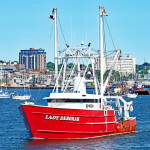
Photo courtesy of Måsøval
