






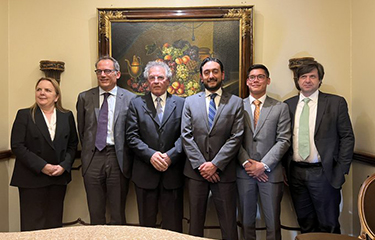
Guayaquil, Ecuador-based shrimp farmer Industrial Pesquera Santa Priscila has received a USD 45 million (EUR 44.1 million) loan from the World Bank’s International Finance Corporation (IFC) to improve the resilience of its shrimp crop while cutting down on greenhouse gas emissions.
The company plans to use the loan to acquire a 1,300-hectare shrimp farm located in the area of Naranjal, close to Guayaquil, and connect the farm to the electrical grid, according to information on IFC’s project information and data portal. The shift will allow Santa Priscila to forego using diesel-power generators in the pumping and automated aeration and feeding systems, thereby decreasing its emissions by some 2,000 metric tons (MT) of carbon dioxide equivalent a year while improving productivity levels in its shrimp ponds due to enhanced stability and higher-quality oxygenation.
“IFC’s long-term financing, not readily available for agribusinesses – especially for investments in electrification of farms – will help grow our operations,” Santa Priscila Corporate Advisor Raúl Estrada said. “With IFC’s support, we expect to increase productivity levels by more than 20 percent in terms of pounds of shrimp per hectare. IFC’s expertise will also help raise our operating standards in terms of environmental and social practices, corporate governance and insurance, boosting our sustainability to meet the dynamic market demand.”
Ecuador’s shrimp sector accounts for about 20 percent of Ecuador’s exports and 5 percent of its gross domestic product, but relative low productivity coupled with high reliance on fossil fuels continue to be an issue. The IFC funds will be invested only in farms adapted to replicate Aquaculture Stewardship Council (ASC) or Best Aquaculture Practices (BAP) certification standards, thereby promoting good practices with sustainability benefits. Of the total loan, around 42 percent will go towards climate mitigation.
“The aquaculture sector, particularly shrimp, is key in the productive structure of Ecuador, which is a world leader. Yesterday I had the pleasure of signing a sustainable laon with Santiago Salem, president of @SantaPriscilaEC, a company which produces 20,000 tons of shrimp a month,” IFC Vice-President for Europe, Latin America, and the Caribbean Alfonso García said on Twitter on 5 August.
A member of the World Bank Group, the IFC is the largest global development institution focused on the private sector in emerging markets. It works in more than 100 countries and uses its capital and expertise to create markets and opportunities in developing countries. Since 1956, the IFC has invested over USD 321 billion (EUR 313.9 billion) in emerging markets, and climate-related solutions are one of the major thematic areas it is currently targeting for investment.
“Addressing climate change and supporting long-term growth is a key priority for IFC in Latin America and the Caribbean,” García said in an IFC release. “IFC’s investment will support one of the leading shrimp producers in Ecuador to expand, adopt more-sustainable farming practices, and upgrade its farm infrastructure. This will promote competition and productivity growth in this important export-oriented sector, catalyzing the greening of the shrimp sector to tackle future shocks.”
Photo courtesy of the World Bank's International Finance Corporation/Alfonso García
