






Aquaculture technology provider AKVA Group posted higher revenue and profits in the fourth quarter of 2023.
But AKVA CEO Knut Nesse said the introduction of Norway’s new resource rent tax on salmon farming has negatively impacted both its land- and sea-based business segments.
Delivering AKVA’s Q4 2023 results on 16 February 2024, Nesse said the company’s activities in 2023 remained relatively the same as the previous year, and even though its profitability improved, it still did not meet expectations.
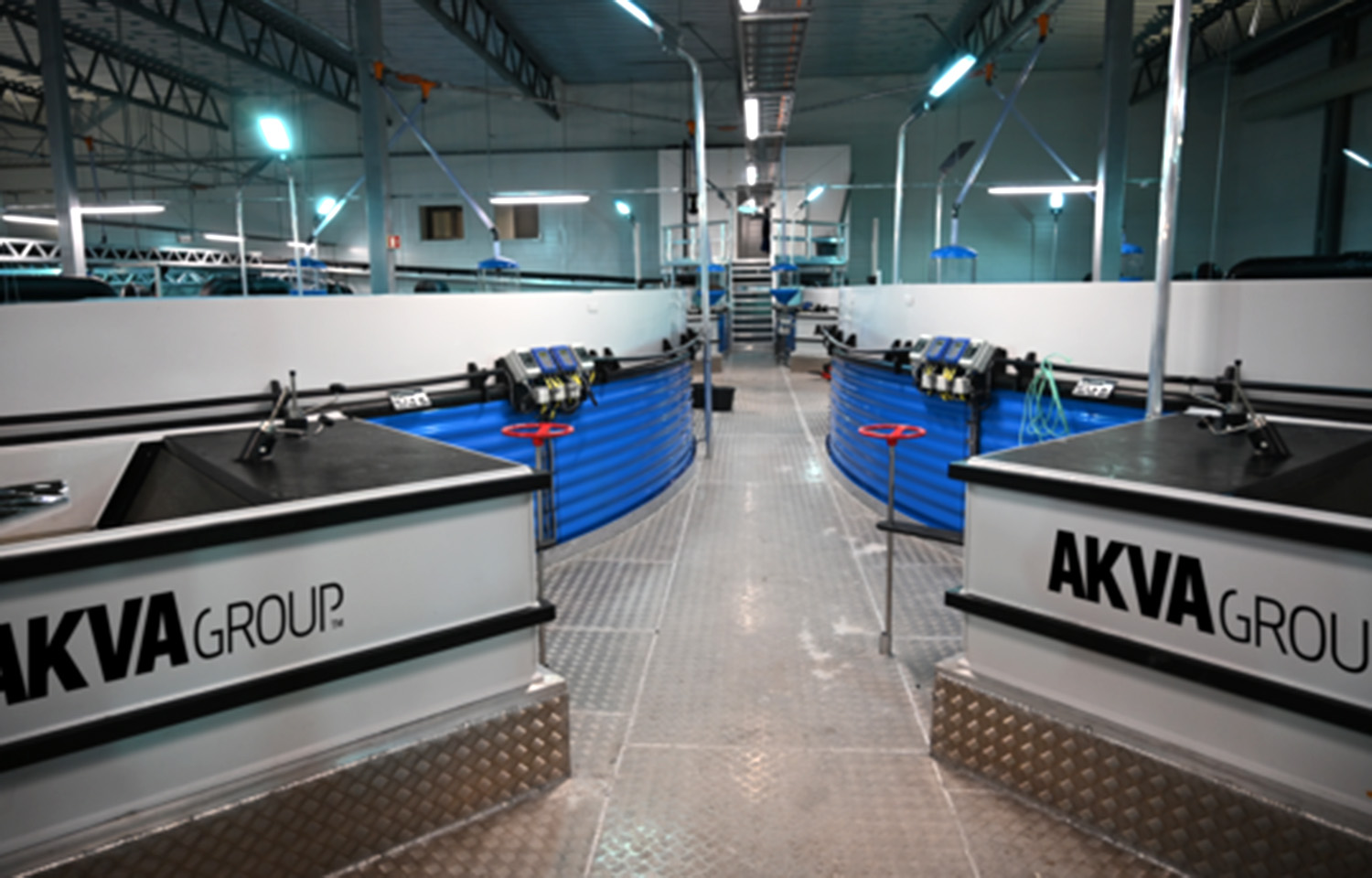
The company’s Land-Based Technology (LBT) business has “suffered for a few years now,” Nesse said, highlighting a trend that has continued due to high costs and lower profitability in parts of the project portfolio. The performance of AKVA’s Sea-Based Technology (SBT) segment, meanwhile, has remained solid with a healthy product mix, according to Nesse.
The LBT segment's Q4 2023 revenue totaled NOK 142 million (USD 13.5 million, EUR 12.5 million), down NOK 21 million (USD 2 million, EUR 1.9 million) year over year. Its earnings before interest, taxes, depreciation, and amortization (EBITDA) and EBIT ended the period at NOK -15 million (USD -1.4 million, EUR -1.3 million) and NOK -18 million (USD -1.7 million, EUR -1.6 million), compared to NOK -27 million (USD -2.6 million, EUR -2.4 million) and NOK -28 million (USD -2.7 million, EUR -2.5 million) in Q4 2022.
AKVA's SBT segment's Q4 2023 revenue totaled NOK 618 million (USD 58.8 million, EUR 54.6 million), up from NOK 592 million (USD 56.3 million, EUR 52.3 million) in Q4 2022.
In November 2023, AKVA implemented a restructuring and rightsizing process to ensure it could adapt to the resource tax. That process concluded in Q4 2023, according to Nesse, helping the company assure annual estimated cost savings of NOK 45 million (USD 4.3 million, EUR 4 million). Future cost savings from the restructuring should ease a bit of the tax’s financial burden, Nesse said, but costs related to its implementation totaled NOK 10 million (USD 952,000, EUR 883,000) and had a negative impact on profitability in the quarter, Nesse said.
Despite the challenges, AKVA achieved a “sound” order intake in Q4 2023, including a EUR 40 million (USD 43.1 million) recirculating aquaculture system (RAS) contract from Nordic Aqua Partners and a minimum EUR 60 million (USD 64.6 million) post-smolt contract from Cermaq Norway. AKVA received orders totaling NOK 718 million (USD 68.3 million, EUR 63.4 million) in the period, representing a year-over-year decrease of NOK 171 million (USD 16.3 million, EUR 15.1 million). At the end of the period, it had an order backlog of NOK 2.4 billion (USD 228.4 million, EUR 211.9 million).
Nesse said the outlook for the post-smolt market in Norway is still uncertain but said that some normalization should occur during the second half of 2024. Much of the Norwegian post-smolt market is currently pursuing a “wait-and-see” approach, Nesse said, as many industry players want to know the full implications of the resource tax before making final investment decisions.
“This is taking some time,” he said. “Even though we are working on prospects and cases, we don’t expect any major post-smolt contracts in the first half of the year but we hope the tide will change in the second half.”
That improvement is likely to come from a better understanding of the tax, Nesse said.
“We have a solid pipeline of prospects. We are working on at least four or five projects where we are rather advanced, meaning that they are, in principle, ready for decision-making with their boards. The typical dynamic at the moment is that these board decisions are a little delayed,” he said. “For understandable reasons, people are not making final decisions easily, but since we already have several qualified prospects and processes running which are at the final stage, we think the tide will turn.”
Regardless, the company has plans in place to ensure it can optimize post-smolt operations, according to Nesse.
“We think that a well-applied post-smolt strategy for a company comes with clear benefits. We’re talking about significantly reduced time in the sea and that also means less exposure, with less sea lice treatments [needed] and improved fish health. Also, depending on the size of the smolt, it comes with better capacity utilization of your current sites,” Nesse said. “People don’t like the situation, but the resource tax is not going away, and when you have taken out the uncertainty, we think on the back of still very good profitability and strong cash flows [in the salmon industry] that [companies can] start making decisions again.”
Regarding the company’s overall Q4 results, revenue for the quarter increased 3 percent to NOK 800 million (USD 76.1 million, EUR 70.6 million), and its EBITDA increased by NOK 14 million (USD 1.3 million, EUR 1.2 million), totaling NOK 41 million (USD 3.9 million, EUR 3.6 million).
AKVA has also revised its medium-term financial targets and is aiming for a minimum revenue of NOK 3.6 billion (USD 342.5 million, EUR 317.9 million) – a 5 percent increase on 2023 – and an EBIT range of 4 percent to 5 percent in 2024.
Photo courtesy of AKVA Group
